Twenty pounds is 9.07 kilograms. It’s the weight that makes your forearms burn after two minutes, the one that feels manageable until it suddenly isn’t. Most people have lifted this weight dozens of times without realizing it.
Here’s what weighs 20 pounds, explained through objects you’ve probably already touched.
20 Pounds Conversions
| Unit | Value | Real-World Feel |
| Pounds | 20 lbs | A loaded gym bag |
| Kilograms | 9.07 kg | A large watermelon |
| Grams | 9,071 g | Precise scientific measure |
| Ounces | 320 oz | 20 standard cans of soup |
All pound-to-kilogram conversions in this article follow the International Yard and Pound Agreement (1959), the globally accepted standard that set 1 pound as exactly 0.45359237 kilograms.
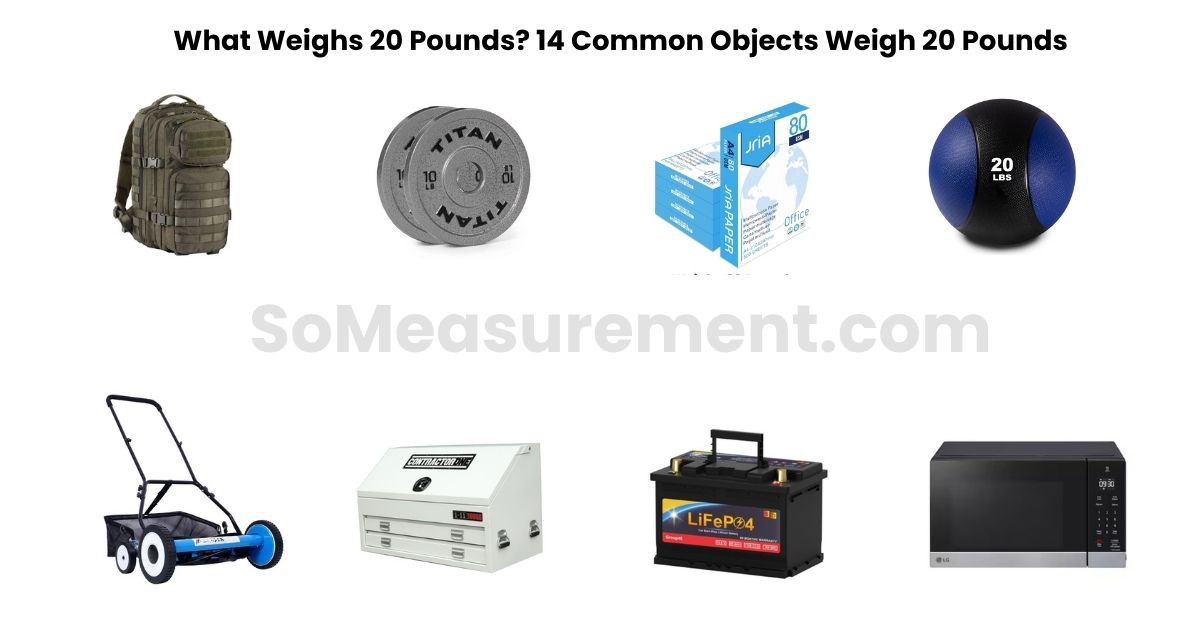
14 Everyday Things That Weigh 20 Pounds
| Object | Category |
| Four Reams of Printer Paper | Office / Stationery |
| Large Whole Watermelon | Food / Produce |
| 20-lb Bag of Dry Pet Food | Home / Pets |
| Two Gallons of Liquid Paint | Home / DIY |
| Medium Thanksgiving Turkey | Food / Kitchen |
| Countertop Microwave | Home Appliance |
| 20-lb Dumbbell | Fitness / Gym |
| Standard Medicine Ball | Fitness / Gym |
| Two 10-lb Weight Plates | Fitness / Gym |
| Packed Tactical Rucksack | Fitness / Outdoor |
| Manual Push Reel Mower | Garden / Outdoor |
| Lead-Acid Car Battery | Auto / Mechanical |
| Loaded Contractor’s Toolbox | Tools / DIY |
| Foldable Adult Electric Scooter | Transport / Tech |
Four Reams of Printer Paper
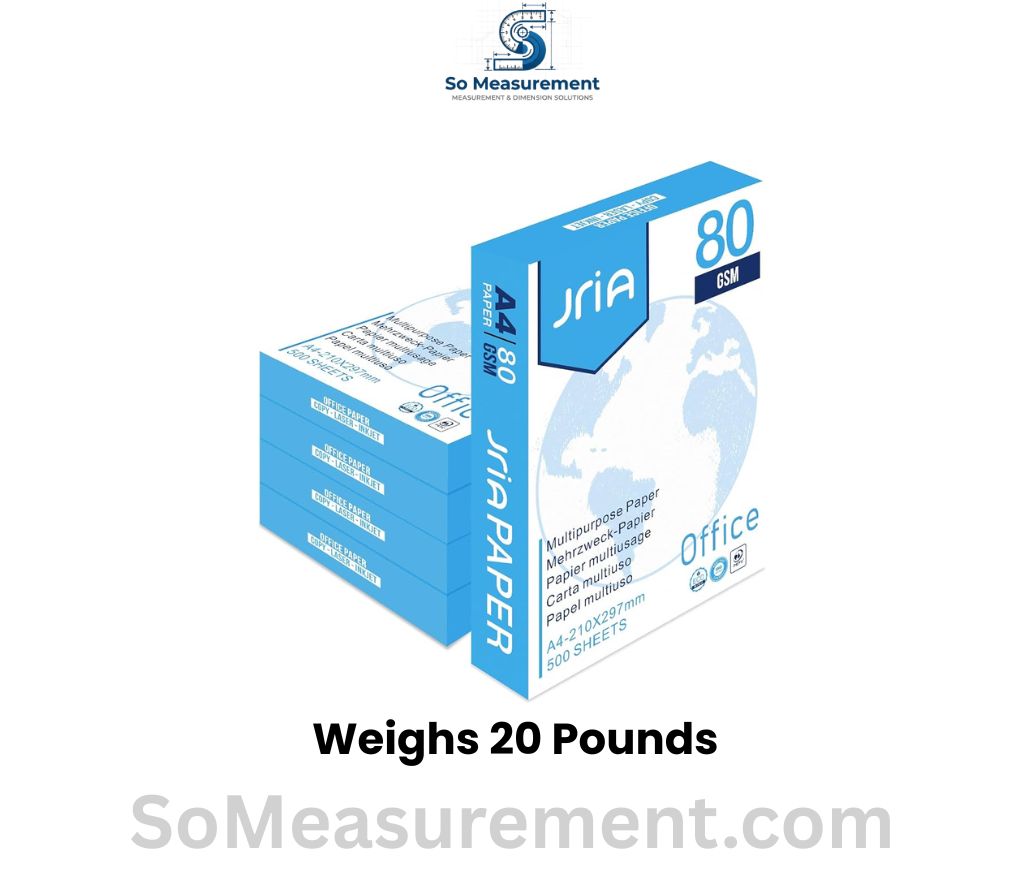
Go to any office supply store and pick up four standard reams of 8.5 x 11 copy paper. Stack them in your arms. That’s almost exactly 20 pounds — each ream is tightly controlled at 5 pounds during manufacturing, making this one of the cleanest comparisons you’ll find anywhere.
The weight is dense and uniform. Nothing shifts, nothing wobbles. Just a solid, rectangular block pressing evenly into your forearms. If you’ve ever carried a box of paper from a storage room, you already have this weight memorized in your muscles.
A Large Whole Watermelon
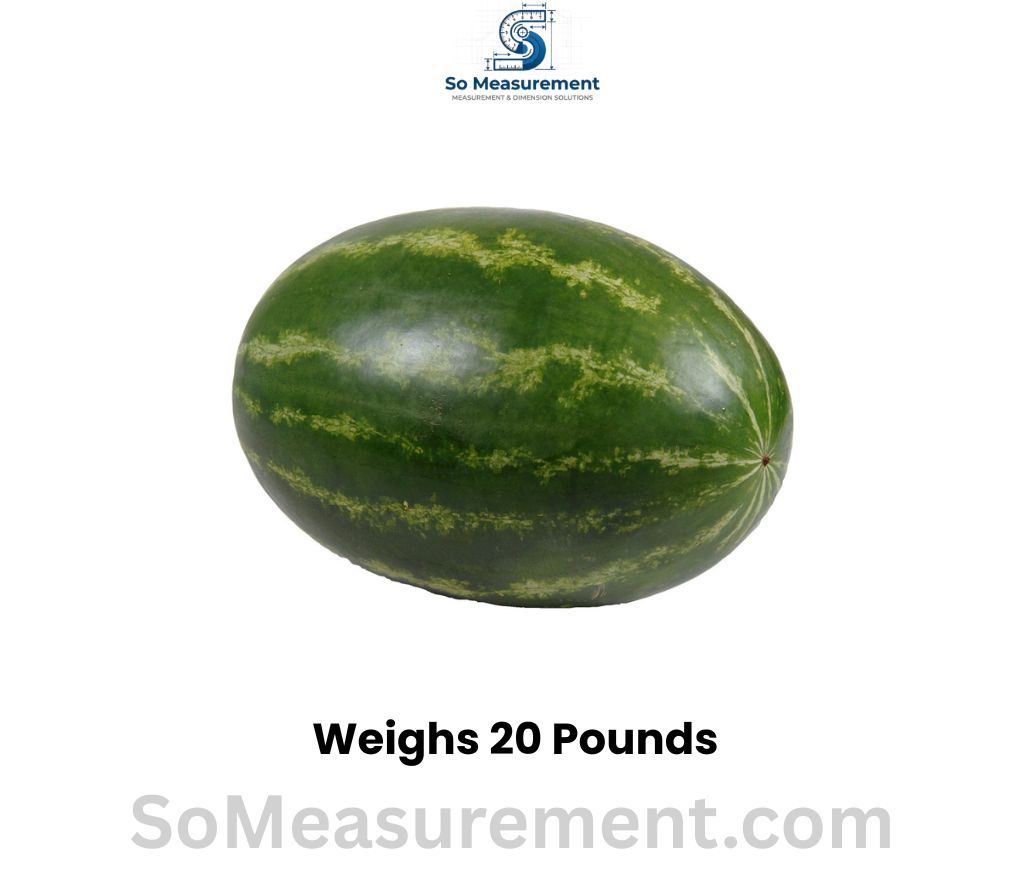
The big, dark-green oblong ones at the bottom of the grocery bin — those are your 20-pound watermelons. Most large melons land between 15 and 20 pounds, and the biggest ones clear that upper mark easily.
What makes this comparison interesting is the shape. A watermelon is round, slightly slick, and has zero grip points. Carrying it requires both arms wrapped underneath, which distributes the load awkwardly across your wrists and inner forearms. The weight feels worse than a dumbbell at the same number purely because of how your body has to hold it.
A 20-Pound Bag of Dry Pet Food

Medium to large bags of dry dog or cat food are commonly packaged at exactly this weight. Walk down the pet food aisle and you’ll see 20-pound bags stacked everywhere — it’s one of the most standard packaging sizes in the category.
The bag is wide, floppy, and shifts as you move. That’s what separates it from carrying something rigid. A floppy load at 20 pounds is genuinely harder on your grip and lower back than a compact load at the same weight. Anyone who’s hauled one of these up an apartment staircase understands this immediately.
Two Gallons of Liquid Paint
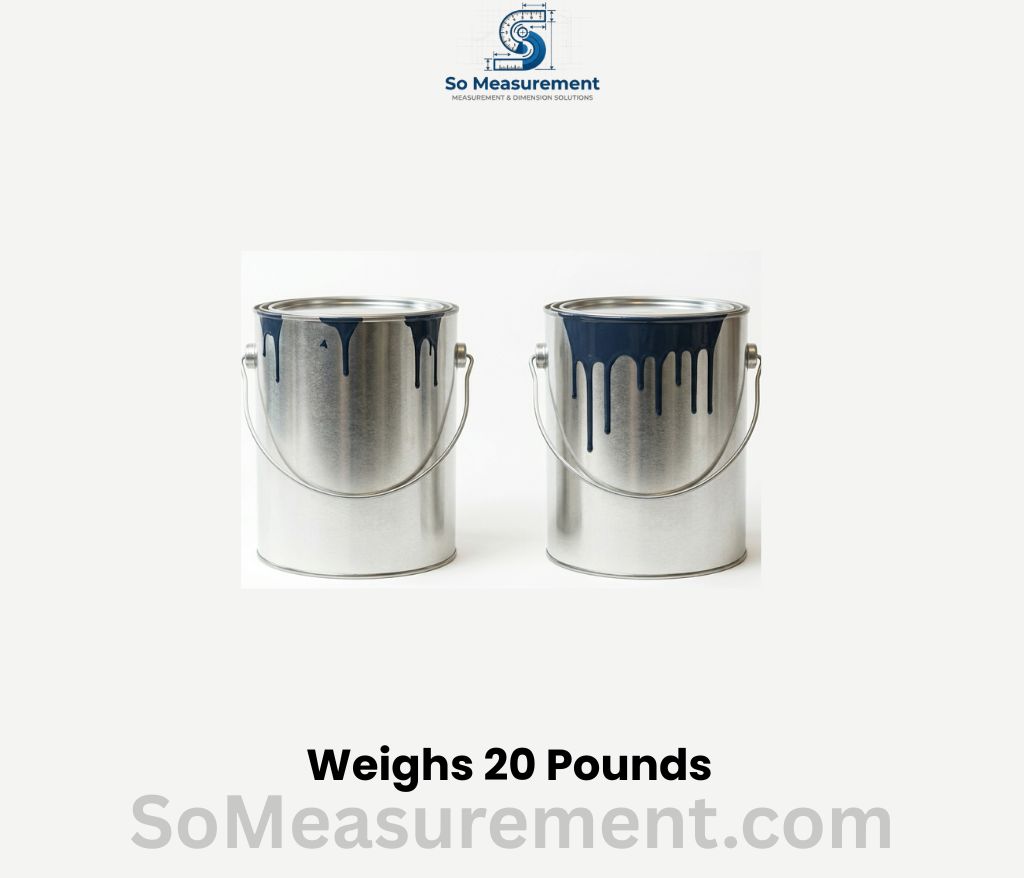
One gallon of standard latex wall paint weighs close to 10 pounds. Two gallons together bring you right to the 20-pound mark. Painters carry this combination constantly — from the hardware store floor to the car trunk to the top of a ladder.
The metal cans have handles, which helps. But paint sloshes slightly with every step, and that subtle movement changes how the weight sits in your grip. It’s one of those loads that feels heavier at the end of a job than it did at the start.
A Medium Thanksgiving Turkey
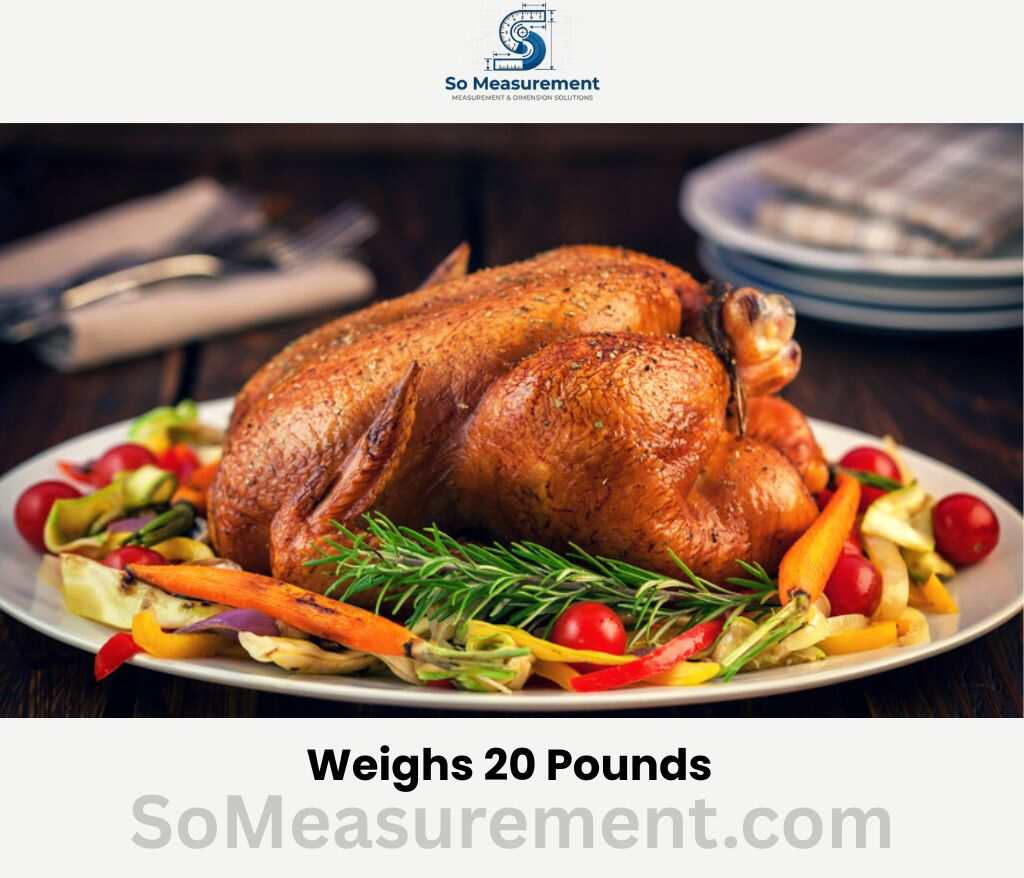
A raw, uncooked turkey in the 18 to 22-pound range is one of the most common items in American kitchens that casually hits this weight. Medium turkeys meant for 8 to 10 people frequently come in right around 20 pounds.
Lifting a raw turkey out of packaging is its own experience. It’s cold, dense, slightly slippery, and has no natural grip. Getting it from the sink into a roasting pan without dropping it is a small annual athletic event for a lot of home cooks.
A Countertop Microwave
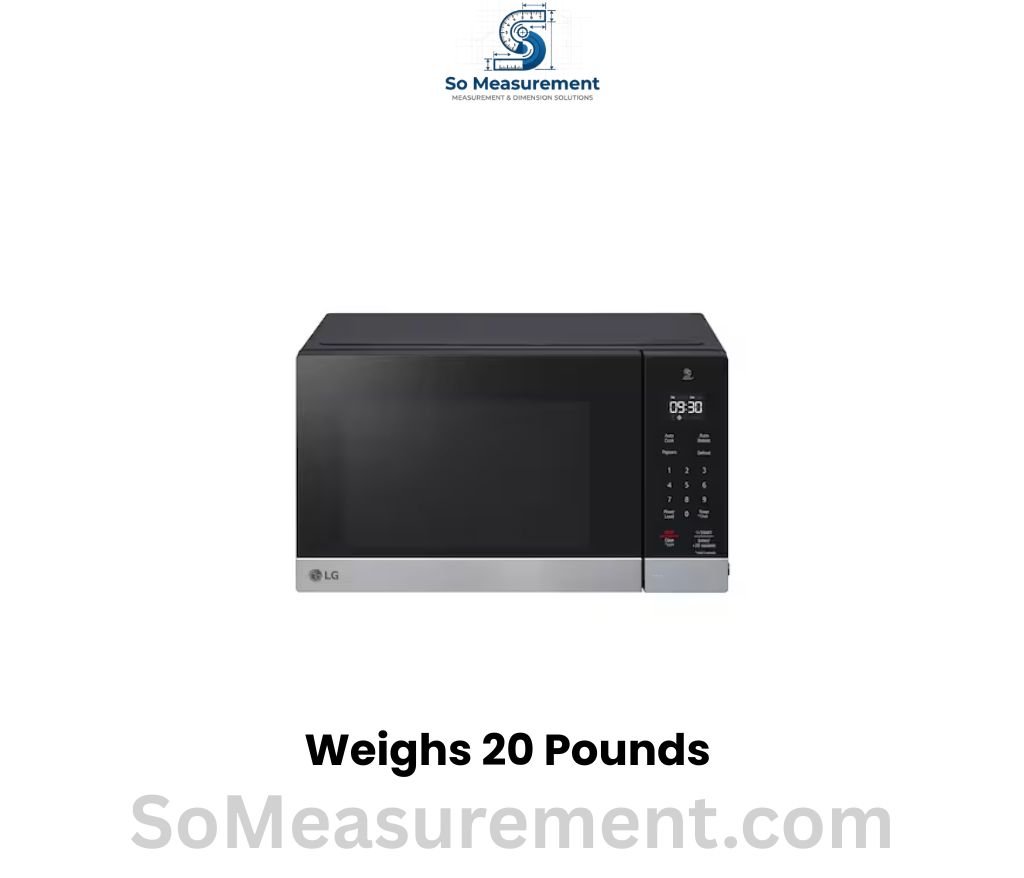
Compact to mid-size kitchen microwaves — the standard units that sit on a counter rather than mount above a range — typically weigh between 18 and 22 pounds. A common 1.1 cubic foot model lands right in this zone.
The challenge with a microwave isn’t just the weight, it’s the shape. Wide, boxy, and with no real grip points on the sides. Sliding one onto a high shelf solo requires actual technique, not just strength. Appliance stores recommend two people for a reason.
A 20-Pound Dumbbell
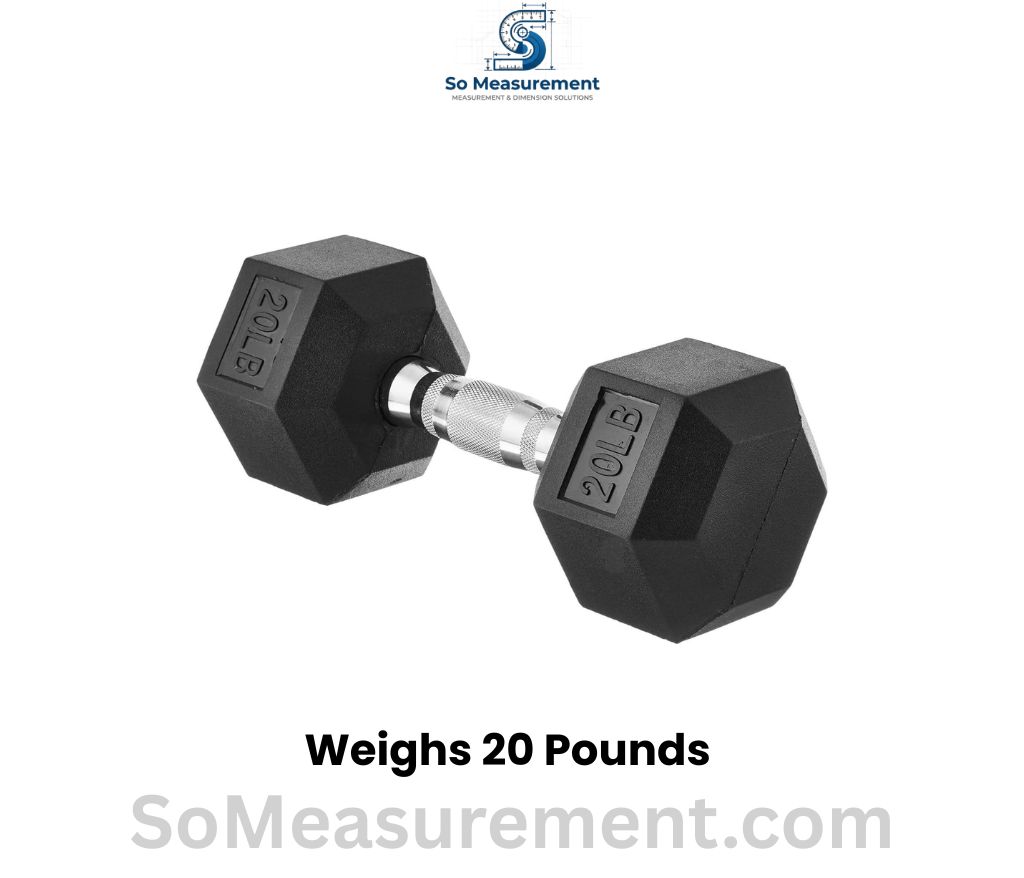
Step into any gym and look at the middle section of the dumbbell rack. Not the light beginner weights, not the serious heavy ones — the 20-pound dumbbells sit right in the middle, used constantly for curls, rows, shoulder work, and chest presses.
A rubber-coated hex dumbbell at this weight sits in one hand with a grip that feels solid and complete. The weight is concentrated, compact, and honest. Hold one at your side and walk across a gym floor. By the time you reach the other wall, your forearm is done debating whether this is heavy or not.
A Standard Medicine Ball
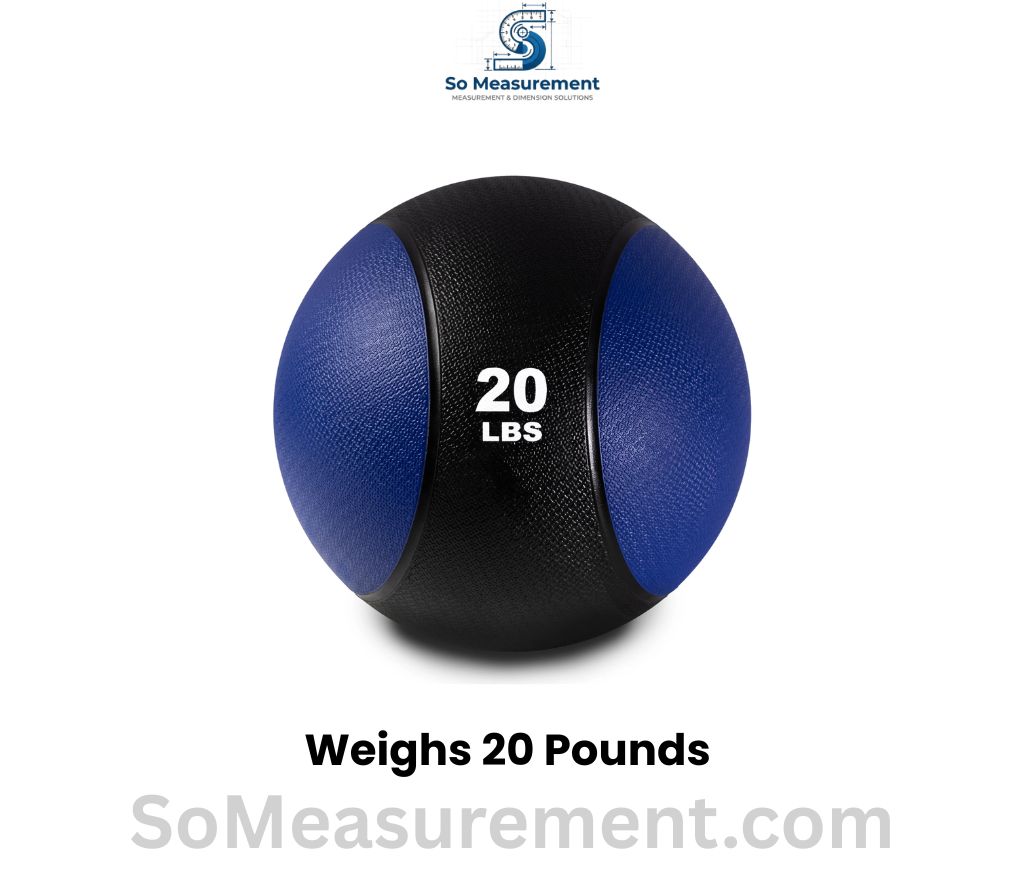
Medicine balls at 20 pounds are among the most common sizes stocked in commercial gyms. They’re used for wall balls, sit-ups, slams, and rotational throws. The ball itself is roughly the size of a large cantaloupe but dramatically denser than it looks.
Press one against your chest and hold it there. The weight pulls your upper back into a forward curl almost immediately. It forces your core to engage just to stay upright. That’s why trainers use this specific weight — it’s heavy enough to be genuinely challenging without requiring superhuman strength.
Two 10-Pound Weight Plates
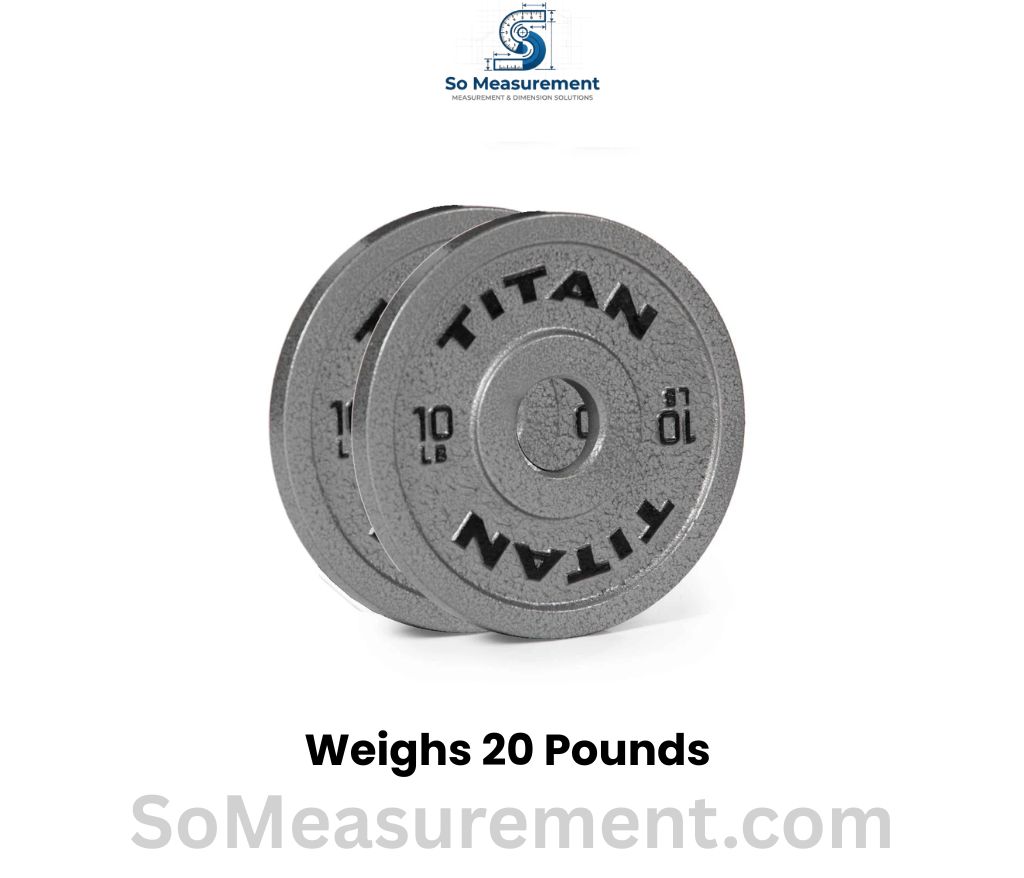
A pair of standard iron or rubber weight plates at 10 pounds each totals exactly 20 pounds. These are everywhere in home gyms and commercial facilities, used as loading weight on barbells, standalone objects for exercises, or carried between equipment.
Holding two flat plates by their edges works your grip differently than a dumbbell handle. The disc shape means your fingers have to splay out and squeeze against a flat surface. Same total weight, completely different demand on your hands. It’s a small detail that most people never notice until they try it.
A Packed Tactical Rucksack
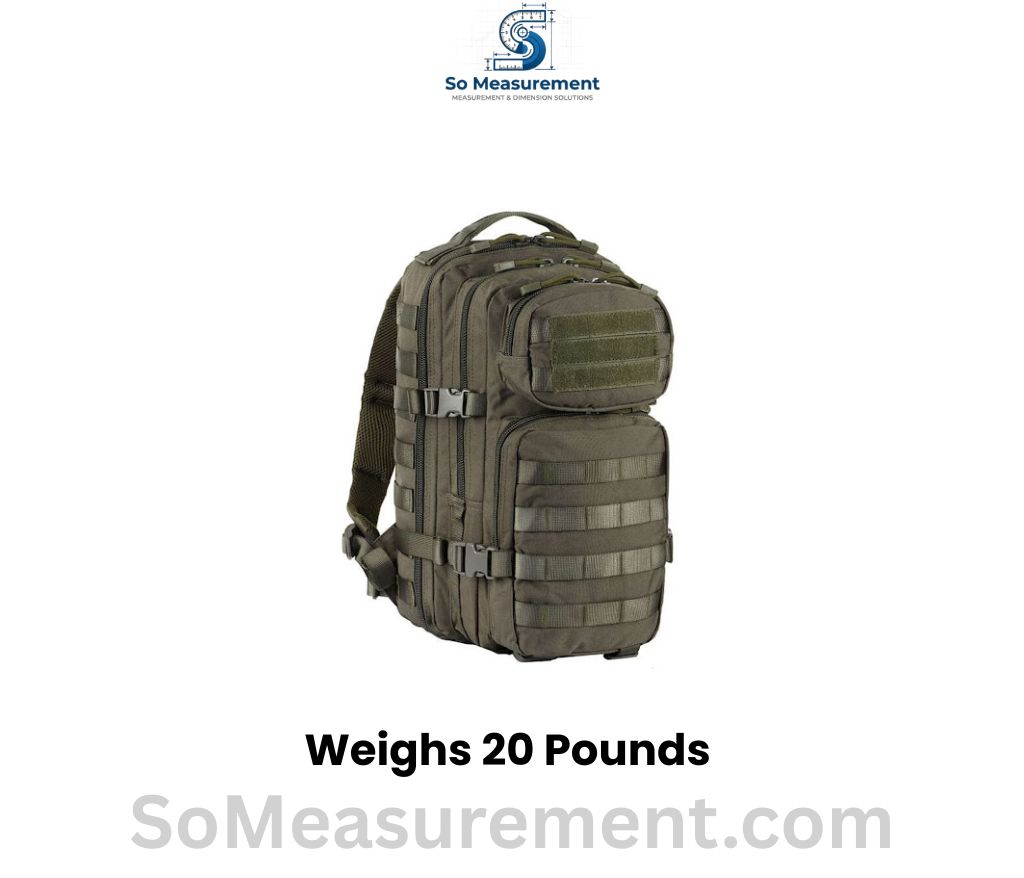
Twenty pounds is the standard starting weight in fitness rucking — structured training walks with a loaded backpack. Programs built around military-style fitness use this as the entry point because it’s challenging without being dangerous for beginners.
On your back with a proper fit, 20 pounds spreads across your shoulders and hip belt. For the first mile, it barely registers. By mile three, it’s a completely different conversation. The weight hasn’t changed — your body’s ability to ignore it has.
A Manual Push Reel Mower
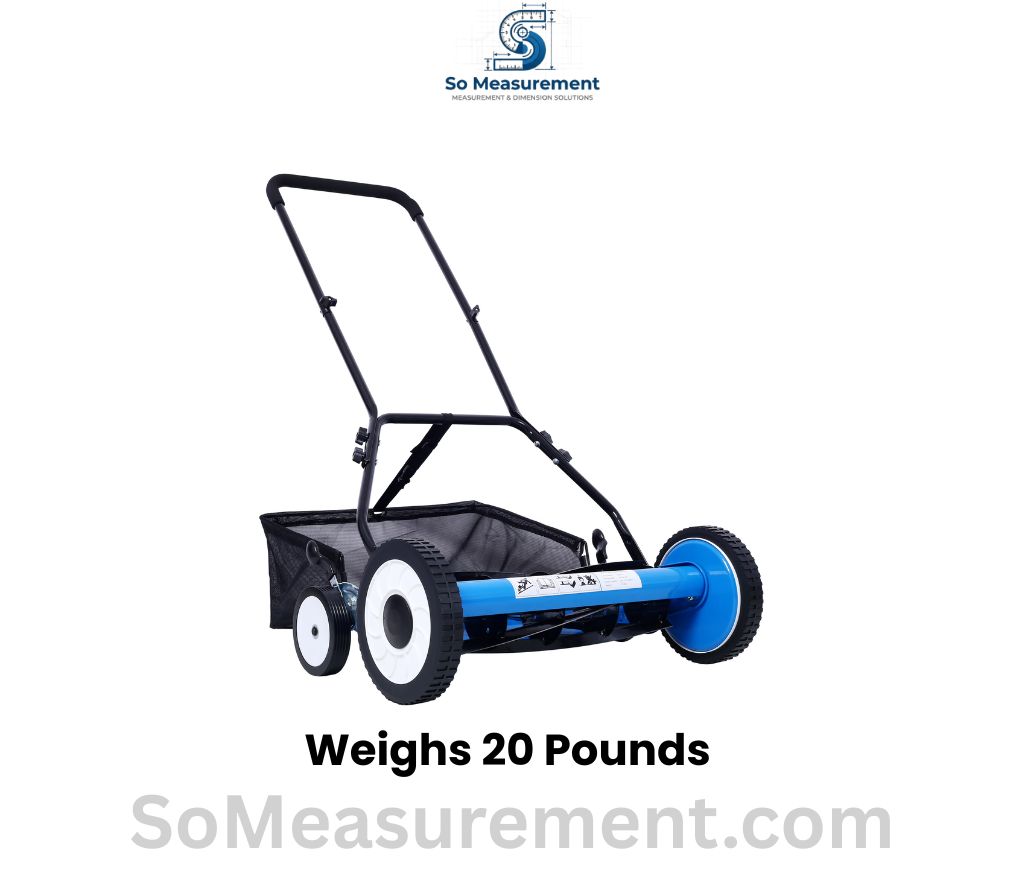
Non-motorized push reel mowers, the kind that cut purely from being pushed forward, commonly weigh right around 20 pounds. They’re compact, low to the ground, and easy to store because of it.
Lift one to carry it over a garden hose or step it down from a porch. That brief lift gives you the weight clearly. It’s manageable in your hands for short distances, but it’s not something you’d want to carry across a large yard. The metal frame and blade assembly concentrate the weight toward the front, which makes it nose-heavy when carried.
A Lead-Acid Car Battery
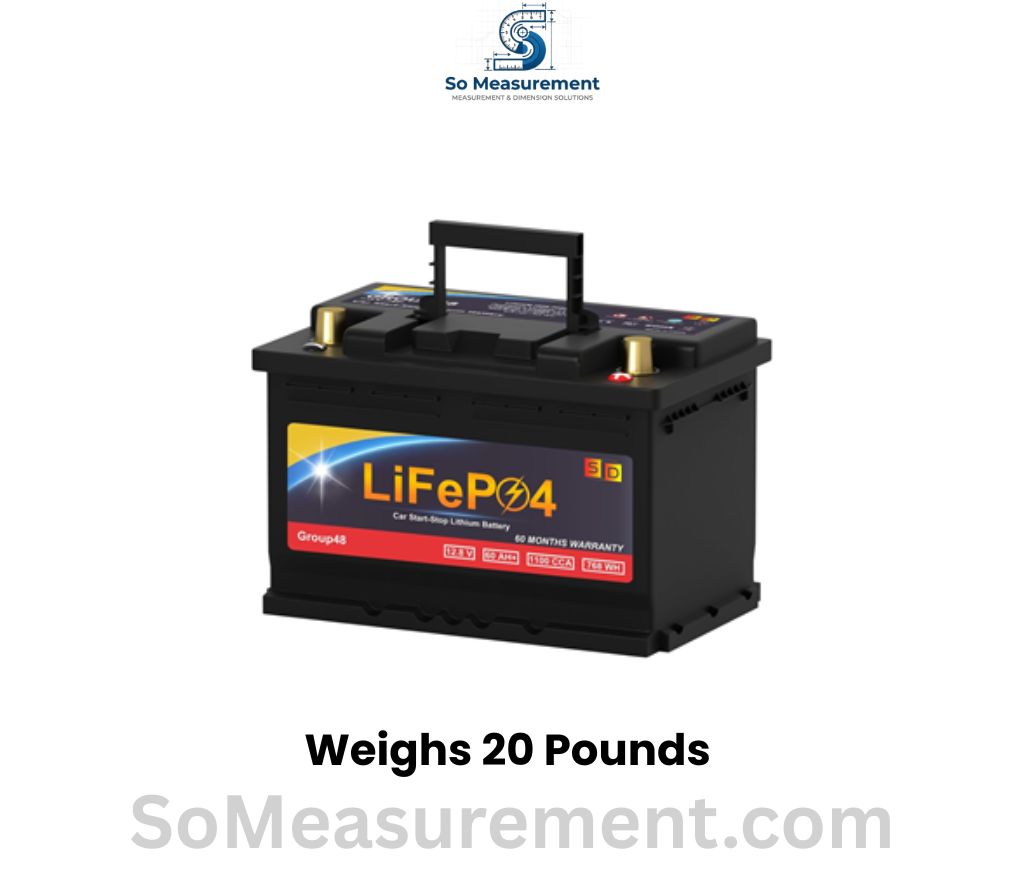
Standard lead-acid batteries in most passenger vehicles weigh between 18 and 25 pounds. Many of the most common group sizes land right at 20 pounds. The weight is entirely from lead plates and the liquid electrolyte solution sealed inside the casing.
Replacing a car battery yourself means lifting that weight out of a cramped engine bay with limited arm position, then lowering a new one in. The weight itself isn’t extreme. The restricted movement is what makes it feel harder. Anyone who’s done this job knows their triceps feel it for a day or two afterward.
A Loaded Contractor’s Toolbox
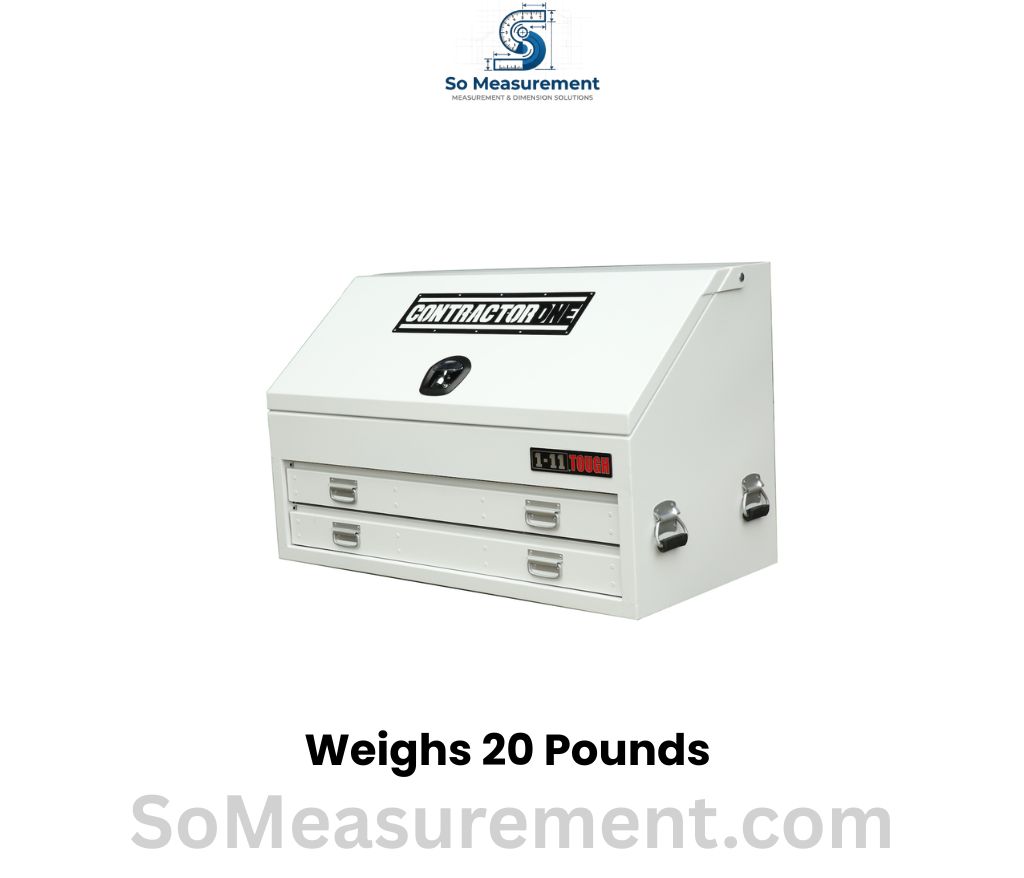
A mid-sized metal or hard plastic toolbox loaded with basic tools — hammer, wrenches, drill, screwdrivers, pliers, tape measure — reaches 20 pounds without much effort. Individual tools are dense, and they pack tightly.
The handle makes short carries manageable. But there’s an unevenness to a toolbox load that a dumbbell doesn’t have. Tools shift slightly, the weight isn’t perfectly centered, and the rigid handle transfers all of it directly into your palm. Carry one up two flights of stairs and your grip endurance gets tested more than your overall strength.
A Foldable Adult Electric Scooter
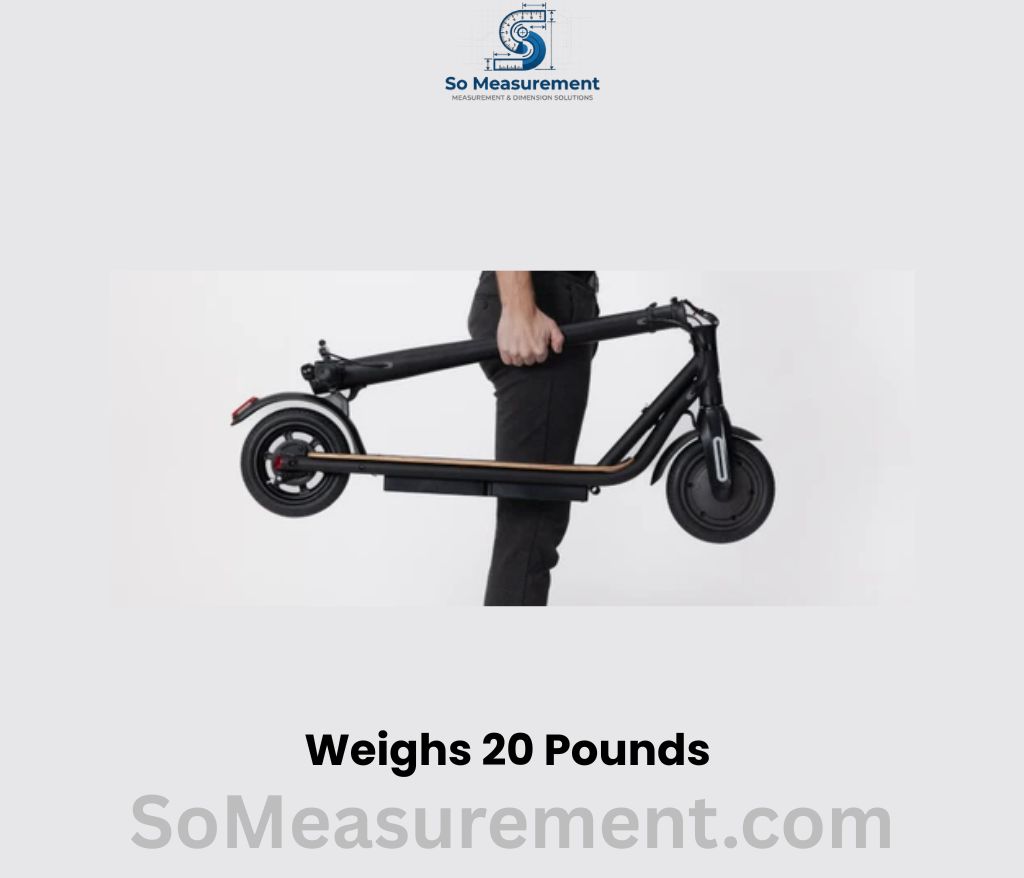
Most standard foldable adult electric scooters — the kind people use for urban commuting — weigh between 18 and 22 pounds. Popular commuter models cluster right around 20 pounds because manufacturers balance portability with enough battery and motor to be useful.
Folded and carried by the handlebar onto a bus or up subway stairs, that 20 pounds swings with every step. The unbalanced, elongated shape makes it feel heavier than a compact object at the same weight. People who commute daily with one develop noticeably stronger grip strength in their dominant hand over time — a side effect nobody mentions in product reviews.
How to Estimate 20 Pounds Without a Scale
Two full gallon water jugs — A gallon of water weighs 8.34 pounds. Two jugs together reach 16.7 pounds. If the object you’re estimating feels clearly heavier than two full water jugs, you’re close to or above 20 pounds.
Loaded grocery bags — Two fully packed reusable grocery bags with canned goods and bottles typically run 10 to 14 pounds combined. Something heavier than both bags stacked is nudging toward the 20-pound range.
The one-arm extended hold — Extend the object in one arm straight out from your body. If you can hold it there comfortably past 20 seconds, it’s likely under 20 pounds. If your shoulder starts shaking before that, you’re probably at or above this weight.
Two Things People Get Wrong About Heavy Objects
Shape changes how heavy something feels, not how much it weighs. A 20-pound medicine ball and a 20-pound bag of dog food are identical on a scale. In your arms, they feel completely different. The ball is compact and sits against your chest. The bag is floppy, wide, and shifts constantly. People routinely overestimate the bag and underestimate the ball.
Carrying position matters more than most people think. The same 20 pounds on your back in a fitted backpack feels lighter than 20 pounds held in one hand. Your body distributes load differently depending on how it’s carried. This is why people who’ve worn a 20-pound ruck are often surprised how heavy a 20-pound dumbbell feels held at arm’s length — it’s the same weight behaving like a different one.
FAQ’s about 20 Pounds
1. What are some common things that weigh 20 pounds at home?
A few simple examples include a large watermelon, a bag of pet food, a microwave, or a loaded toolbox. Most homes already have at least one item close to this weight.
2. Is 20 pounds heavy for beginners to lift?
It depends on your strength and form. For many beginners, 20 pounds is manageable but still challenging if held for long or lifted away from the body.
3. How can I tell if something is around 20 pounds without a scale?
Try comparing it to two full water gallons or a packed grocery bag. If it feels slightly heavier than that, you are likely near 20 pounds.
4. Why do two 20-pound objects feel different?
Shape and balance change everything. A compact weight feels easier, while a floppy or awkward object forces your muscles to stabilize it, making it feel heavier.
Knowing a number is one thing. Knowing what the number actually feels like in your hands, on your back, or in your arms — that’s what makes the difference when it matters.

Lev is passionate about helping readers understand sizes and dimensions of everyday objects. With a focus on clarity and practical examples, Lev shares accurate, trustworthy insights that make measurements relatable, useful, and easy to visualize for everyone.