One centimeter is easy to underestimate. On a ruler, it looks like almost nothing, just the small gap between two numbered marks. Yet once you start looking, you’ll find things measuring right around 1 cm in almost every room of your house, every bag you carry, and every cup of coffee you brew.
To put it in quick perspective: 1 cm equals 10 millimeters, or about 0.39 inches, just under half an inch. It’s a measurement that shows up constantly in everyday manufactured objects, which makes it one of the most useful scales to be able to picture without a ruler nearby.
Quick Reference: 10 Things That Are About 1 cm Big
| Object | Dimension | Notes |
|---|---|---|
| Shirt Button | Diameter | Common medium shirt button |
| Standard Staple | Leg Length | Before stapling |
| Jumbo Drinking Straw | Outer Diameter | Wide-bore style |
| Blueberry | Diameter | Average cultivated berry |
| Pencil Eraser | Top Width | Standard wooden pencil |
| Mini Travel Dice | Side Length | Compact novelty dice |
| Micro-USB Connector | Plug Width | Standard plug face |
| AAA Battery | Diameter | Standardized across brands |
| Paracetamol Caplet | Shortest Width | Narrow cross-section |
| Large Arabica Coffee Bean | Length | Specialty grade bean |
1. Shirt Button (Diameter)
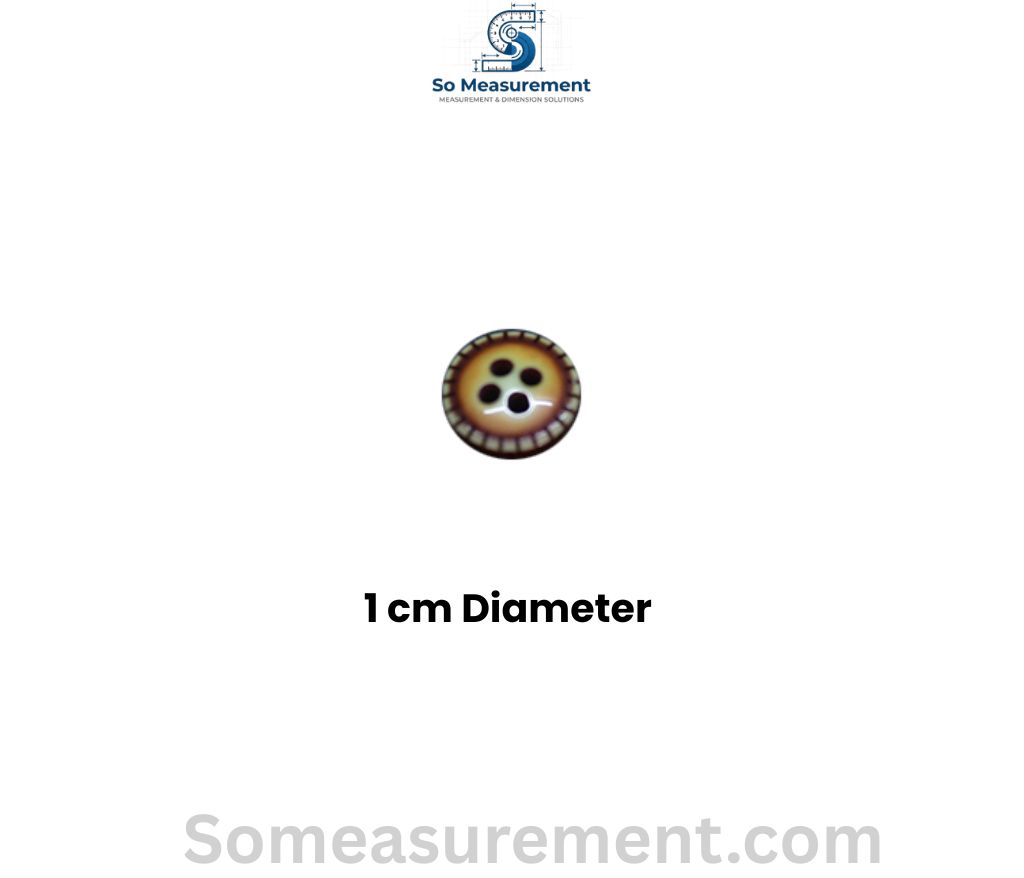
The medium-sized button on a dress shirt or casual shirt sits comfortably at around 1 cm in diameter. These are sometimes listed in the sewing trade using a unit called “lignes,” but a standard shirt button typically falls between 14 and 16 lignes, which translates to roughly 9 to 10 mm at the small end and just over 1 cm for mid-sized versions.
If you pull a button off a collared shirt right now, the ones used on the front placket are almost always the clearest 1 cm reference you’ll find in your wardrobe. Cuff buttons and collar buttons tend to run slightly smaller, so the front-facing ones are the better reference here.
Read also: How Big Is 50 cm? Size Guide With Real Objects You Already Own
2. Standard Staple (Leg Length)
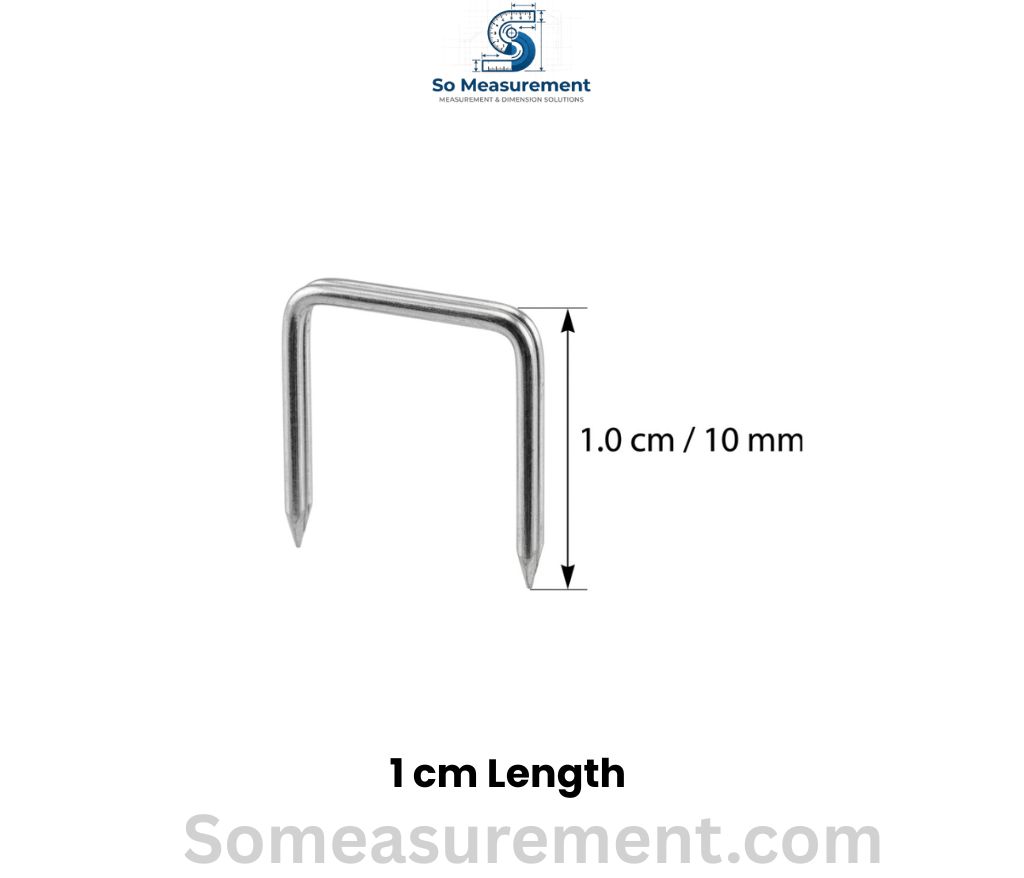
A fresh, unused staple sitting flat in a strip has legs that measure approximately 6 to 7 mm, but once you look at the leg length on a standard No. 10 staple (common in much of Europe and Asia) or a standard 26/6 staple, the leg extends to about 6 mm before the staple is driven. The total unfolded wire length from one end to the other, including the bridge, runs close to 1 cm.
What makes this a useful reference is how standardized staples are across manufacturers. The dimensions don’t vary much between brands, so it’s one of those rare small objects where the number stays reliable rather than ranging wildly by model.
3. Jumbo Drinking Straw (Outer Diameter)
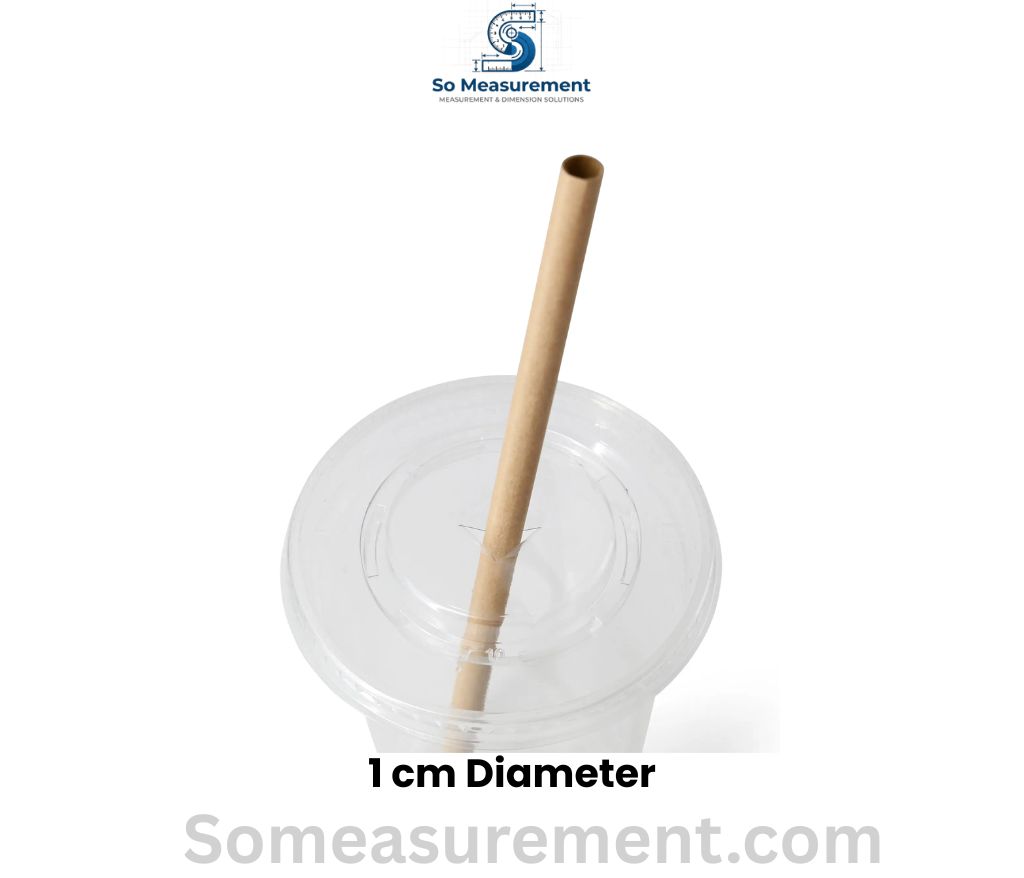
Regular drinking straws have an outer diameter of about 6 mm. The wider jumbo straws, the kind used for smoothies, bubble tea, and thick milkshakes, push up to around 10 to 12 mm in outer diameter, putting them right at the 1 cm mark.
The practical reason these straws grew to this size is simple: standard straws can’t pull tapioca pearls through. The wider bore needed for that purpose lands the outer diameter squarely around 1 cm, which makes a bubble tea straw one of the more satisfying physical references for this measurement if one happens to be nearby.
4. Blueberry (Diameter)
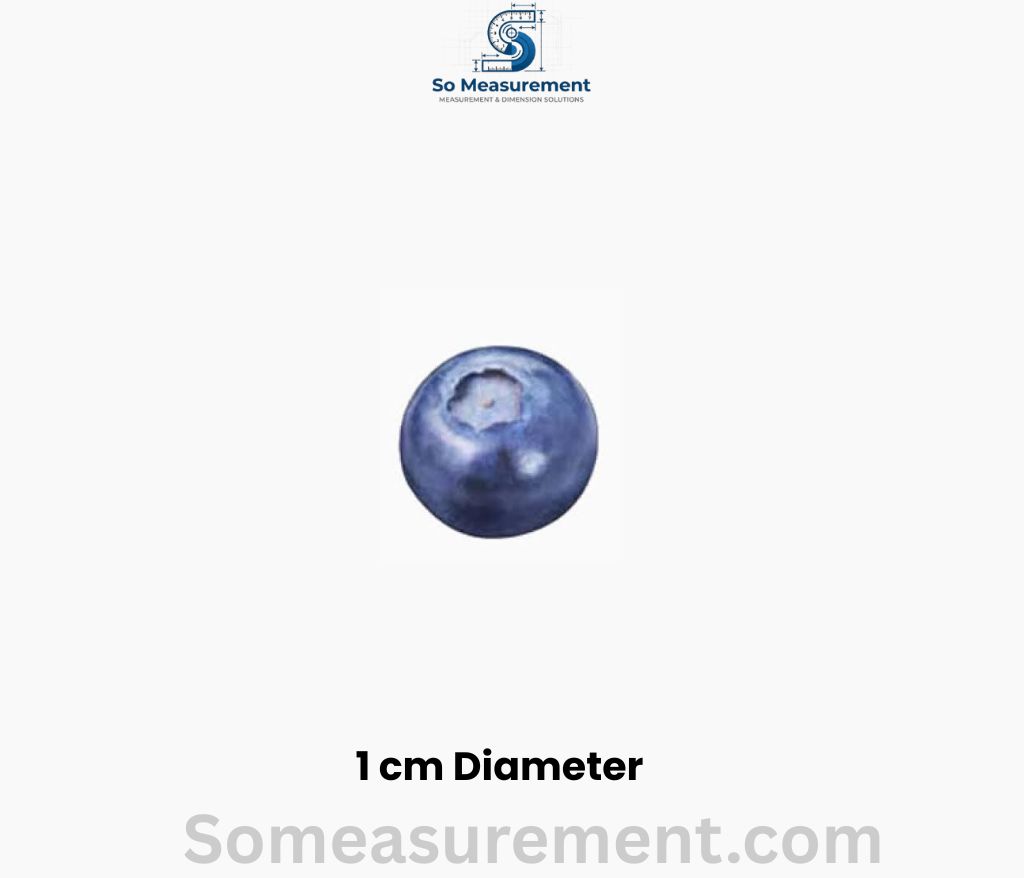
A cultivated blueberry from a grocery store, the kind grown on highbush varieties, typically measures between 8 mm and 16 mm in diameter depending on growing conditions and variety. The average falls around 10 to 12 mm, making a standard-sized blueberry a very close match to 1 cm.
Wild blueberries run considerably smaller, usually around 5 to 7 mm, so this comparison works best with farmed berries rather than the wild variety. When you pick out a berry that feels average in size from a punnet, you’re almost certainly holding something within a millimeter or two of 1 cm.
Read more: How Big Is 2 cm? The Size You Can Actually Picture
5. Pencil Eraser (Top Width)
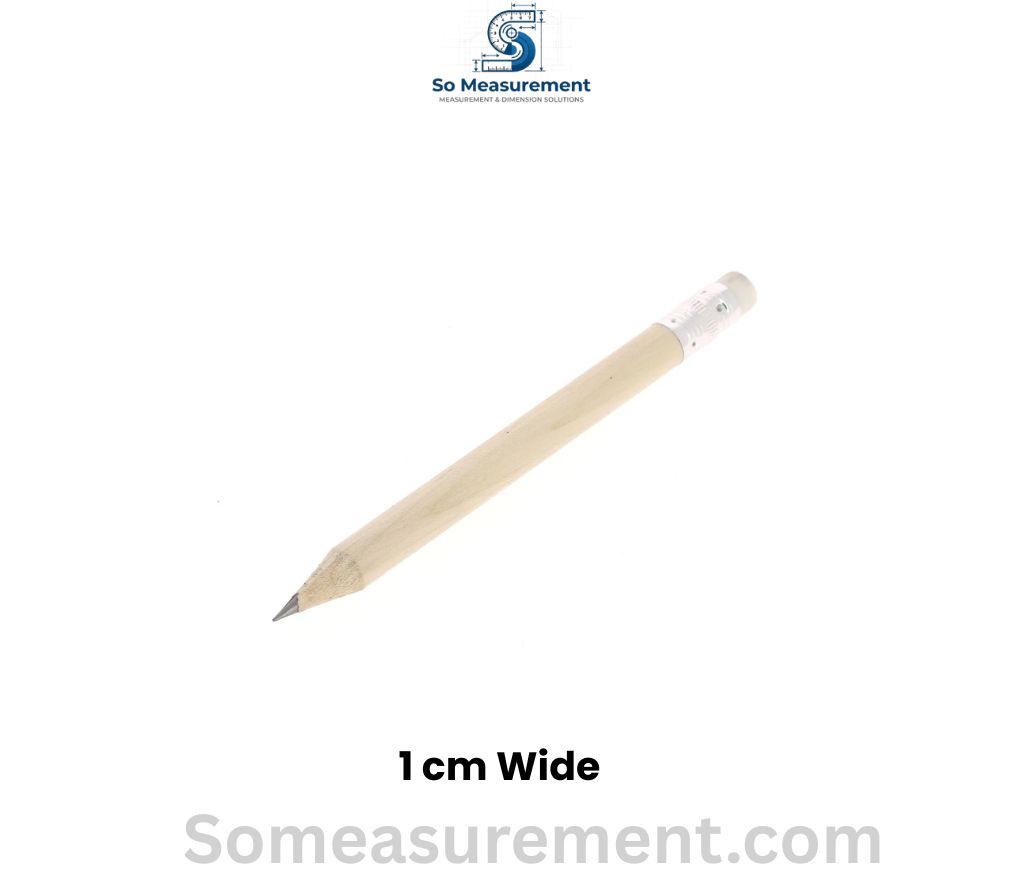
The pink or white eraser bonded to the top of a standard wooden pencil is held in place by a metal ferrule. The eraser itself, measured across its flat top face, sits at about 6 to 7 mm wide, but the full ferrule assembly including the metal band reaches roughly 1 cm across.
This is one of those objects where the exact dimension depends on whether you’re measuring the eraser alone or the ferrule that grips it. Either way, the top of a standard pencil gives you a tactile 1 cm reference that most people have handled thousands of times without thinking about the size.
Read more: How Big Is 10 cm? Here’s What It Actually Looks Like in Real Life
6. Mini Travel Dice (Side Length)
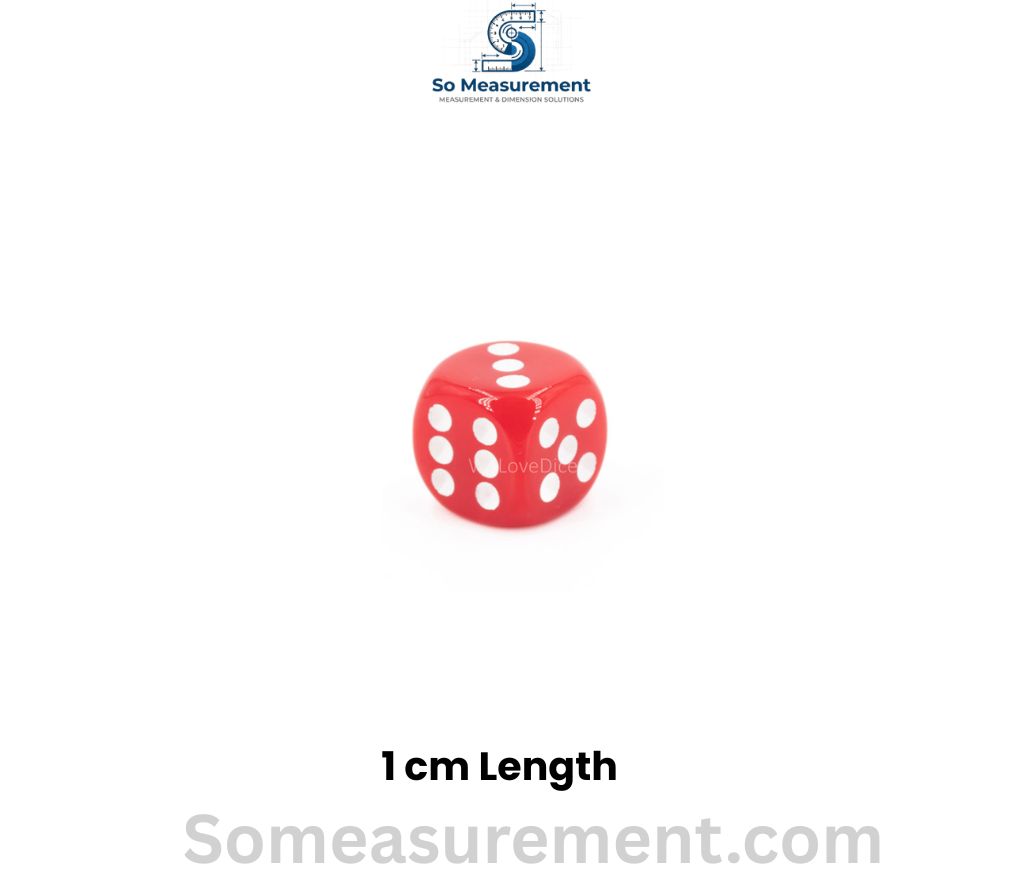
Standard full-sized dice have a side length of about 16 mm. Mini or travel dice, the compact versions sold in small games sets and portable game kits, are commonly produced at 8 mm or 10 mm per side. The 10 mm version puts each face at almost exactly 1 cm across.
These small dice are manufactured to consistent dimensions because games depend on them rolling and stacking predictably. That consistency makes them a reliable physical reference. If you find a small die in a travel game or novelty pack, measure one side and it’s likely sitting right at or just under 1 cm.
7. Micro-USB Connector (Plug Width)
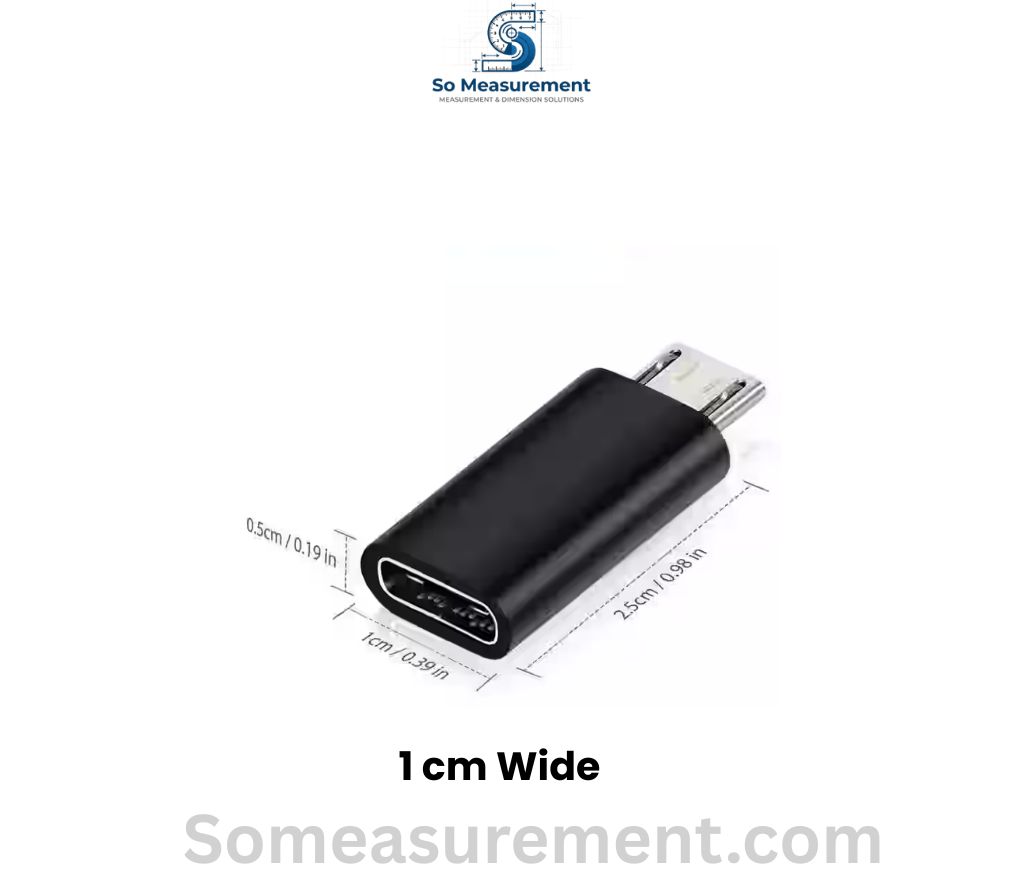
The Micro-USB connector, the type that was dominant on Android phones and accessories through most of the 2010s, has a plug face width of approximately 6.85 mm, and the outer housing including the metal shell reaches close to 10 mm across. The full connector width is just at the boundary of 1 cm.
While USB-C has largely replaced Micro-USB in consumer electronics, the connector still appears on a wide range of accessories, chargers, and older devices. The small rectangular plug face is a precise, manufactured object with consistent dimensions across all compliant connectors, which makes it a trustworthy reference even if the plug itself sits a few tenths of a millimeter under the 1 cm mark.
8. AAA Battery (Diameter)
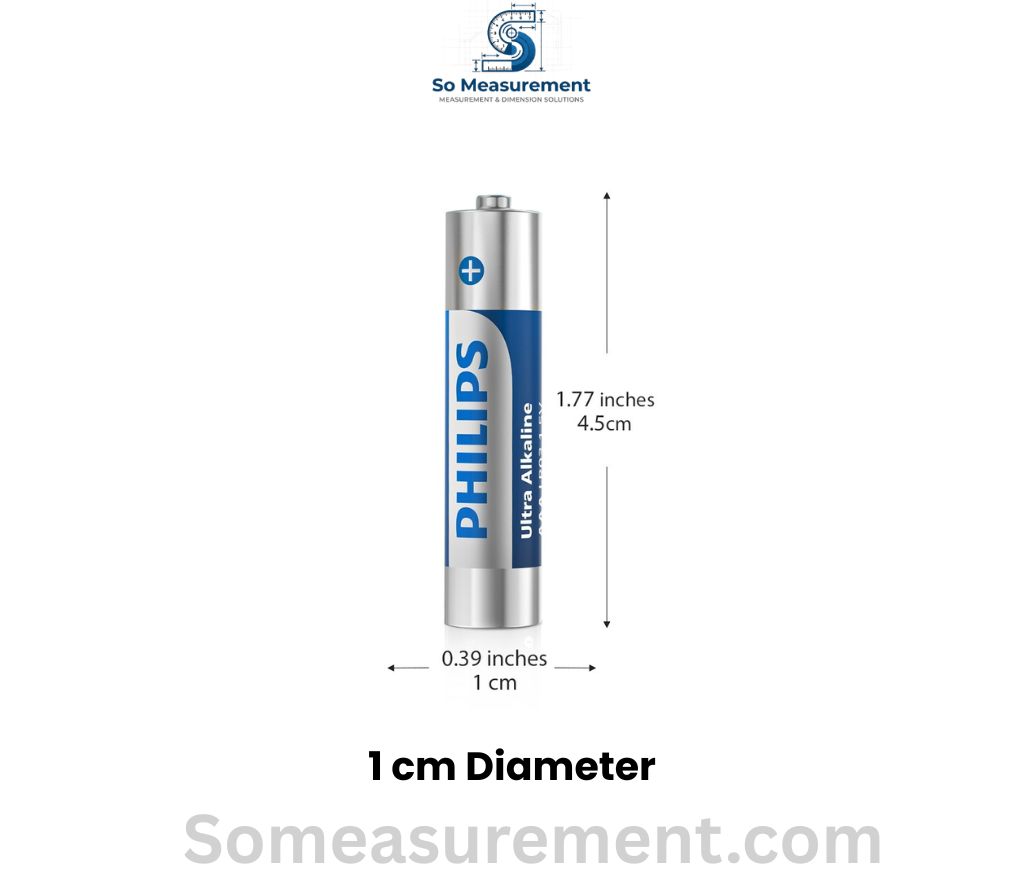
AAA batteries are standardized internationally. Their diameter is specified at 10.5 mm, which is just barely over 1 cm. This isn’t approximate in the casual sense; it’s a defined dimension held to tight tolerances across every compliant manufacturer.
The consistency is what makes the AAA battery particularly useful as a measurement reference. Whether the battery in front of you was made in Japan, Germany, or the United States, its diameter will be the same. Rolling one across a table and looking at its cross-section gives you a near-perfect 1 cm circle.
9. Paracetamol Caplet (Shortest Width)
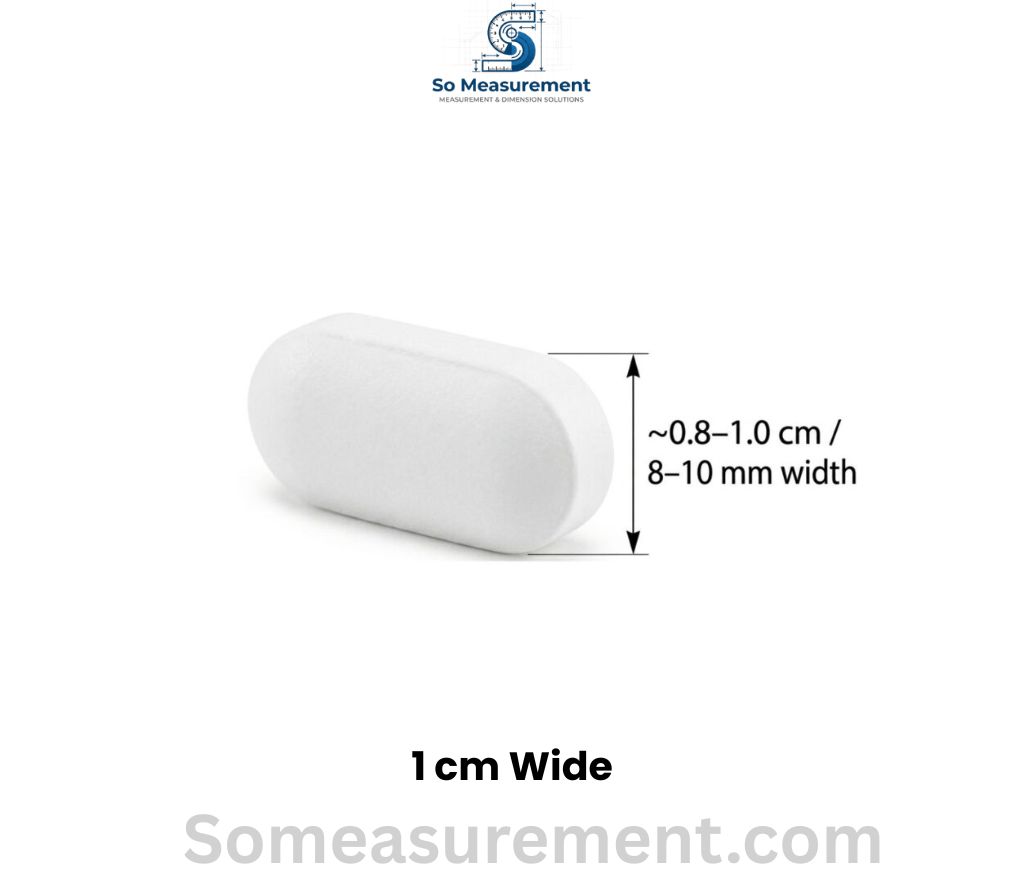
A standard paracetamol caplet (the oblong tablet form, as opposed to a round tablet) typically measures around 17 to 19 mm in length, but its shortest dimension, measured across the narrow width of the caplet, sits at roughly 8 to 10 mm depending on the manufacturer and dosage.
The 500 mg caplets common in the UK and many other markets tend to be at the lower end of that range. This comparison works best across the short axis rather than the length, which is worth noting because the caplet’s length is nearly double 1 cm. Pinching the narrow sides of a standard caplet between two fingers gives a reasonable approximation of the 1 cm scale.
10. Large Arabica Coffee Bean (Length)
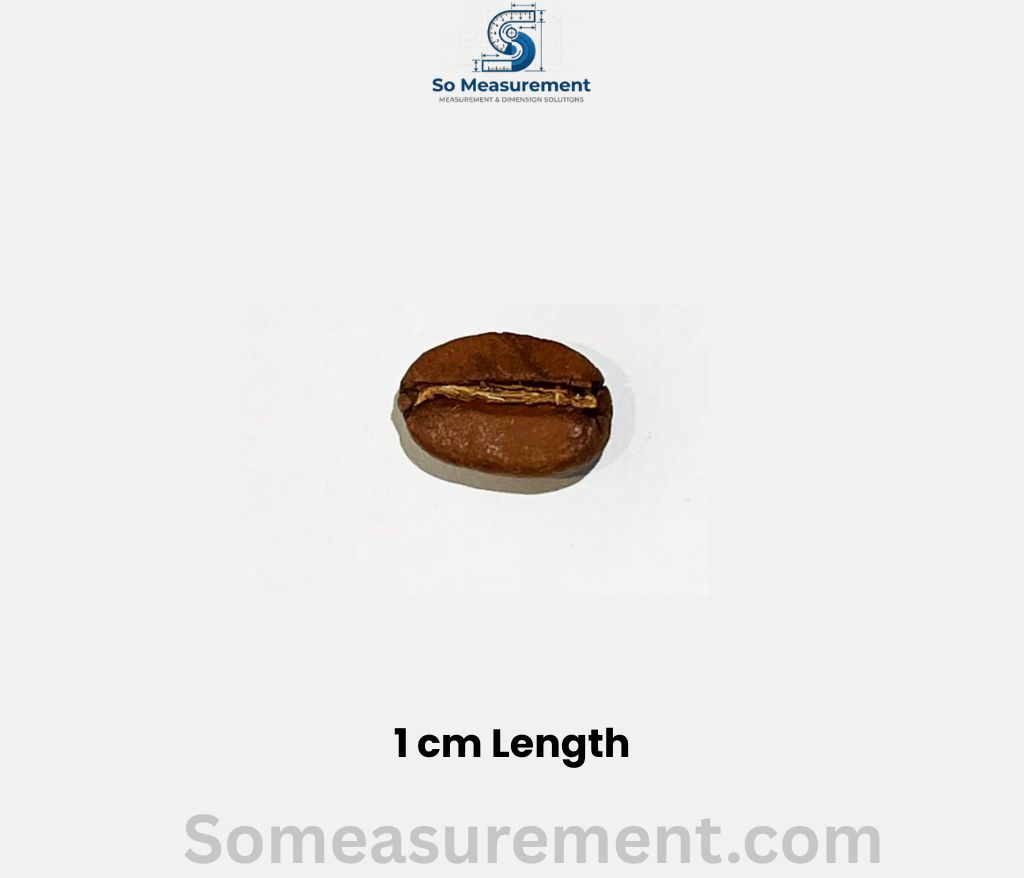
Coffee beans vary considerably in size depending on origin, altitude, processing method, and grade. Specialty-grade large Arabica beans, including well-known varieties from Ethiopia or Colombia, can reach lengths of approximately 10 to 12 mm, placing the biggest beans right at 1 cm or just slightly over.
Commodity-grade beans and Robusta varieties tend to run smaller and rounder. If you’re working with specialty whole-bean coffee, picking out one of the larger beans from the bag and measuring its longest dimension will often land you at or close to 1 cm. It won’t be as precise as a battery or a staple, but it gives the measurement a sensory and aromatic context that a metal ferrule simply can’t.
Estimating 1 cm Without a Ruler
The AAA battery is probably the most precise everyday object on this list for a quick check, since its 10.5 mm diameter is standardized and verifiable. The shirt button and blueberry are reliable for rough visual confirmation. If you need something you can almost certainly find in a pocket or bag right now, the Micro-USB connector or a staple from a standard dispenser will get you close.
For anything that actually matters, such as fitting a component, cutting material, or sizing an object for a specific purpose, use a ruler or calipers. These comparisons are for building a mental picture of 1 cm, not for replacing measurement tools when accuracy counts.
Related you like:
How Big Is 4 cm? Size, Feel, and 11 Real Objects You Already Own
How Big Is 5 cm? 11 Everyday Things That Are About 5 Cm Long

Lev is passionate about helping readers understand sizes and dimensions of everyday objects. With a focus on clarity and practical examples, Lev shares accurate, trustworthy insights that make measurements relatable, useful, and easy to visualize for everyone.