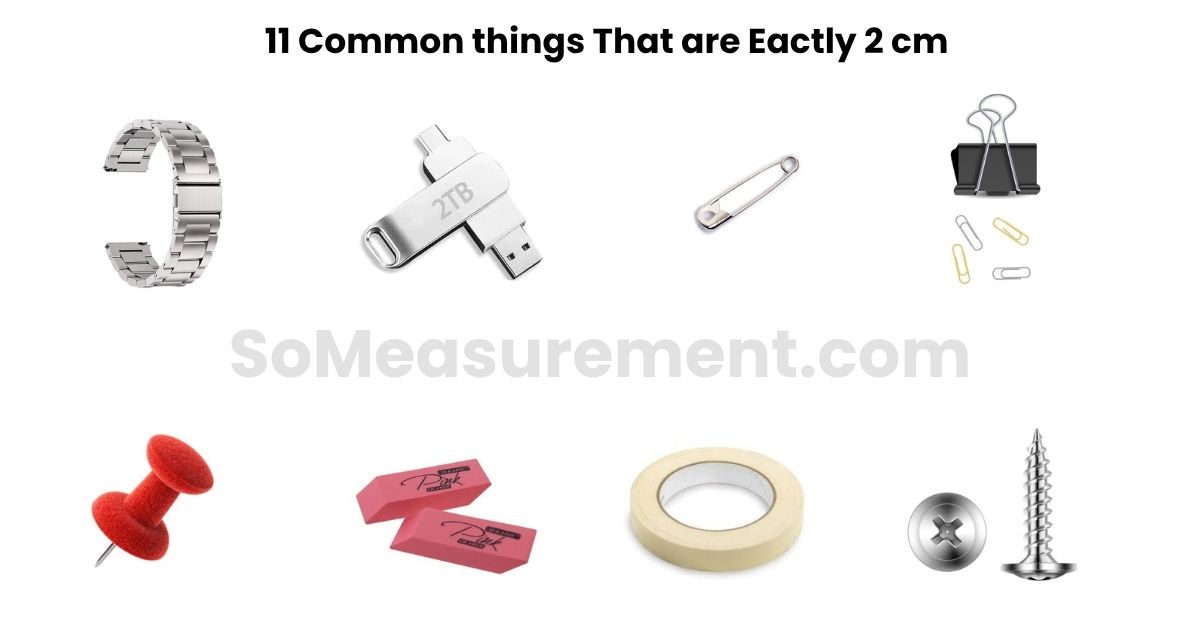
Two centimeters is a small but surprisingly common measurement. It equals exactly 20 millimeters, or roughly 0.79 inches, just under the width of your thumbnail on most adult hands. At this scale, the objects around you that hit this mark are often ones you pick up daily without giving their size a second thought.
This measurement sits in a range where things feel distinctly small but still easy to handle. The 11 examples below each approach 2 cm in a specific dimension, and understanding which dimension matters is part of what makes each comparison genuinely useful.
Quick Reference: 11 Things That Are About 2 cm Big
| Object | Relevant Dimension | Approximate Size |
|---|---|---|
| Watch Strap | Width | 18–22 mm |
| Large Vitamin Capsule | Length | 20–23 mm |
| Small Binder Clip | Width (jaw opening) | ~19–21 mm |
| MiniSD Card (Shorter Side) | Width | 21.5 mm |
| USB-A Flash Drive Metal Tip | Width | ~20 mm |
| Drywall Screw (¾ inch) | Length | ~19 mm |
| Push-Pin Body | Diameter | ~18–20 mm |
| Masking Tape Width (Slim Roll) | Width | ~18–24 mm |
| Size 00 Safety Pin (Closed) | Length | ~22 mm |
| Band-Aid Gauze Pad Width | Width | ~19–22 mm |
| Pink School Eraser Thickness | Thickness | ~18–22 mm |
1. Watch Strap
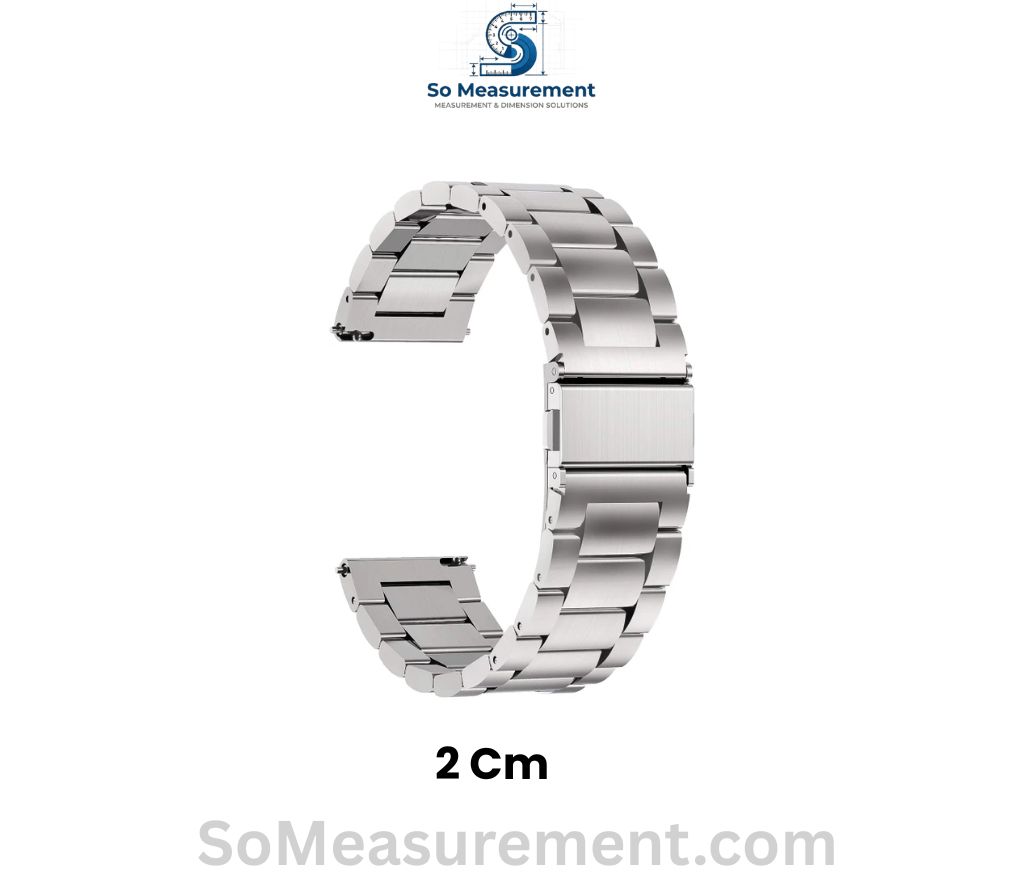
The width of a watch strap is one of the most tactile references for 2 cm you can find on your wrist. Standard strap widths range from 18 mm to 22 mm depending on the watch case size, with 20 mm being among the most common for everyday watches.
This measurement refers specifically to the width of the strap where it meets the watch case, not the total length of the band. If you wear a watch, glancing at that narrow band gives you an almost immediate, wearable feel for what 2 cm actually looks like in real life.
2. Large Vitamin Capsule
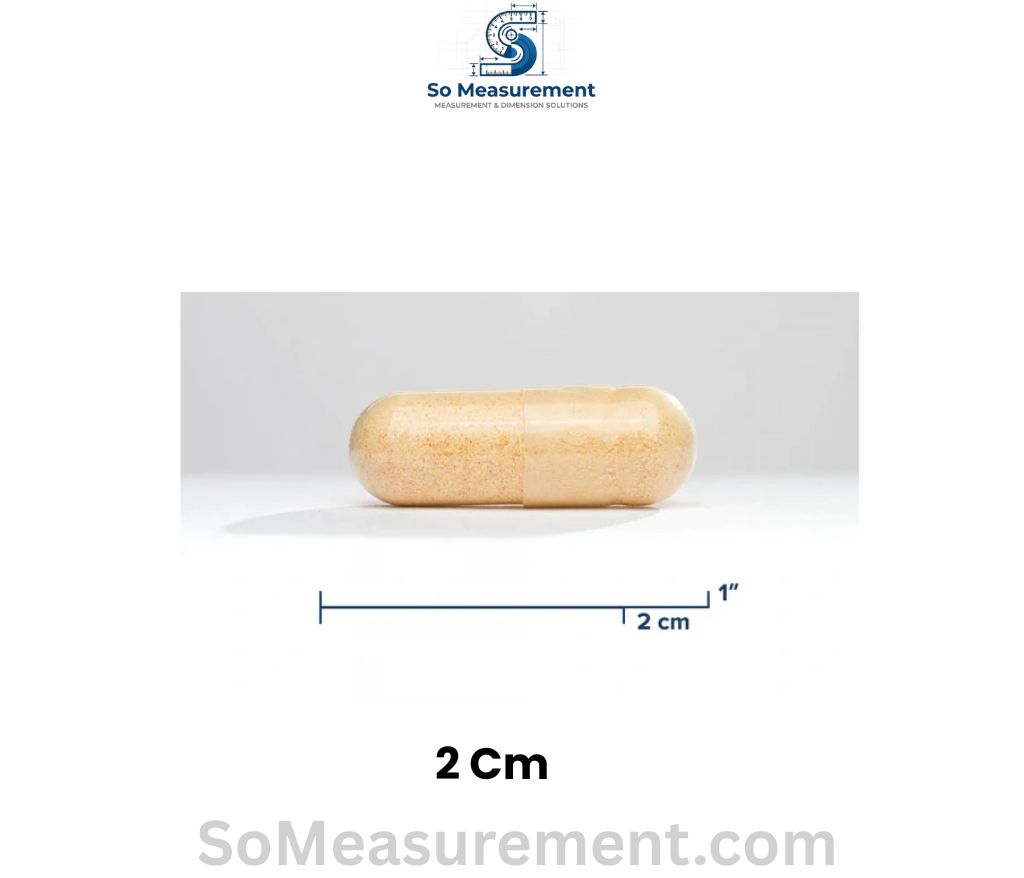
A large vitamin capsule, the kind often used for fish oil, vitamin D supplements, or multivitamins in capsule form, typically measures between 20 mm and 23 mm in length. This corresponds to a size 00 or size 000 capsule in pharmaceutical sizing, which are the largest standard capsule sizes used for consumer supplements.
The oblong shape makes the length easy to judge visually. Hold one between two fingers and you have a reliable, palm-friendly reference for 2 cm that most people have sitting in their medicine cabinet.
3. Small Binder Clip
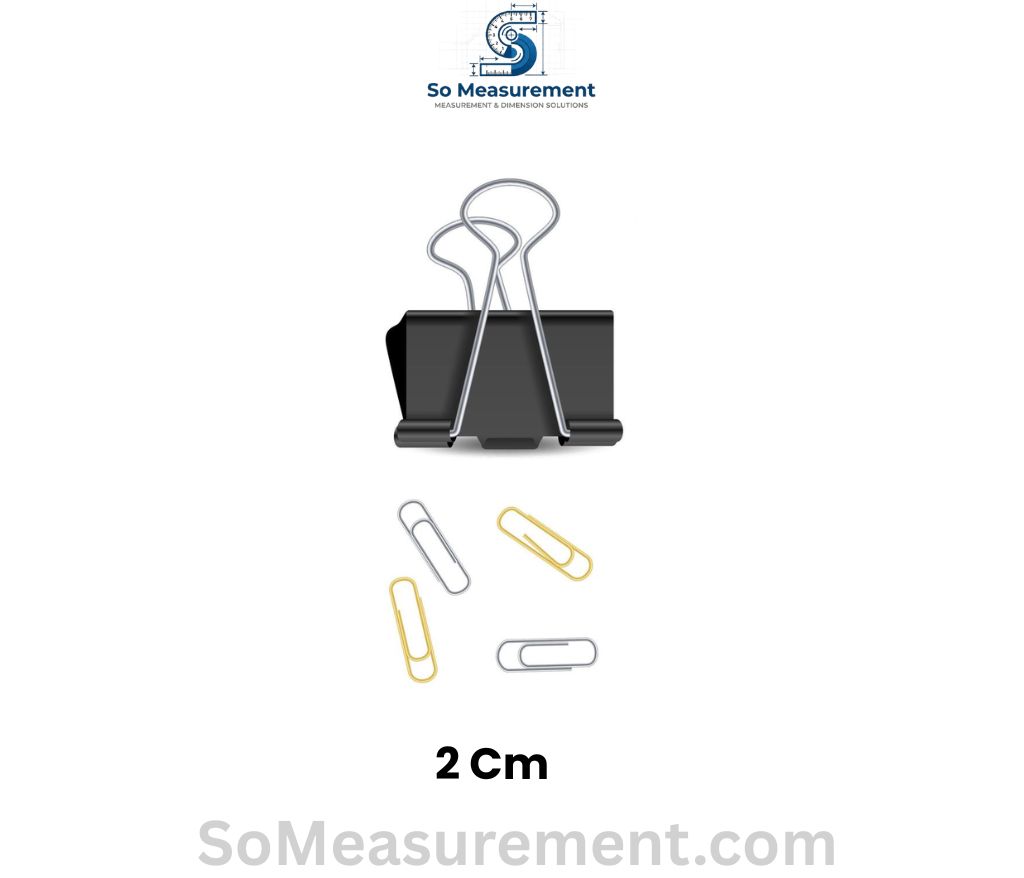
Small binder clips, the kind used to hold a thin stack of papers together, have a jaw opening and body width that sits right around 19 mm to 21 mm. The relevant measurement here is the width across the clip’s opening, not the length of the wire handles.
These clips are standardized enough in office supply manufacturing that their dimensions stay fairly consistent across brands. The compact metal body is a good physical reference because you can feel its width clearly when you pinch it between your fingers.
4. MiniSD Card (Shorter Side)
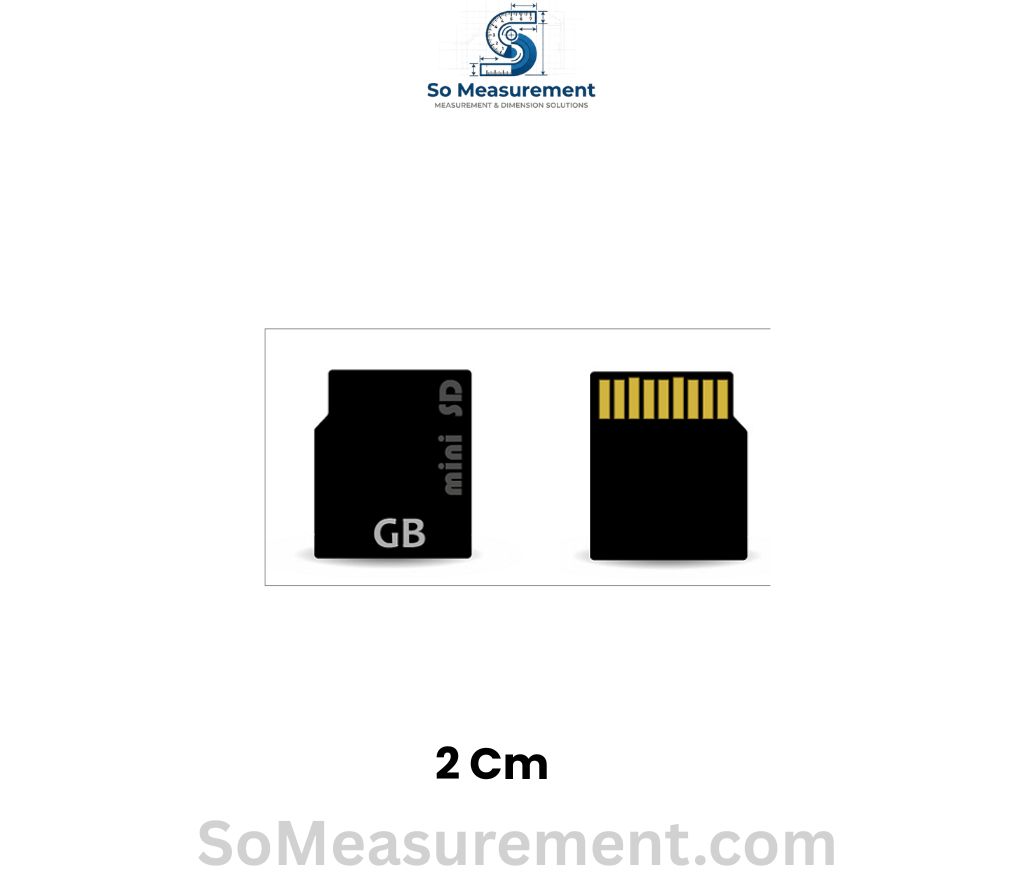
A MiniSD card measures 21.5 mm on its shorter side, making that width one of the more precisely documented references near 2 cm. MiniSD was a memory card format used primarily in mobile phones during the mid-2000s before microSD became the dominant standard.
While MiniSD cards are no longer in common circulation, their dimensions were formally specified, which makes this a cleanly accurate comparison rather than an estimate. If you happen to have one in an old electronics drawer, the short edge is a near-perfect ruler substitute for this measurement.
5. USB-A Flash Drive Metal Tip
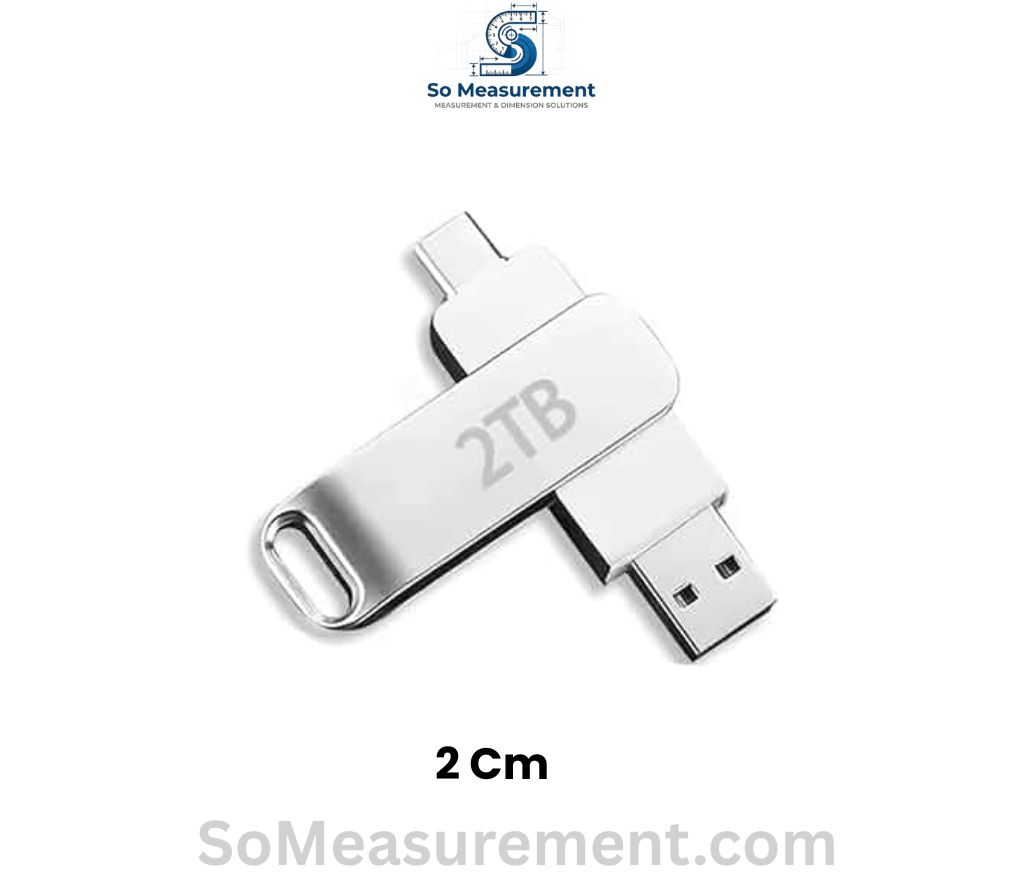
The metal connector tip on a standard USB-A flash drive, the rectangular plug that inserts into a port, measures approximately 12 mm in length but sits close to 20 mm wide including the outer casing at the plug end. More practically, the overall width of the metal tip itself is often right around 2 cm.
This part of the drive is highly standardized because USB-A port dimensions are defined by the USB specification. The tip is something most people handle regularly and can easily use as a quick visual or physical gauge.
Read more: How Big Is 20 cm? See It, Feel It, Use It Without a Ruler
6. Drywall Screw (¾ Inch)
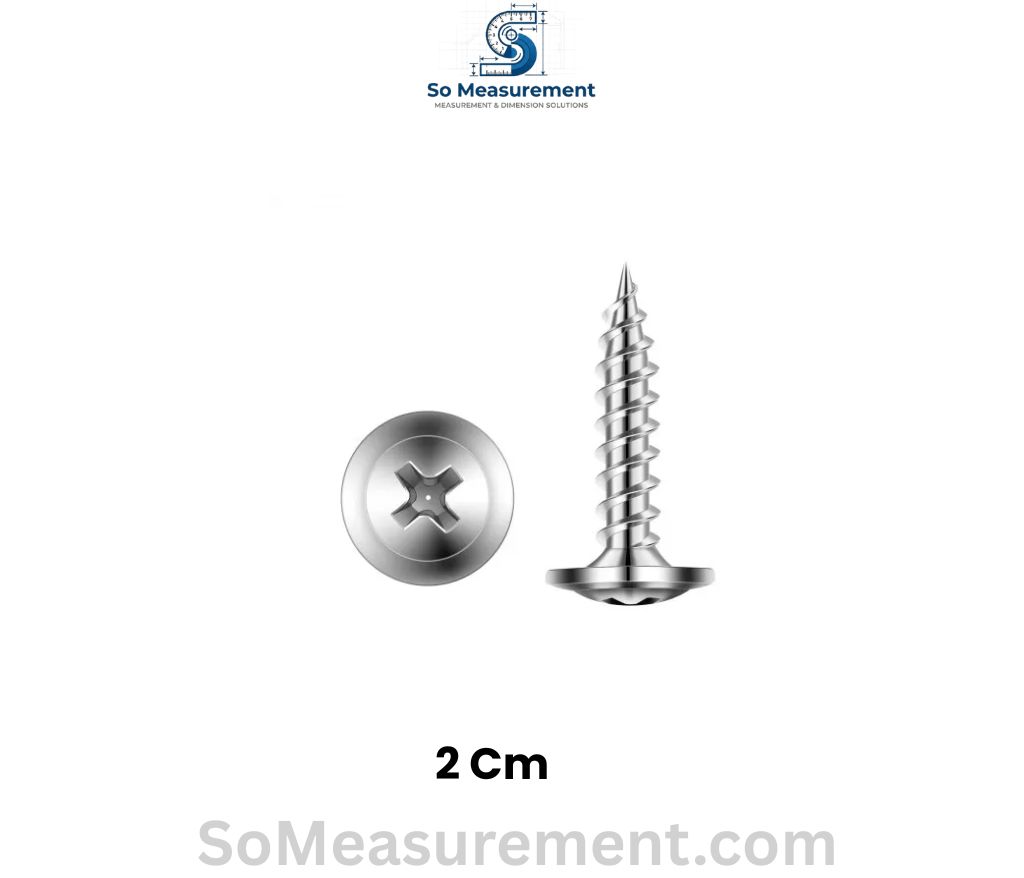
A ¾-inch drywall screw converts to approximately 19 mm in length, landing just a hair under 2 cm. These screws are used in light construction, particularly for attaching drywall to metal studs or for thin material fastening where a longer screw would punch through.
The bugle-head design and coarse threading make drywall screws visually distinctive. Holding one lengthwise between your fingertips gives a clear sense of this small but precise measurement, and their consistent manufacturing tolerances mean the length is reliable across standard hardware brands.
Read also: How Big Is 1 cm? Everyday Things that are 1 cm Long or Big
7. Push-Pin Body
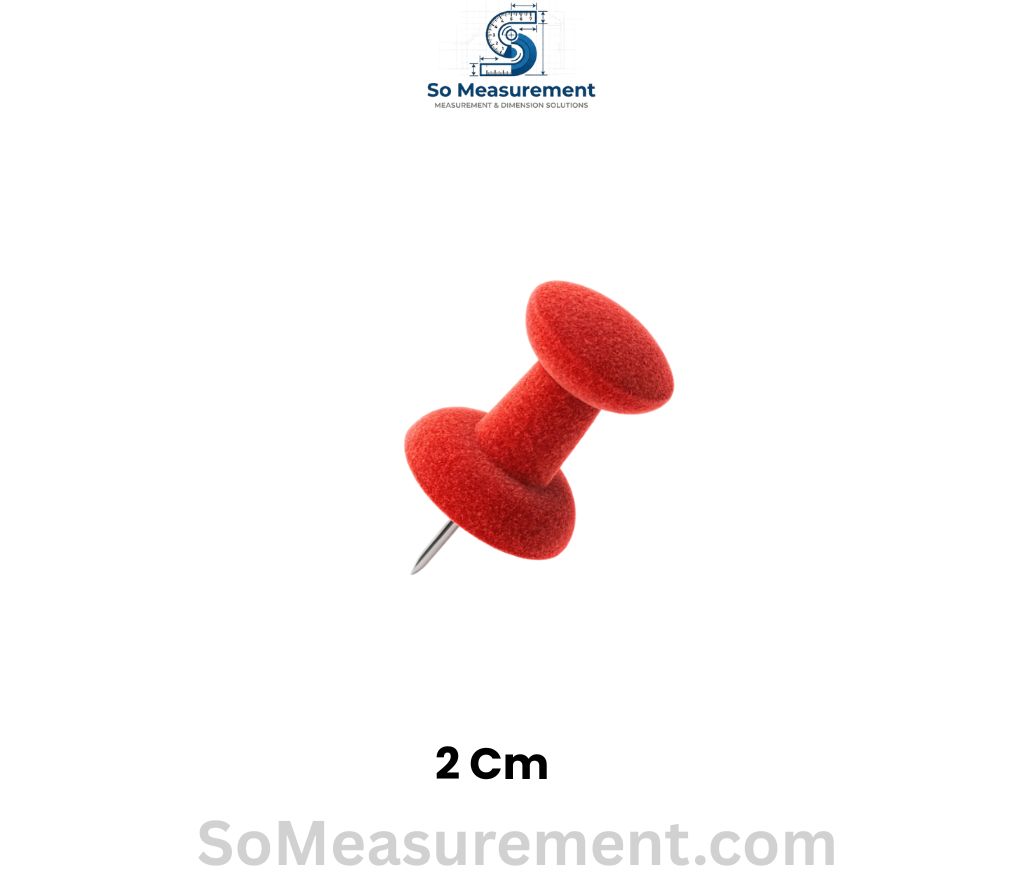
The circular plastic or metal body of a standard push-pin has a diameter that typically falls between 18 mm and 20 mm, right at the 2 cm mark. This refers to the flat disc portion you press with your thumb, not the metal point beneath it.
Push-pins are a useful reference because the round shape makes the diameter intuitive to visualize. Most people have seen or used these on cork boards or bulletin boards, and the familiar disc shape at roughly 2 cm across is easy to picture even without one in hand.
8. Masking Tape Width (Slim Roll)
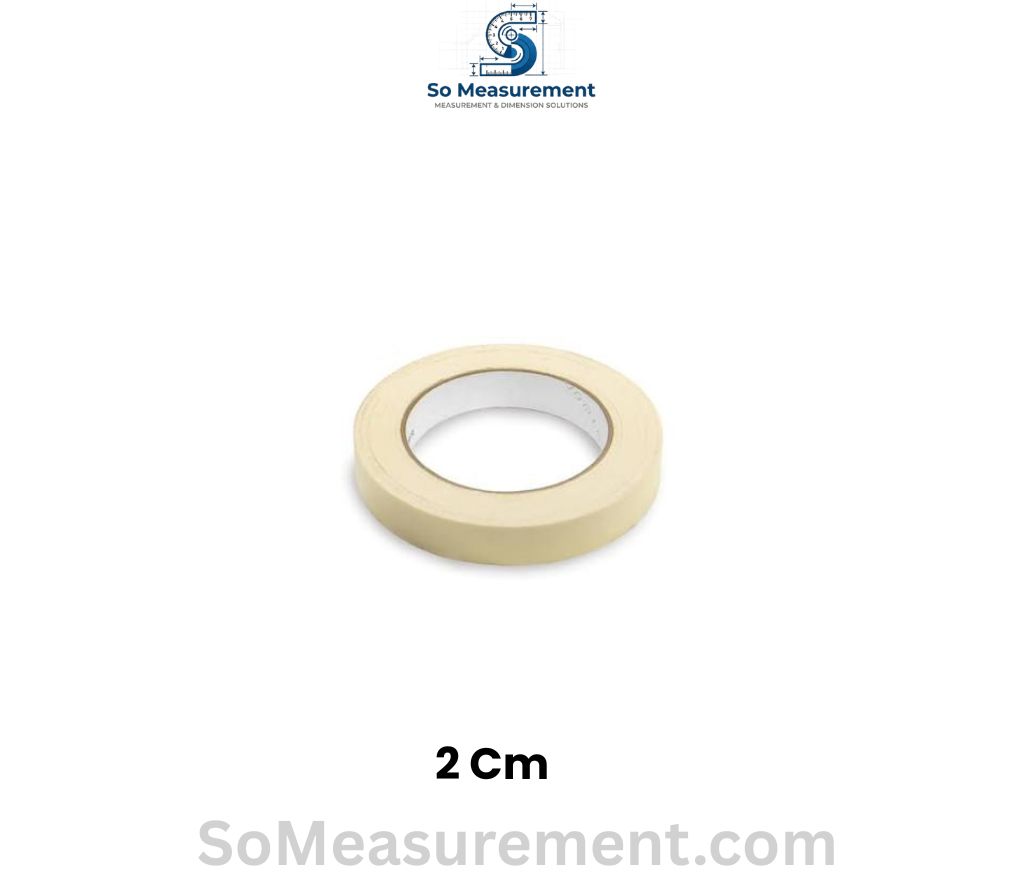
Slim-width masking tape, the kind commonly used for detail painting, craft projects, or light labeling, often comes in rolls that are 18 mm or 24 mm wide. A standard 18 mm roll sits just under 2 cm, while 24 mm is just over, putting the 2 cm mark right in the middle of this common product range.
The rolled tape is easy to measure visually because the width is uniform and visible straight-on. If you have a roll of painter’s tape in a narrow size at home, checking the label for 18 mm or 24 mm gives you a practical bracket around what 2 cm looks like as a strip width.
Read also: How Big Is 50 cm? Size Guide With Real Objects You Already Own
9. Size 00 Safety Pin (Closed)
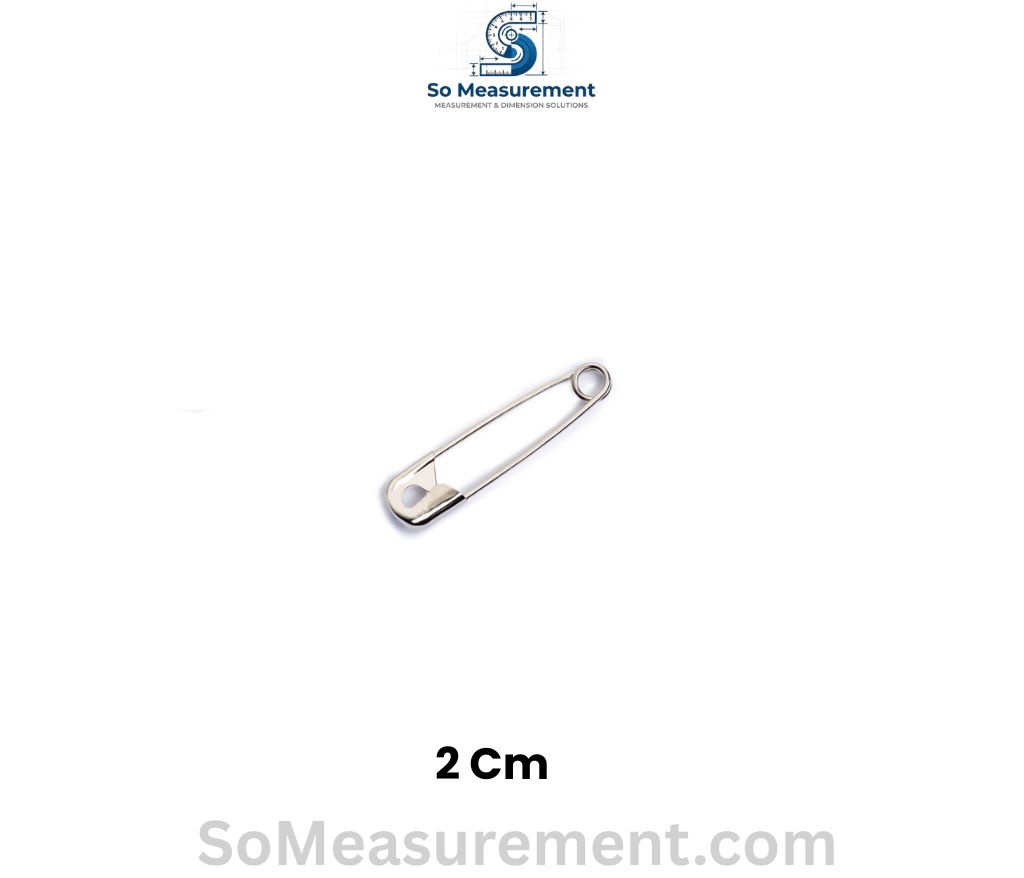
A size 00 safety pin, when closed, measures approximately 22 mm in total length. Size 00 is among the larger standard safety pin sizes and is commonly used in garment alterations, fabric work, and general household use.
Safety pin sizes are not always printed on the packaging, but size 00 pins are widely available and their length is consistent enough to serve as a reasonable approximation for 2 cm. The closed pin gives you a straight, rigid reference that is easy to lay flat and compare against a ruler to confirm the measurement yourself.
10. Band-Aid Gauze Pad Width
The absorbent gauze pad in the center of a standard adhesive bandage, the type sold for everyday cuts and scrapes, typically measures between 19 mm and 22 mm wide depending on the product line and size variant. This refers specifically to the white gauze square, not the total length of the strip.
This is a practical reference point because the gauze pad is sized to cover a typical small wound, and that coverage area happens to land right around 2 cm in width. Standard bandages are manufactured to consistent dimensions, making this one of the more reliable everyday comparisons at this scale.
11. Pink School Eraser Thickness
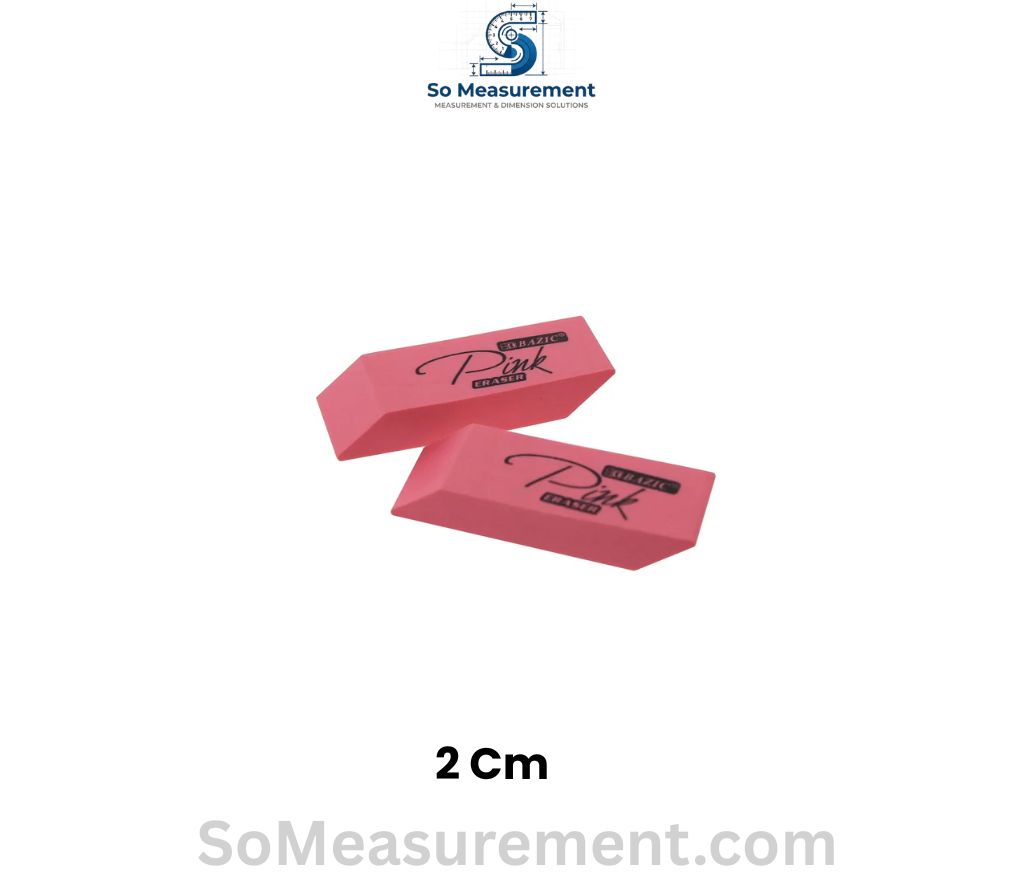
The thickness of a standard rectangular pink school eraser, the classic soft vinyl or latex block eraser used in classrooms, is typically between 18 mm and 22 mm depending on the brand and product size. This refers to the shortest dimension of the eraser block, the edge you would measure if standing it upright on its side.
The eraser’s width and length dimensions are usually larger, but that narrow thickness edge gives a clean, consistent feel for 2 cm. Because these erasers are produced in bulk to fairly uniform dimensions, this comparison holds up well across the most common brands available in school supply stores.
Putting 2 cm in Perspective
Two centimeters is small enough to sit comfortably on a fingertip but large enough to be a meaningful, functional measurement. It is the width of a watch band, the length of a supplement capsule, and the thickness of an eraser, all at once.
When precision matters, a ruler or digital calipers will always give you the exact number. For everyday estimation, any of the objects above that you already own can serve as a quick, reliable check for whether something is close to 2 cm in size.
Read more:
14 Daily Use Things That Are 2 Inches Long
How Big Is 3 cm? Here’s What It Actually Looks Like

Lev is passionate about helping readers understand sizes and dimensions of everyday objects. With a focus on clarity and practical examples, Lev shares accurate, trustworthy insights that make measurements relatable, useful, and easy to visualize for everyone.