5 cm is a small but surprisingly practical measurement. It equals exactly 1.97 inches, just a hair under 2 inches, and sits comfortably in the “small object” category that most people handle every day without thinking about the size. Knowing what 5 cm looks like in real life makes it easy to estimate, measure, or describe something without pulling out a ruler.
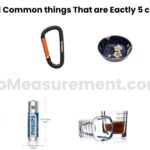
The eleven examples below are all close to 5 cm in at least one dimension, chosen because they are genuinely common and useful for picturing this size.
Quick Reference: 11 Things That Are 5 cm Big
| Object | Relevant Dimension | Approximate Size |
|---|---|---|
| AA Battery | Length | 50.5 mm (about 5 cm) |
| USB Flash Drive Body | Length | ~45 to 55 mm |
| Standard Matchbox | Length | ~50 mm |
| Hot Wheels/Matchbox Toy Car | Width | ~40 to 50 mm |
| Mini Pocket Stapler | Length | ~50 mm |
| Two Adult Fingers Side by Side | Combined Width | ~40 to 50 mm |
| Espresso Shot Glass | Height | ~50 to 55 mm |
| Large Jumbo Paperclip | Length | ~50 mm |
| Small Carabiner Keychain Clip | Length | ~45 to 55 mm |
| Small Ceramic Sauce Dish | Diameter | ~50 mm |
| Standard Lip Balm Tube | Height | ~45 to 55 mm |
1. AA Battery
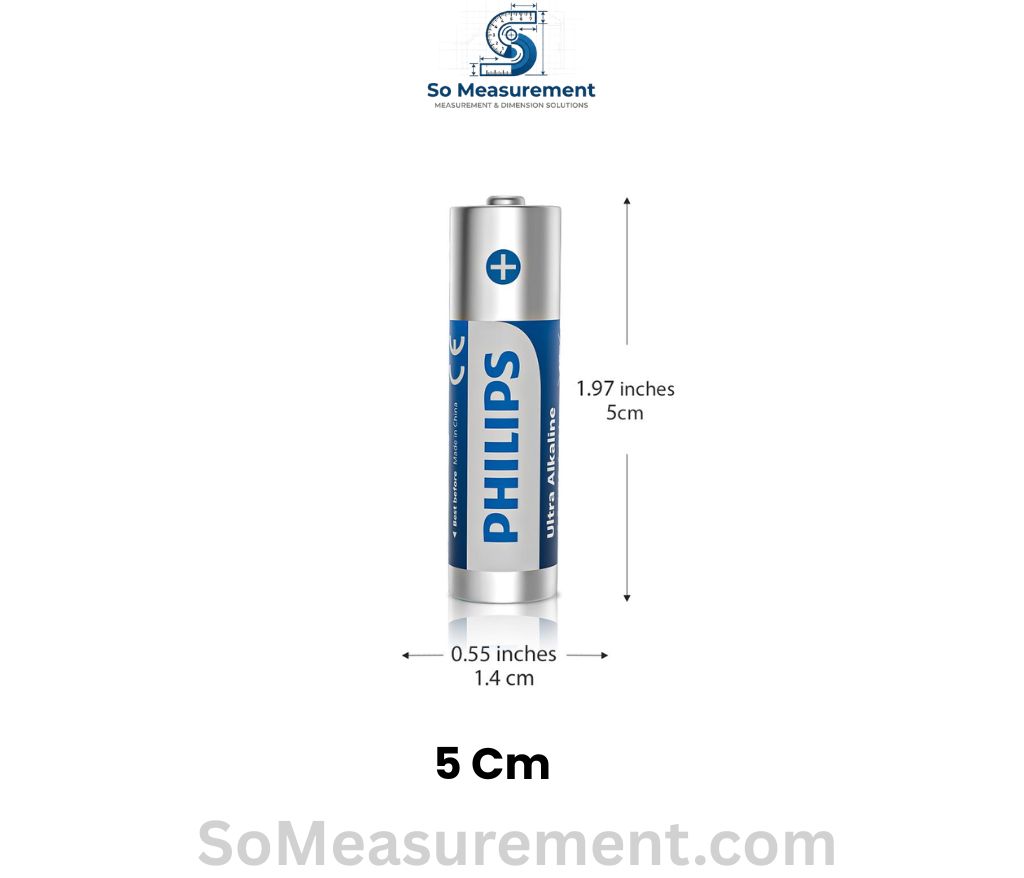
The AA battery is one of the most consistent everyday references for 5 cm. Its height is standardized at 50.5 mm, which rounds cleanly to just over 5 cm. This makes it one of the most reliable comparison objects you can find in almost any home.
What makes it especially useful is that it holds its shape and size across every brand. Whether it is a budget pack from a convenience store or a premium brand, the physical dimensions stay within the same tight tolerance. Pick one up and you have an instant 5 cm ruler.
2. USB Flash Drive Body
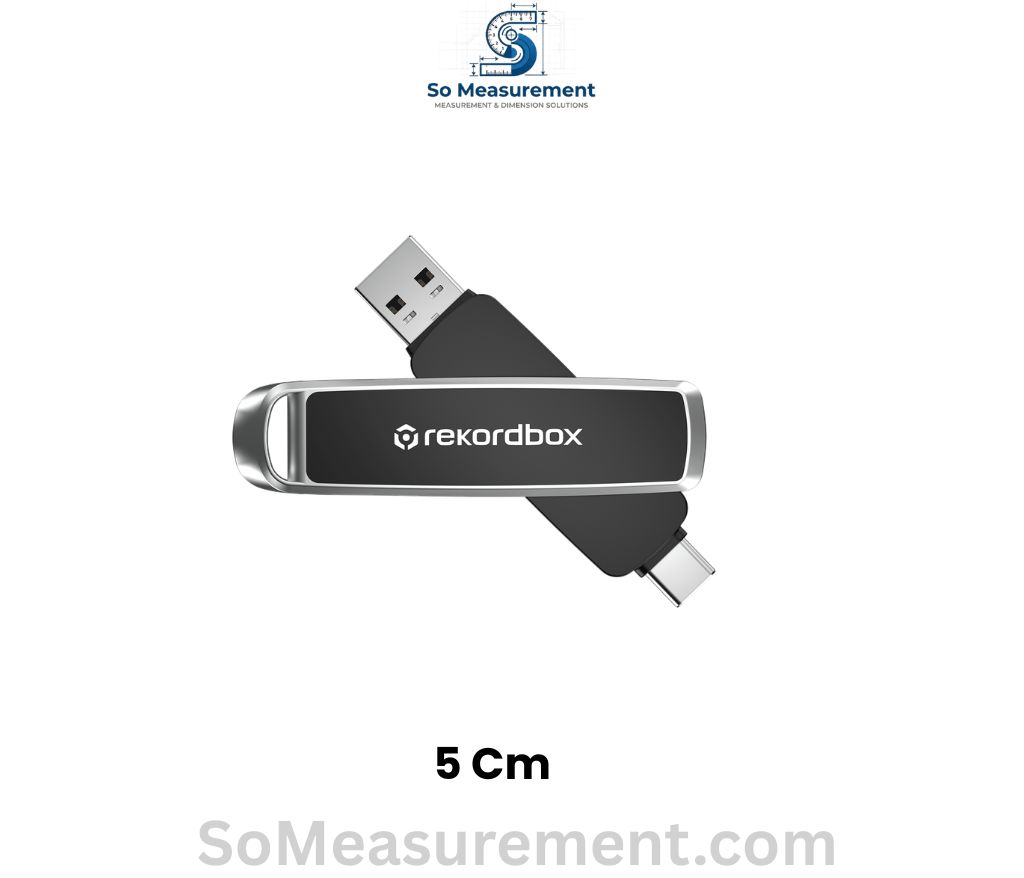
The plastic or metal body of a typical USB flash drive, excluding the connector tip, sits right around 5 cm for many common models. The connector itself adds extra length, but the main casing where the storage electronics sit tends to hover near this mark.
This varies more than a battery does since manufacturers design drives differently. Slim credit-card-style drives and bulkier rugged drives will differ. A standard everyday flash drive, the kind that comes with a cap and a loop for attaching to a keychain, tends to be your best reference in this category.
3. Standard Matchbox
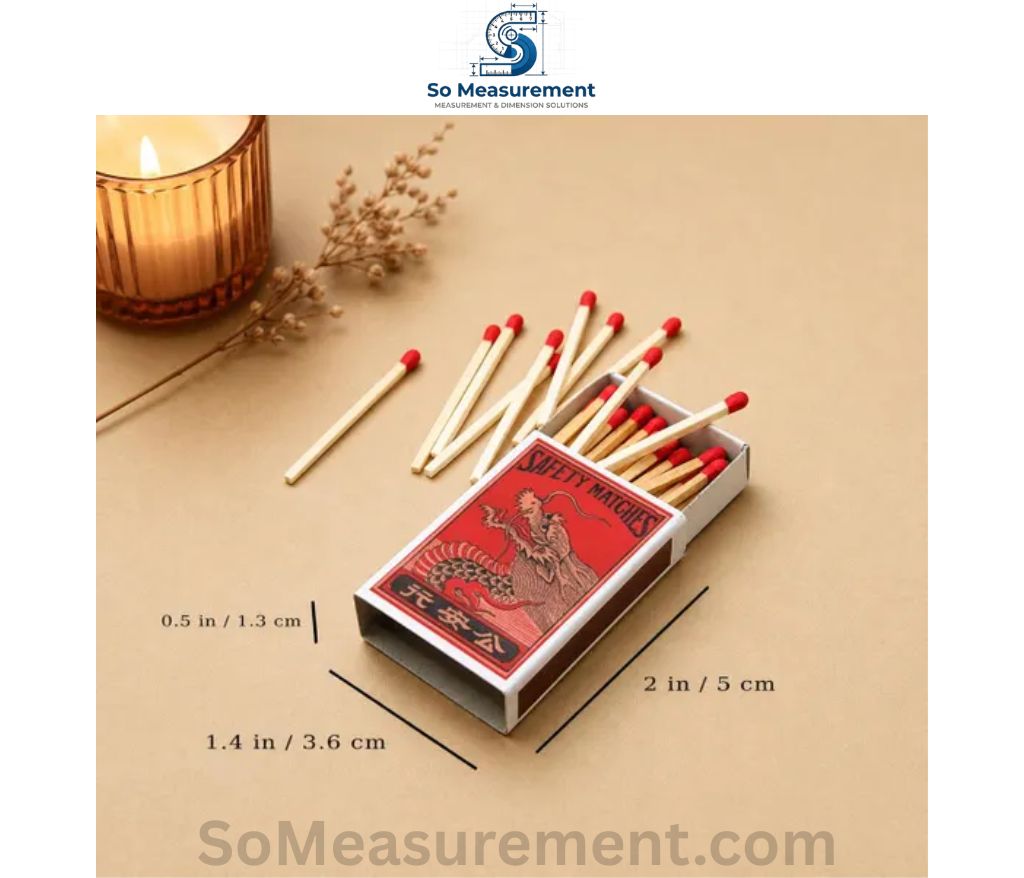
A standard matchbox, the kind that slides open with a tray inside, is typically close to 5 cm along its longest side. This size has remained fairly consistent across decades of production because the length of a standard safety match dictates the minimum practical box size.
The matchbox is a satisfying comparison because it is a flat, rectangular object with well-defined edges. You can lay it on a table and trace its length with a finger to get a clear sense of the 5 cm span. Cooking matches and fireplace matches come in larger boxes, so stick to the pocket-sized variety for this comparison.
4. Hot Wheels or Matchbox Toy Car (Width)
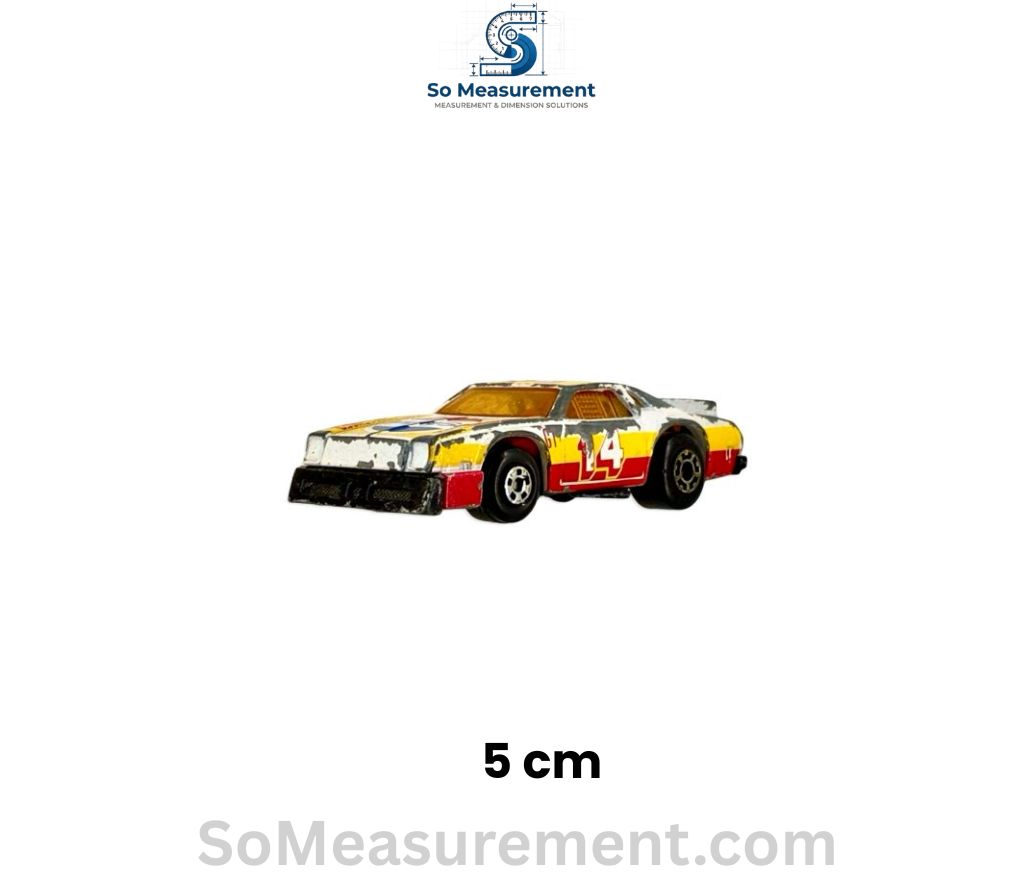
The width of a standard Hot Wheels or Matchbox toy car sits close to 5 cm. These cars follow an approximate 1:64 scale, and their body width across the widest point, typically the rear fender area, generally falls in the 4.5 to 5.5 cm range depending on the vehicle modeled.
Width is the right dimension to focus on here, not length, which runs longer. Next time you see one of these cars, flip it over or hold it up from the front and look at the span across the body. That width gives a good approximation of our target measurement.
Read more: 14 Daily-Use Things That Measure 16 Inches Long or big
5. Mini Pocket Stapler
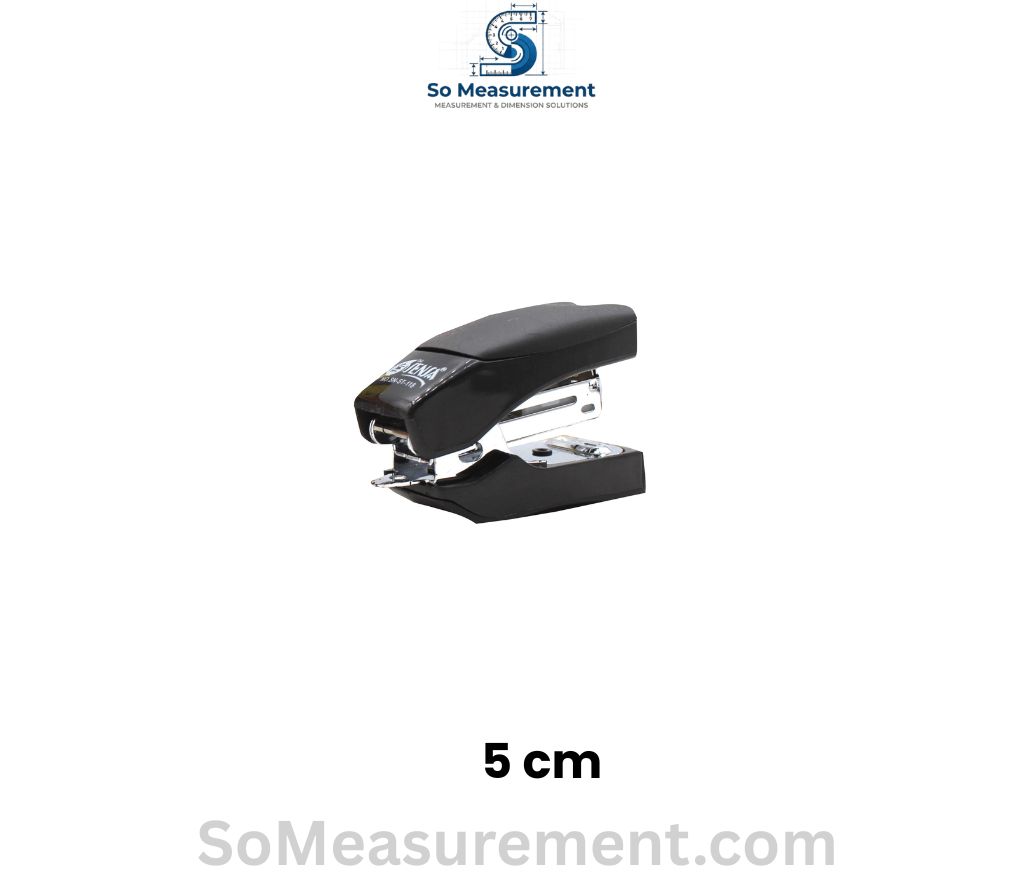
Small pocket-sized staplers, the kind designed to fit in a pencil case or clip to a notebook, are commonly around 5 cm when closed. These are distinct from full-size desktop staplers, which are much longer, or even compact desktop staplers that still run 10 to 12 cm.
The mini stapler is useful as a comparison because it is a rigid object with a consistent form. Its length does not vary much between brands since the function requires a minimum size to accommodate a standard strip of staples. You get a fairly predictable 5 cm reference when you grab one of these.
Read also: How Big Is 6 cm? Here’s What It Actually Looks Like
6. Two Adult Fingers Side by Side
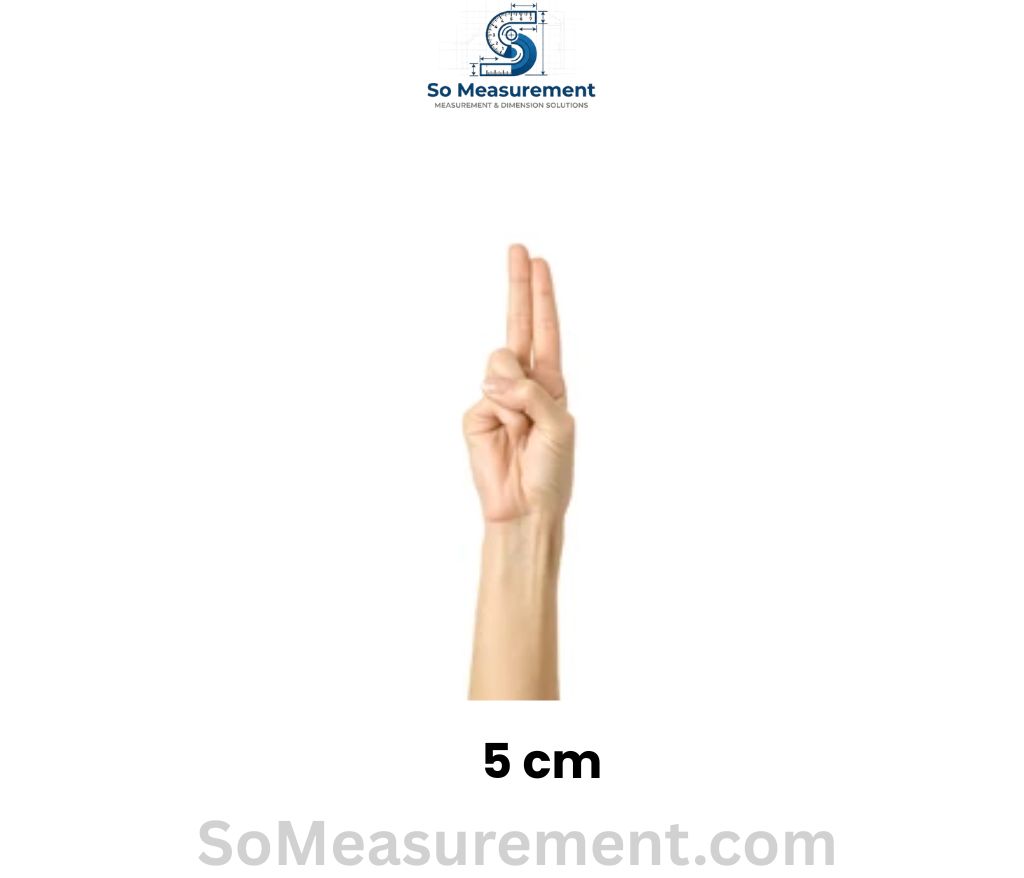
Pressing your index and middle fingers together and measuring across gives most adults a width close to 5 cm. This is not a measurement tool, it is a rough body-based estimate, and it varies meaningfully between people with small hands versus large hands.
Still, it works well as a quick sanity check when you have no objects around. If someone tells you something is 5 cm wide, pressing those two fingers together gives you a fast mental picture of the scale. Think of it as a first approximation, not a substitute for measuring.
7. Espresso Shot Glass (Height)

The height of a standard espresso shot glass is typically close to 5 cm. These small glasses are designed to hold a single or double shot of espresso, and their compact height reflects the small volume they carry, usually 30 to 60 ml.
The body of the glass, from base to rim, is what you are measuring here, not including any handle or base thickness. Espresso glasses vary somewhat in design, with some being taller and narrower, others shorter and wider, but the common squat style used in most coffee shops tends to land right around this height.
Read more: How Big Is 10 cm? Here’s What It Actually Looks Like in Real Life
8. Large Jumbo Paperclip
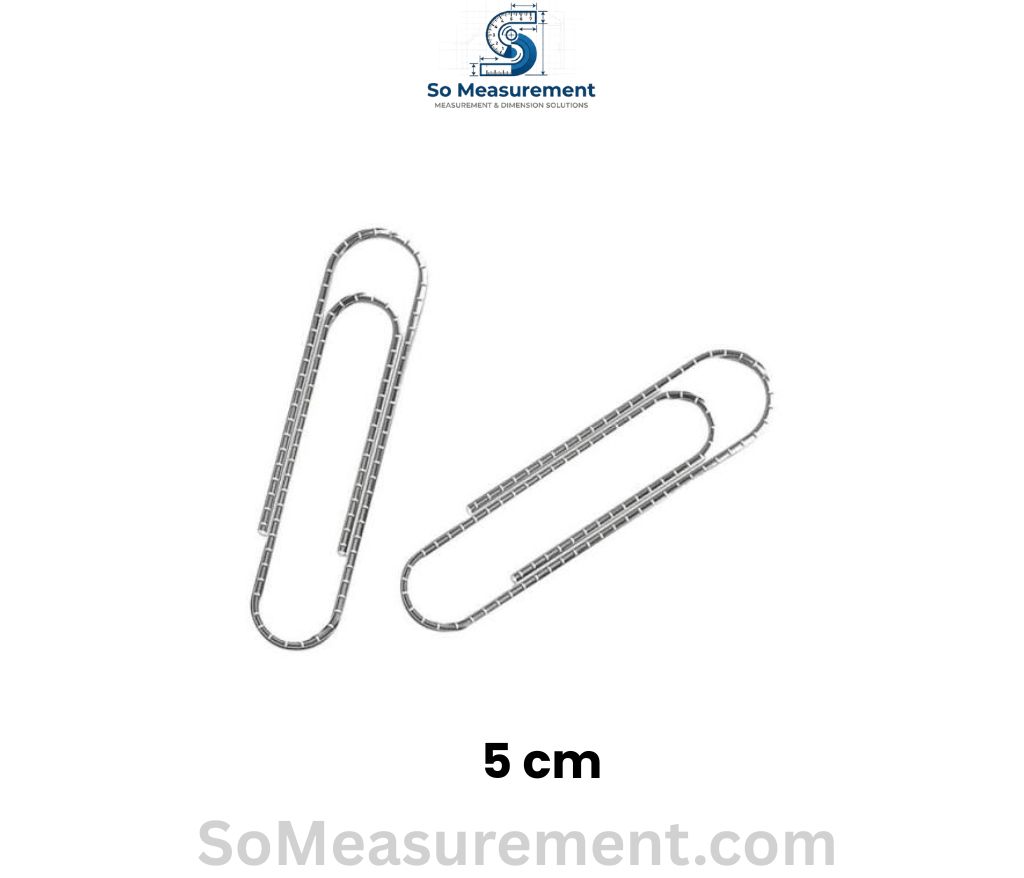
A large or jumbo paperclip measures close to 5 cm in length. Standard paperclips run shorter, around 3.2 cm, but the jumbo size steps up significantly and reaches approximately 5 cm, making it a useful reference for this measurement.
Paperclips are a particularly clean comparison because they are flat, linear objects. Lay one on a piece of paper and you have a simple visual line showing exactly how long 5 cm is. Most office supply stores carry both sizes, and the difference between them is immediately clear when held side by side.
Read more: 15 Daily-Use Things That Measure 13 Inches Long or Big
9. Small Carabiner Keychain Clip
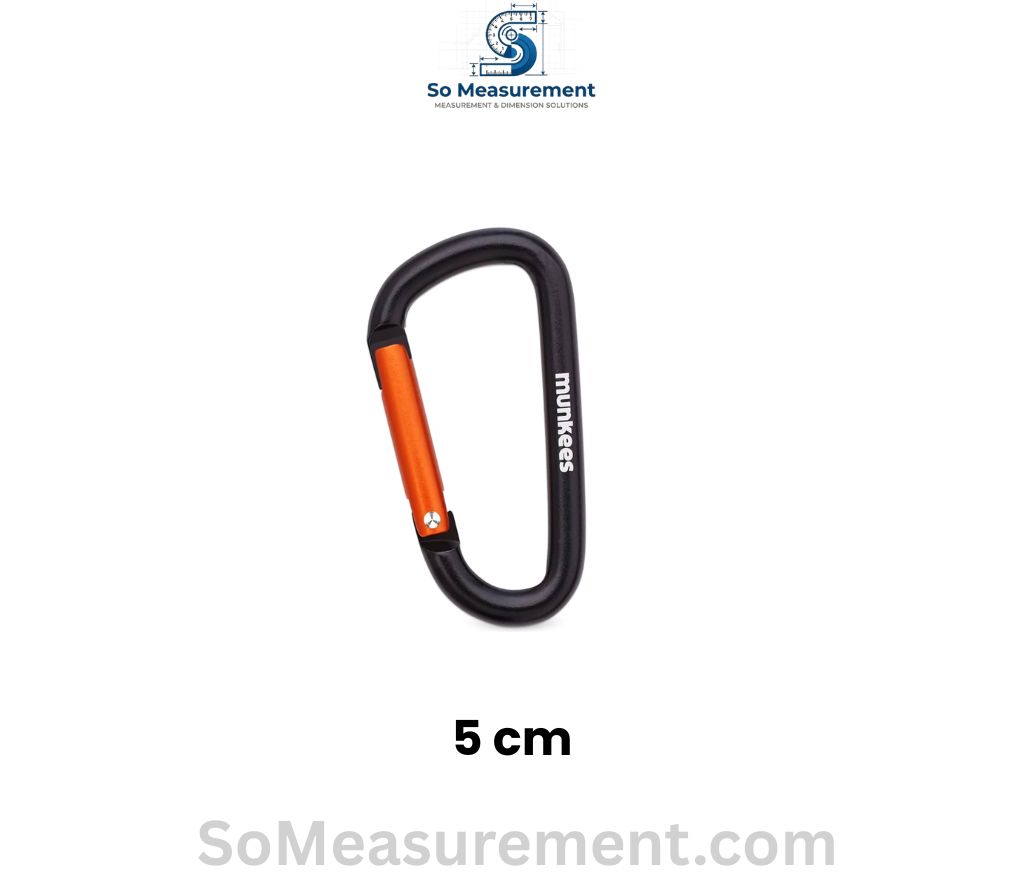
The small carabiner clips sold for keychains and light-duty everyday carry use are commonly around 5 cm long. These are not the load-bearing climbing carabiners used in rock climbing, which are much larger, but the compact metal or aluminum clips designed to hook keys onto a bag loop.
The gate opening, spine length, and overall form of these clips tend to cluster around 4.5 to 5.5 cm for the most common sizes. Because they are rigid metal objects, they hold their shape well and give a clear sense of a 5 cm length that you can feel in your hand.
10. Small Ceramic Sauce Dish (Diameter)
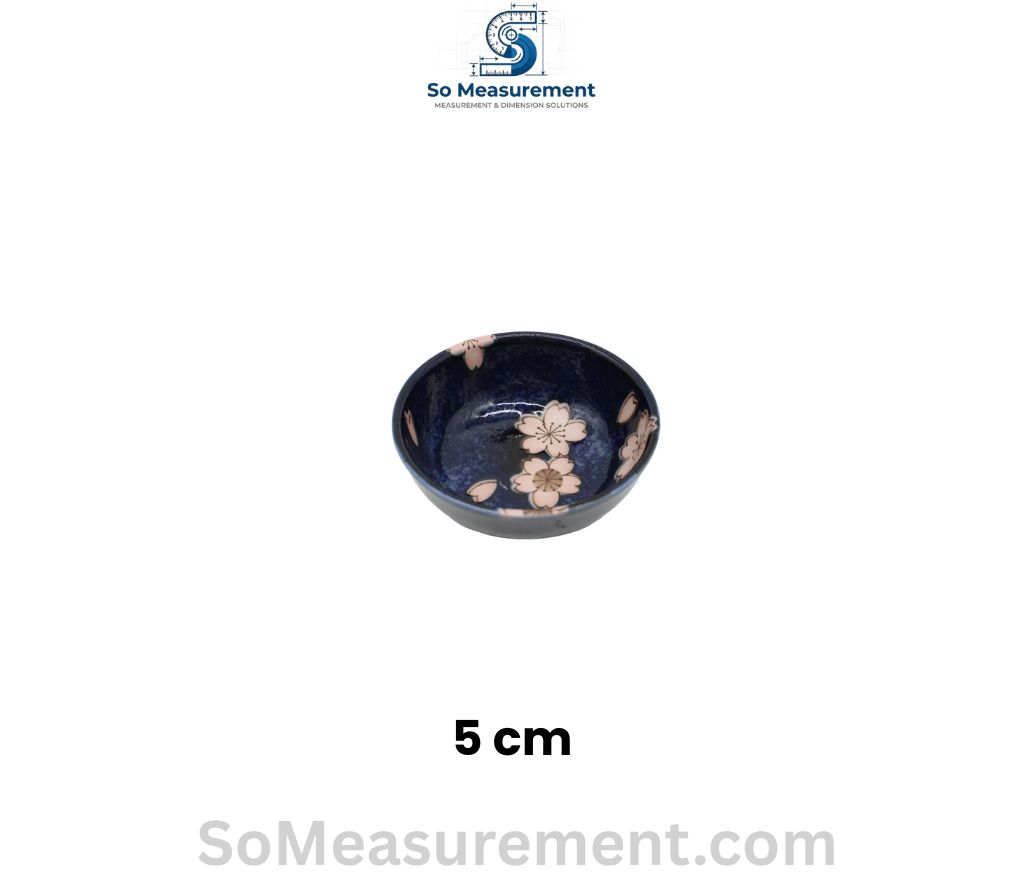
Small ceramic dipping dishes, the type used for soy sauce, dipping oil, or condiments, often have an inner diameter close to 5 cm. These are the tiny dishes that arrive alongside sushi or are placed on the table at Asian restaurants for sauce.
The rim-to-rim measurement across the inside of the bowl is the relevant dimension here. The outer diameter may be slightly larger depending on the thickness of the ceramic. These dishes are made to hold only a small volume of liquid, which is what keeps their diameter at this compact size.
Read also: How Big Is 60 cm? Objects, Conversions, and Tricks That Actually Work
11. Standard Lip Balm Tube (Height)
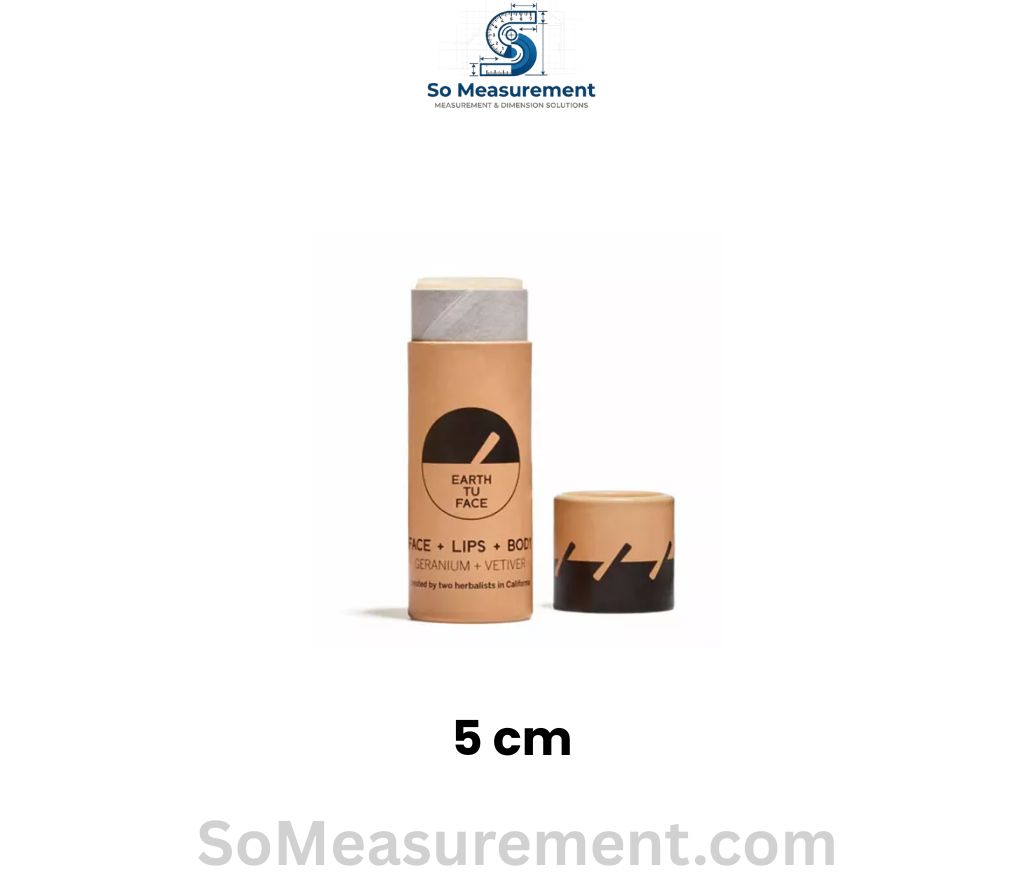
A standard cylindrical lip balm tube, like a classic ChapStick, stands between 4.8 and 5.1 cm tall with the cap on. It fits inside a pocket without creating a visible bulge. Most people carry one without ever thinking about how precisely sized it is.
This is one of the more unexpected 5 cm objects because people rarely think of lip balm as a measuring tool. But it’s one of the most commonly carried personal items in the world, which makes it a genuinely practical reference. If you’re somewhere without any tools and need to eyeball 5 cm, check your pocket.
Three Ways to Measure 5 cm Without Any Tools
Two-finger method: Press index and middle finger together, measure across the knuckles. Works for most adults within a 2 to 4 mm margin.
Credit card method: A standard credit card is 8.56 cm long. Slightly past the halfway mark on the card, around 58% of the length, gives you your 5 cm reference. Mark it mentally or with a fingernail.
AA battery method: Stand a AA battery upright on any flat surface. Its height of 5.05 cm is close enough to use as a direct comparison for anything you’re trying to size up next to it.
Read Also:
How Big Is 2 cm? The Size You Can Actually Picture
How Big Is 4 cm? Size, Feel, and 11 Real Objects You Already Own
5 cm is the kind of measurement that rewards attention. Once you recognize it in a AA battery or a USB drive, you start spotting it everywhere. Small things, precisely made. That’s what this span represents in the physical world.
Quick thought before you go: Which is longer, 5 cm or 2 inches? Check the numbers above and you might be surprised.

Lev is passionate about helping readers understand sizes and dimensions of everyday objects. With a focus on clarity and practical examples, Lev shares accurate, trustworthy insights that make measurements relatable, useful, and easy to visualize for everyone.