Six centimeters sits at an interesting spot on the scale. It is small enough to fit completely in your palm, yet large enough to be a meaningful physical dimension for dozens of common objects. In metric terms, 6 cm equals 60 mm or 0.06 meters. If you are more comfortable with imperial units, that works out to approximately 2.36 inches.
Picturing this measurement is straightforward once you know the right reference points. The sections below cover ten objects whose size genuinely lands at or very close to 6 cm, so you can walk away with a clear mental picture and a few useful pocket references.
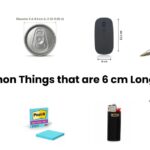
Quick Reference: 10 Things That Are About 6 cm
| Object | Relevant Dimension | Notes |
|---|---|---|
| Debit or Credit Card Short Edge | Width (short side) | Standardized at 53.98 mm, close to 6 cm |
| Soda Can Lid | Diameter | Varies slightly by can size |
| Tennis Ball | Diameter | Official diameter 6.54 to 6.86 cm |
| BIC Cristal Pen Cap | Length | Approximately 5.5 to 6 cm |
| Computer Mouse Width | Width at widest point | Typically 6 to 7 cm depending on model |
| Medium Lime | Diameter | Roughly 5 to 6.5 cm |
| BIC Mini Lighter | Height | Around 6 cm tall |
| Small 2×2 Inch Sticky Note | Side length | 2 inches equals 5.08 cm, close but slightly under |
| Sticky Tape Roll Outer Diameter | Outer diameter | Standard 19 mm width tape rolls vary; 6 cm is common for small rolls |
1. Debit or Credit Card — Short Edge
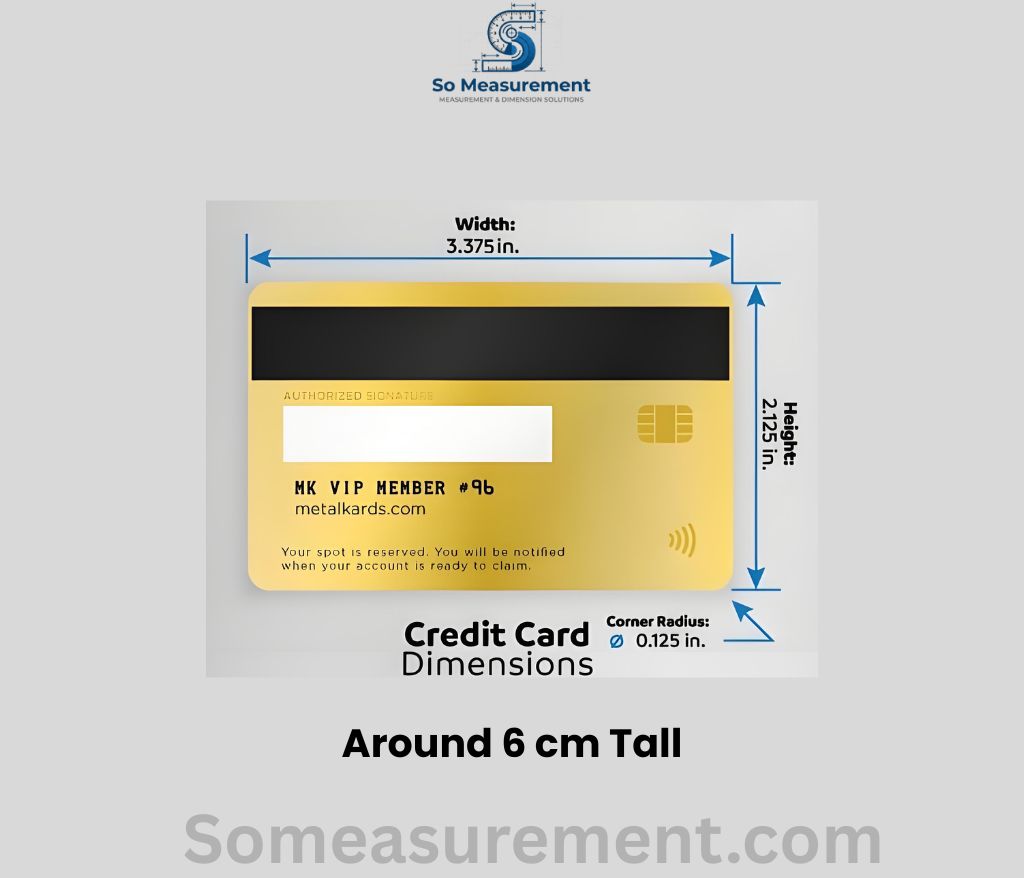
Every standard debit and credit card in the world follows the ISO 7810 ID-1 specification, which fixes the short edge at exactly 53.98 mm. That is just a hair under 6 cm, making it one of the most reliable pocket-sized references you will ever have access to.
If you need to estimate 6 cm on the spot and have no ruler, the short side of your bank card gets you within about 2 mm. Almost every adult carries one, and the size never changes regardless of which bank issued it.
2. Soda Can Lid
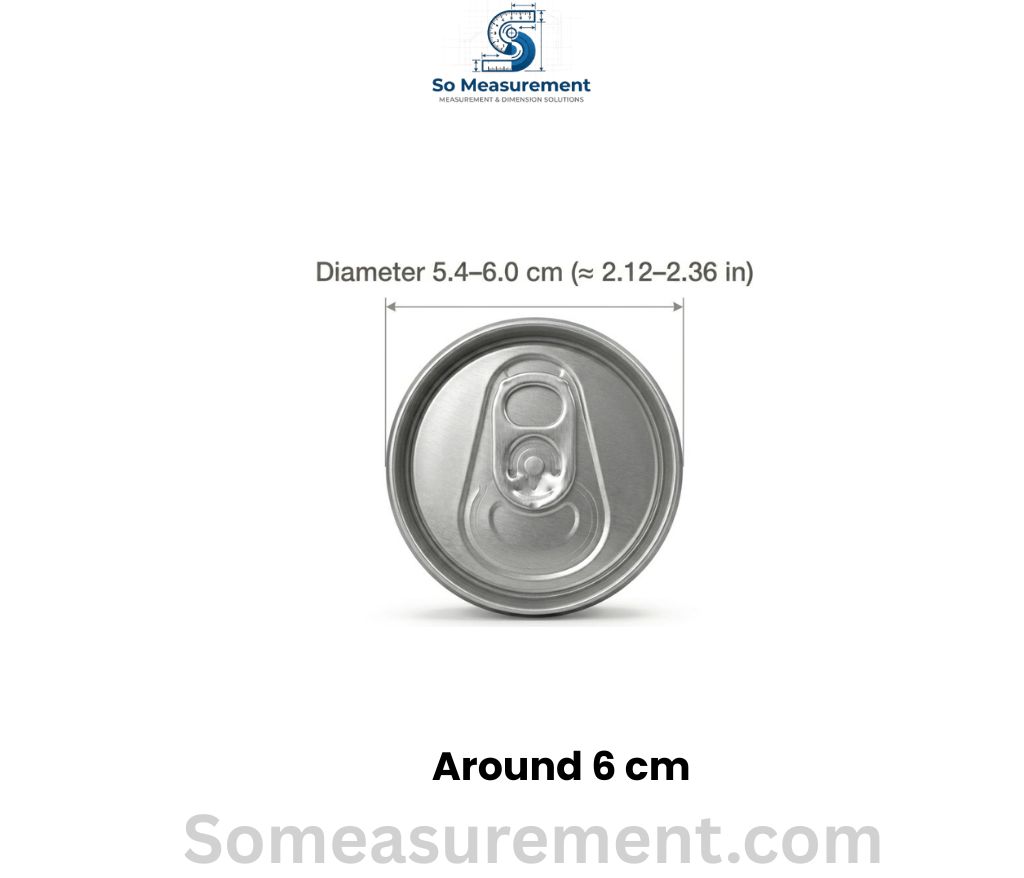
The top of a standard aluminum soda can is smaller than most people expect when they first measure it. The lid diameter on a regular 330 ml or 355 ml can lands at roughly 5.3 to 5.6 cm, while certain larger can formats push the lid closer to 6 cm.
What makes the lid worth noting here is that it represents a very clean circular reference. You are not estimating a length along a curved surface; you are measuring a flat disc. That clarity makes it a useful mental image when 6 cm needs to feel round rather than linear.
3. Tennis Ball — Diameter
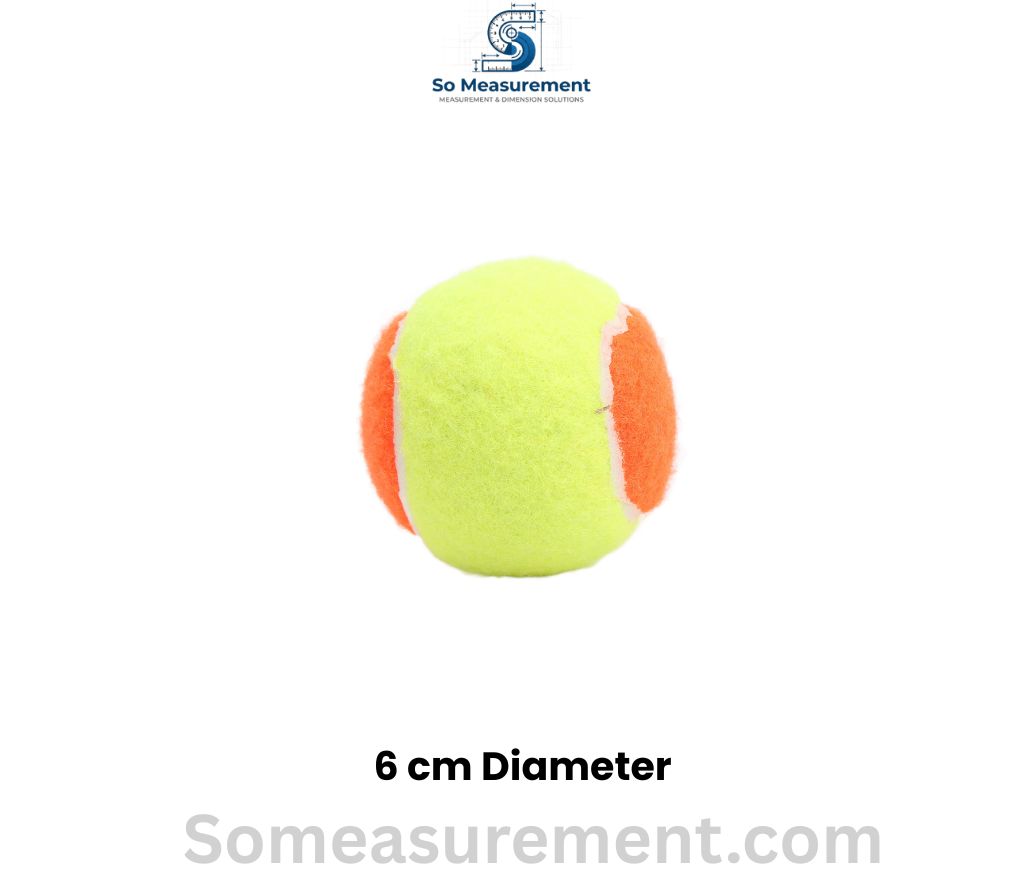
A tennis ball sits slightly above the 6 cm mark rather than exactly on it. The International Tennis Federation specifies an official diameter range of 6.54 cm to 6.86 cm. That puts the midpoint at about 6.7 cm, which is close enough to serve as a useful scale anchor.
The value of using a tennis ball as a reference is its familiarity. Almost everyone has held one. Knowing that 6 cm is just slightly smaller than the ball you hold in your hand gives the measurement an immediate physical meaning that a ruler alone cannot provide.
4. BIC Cristal Pen Cap
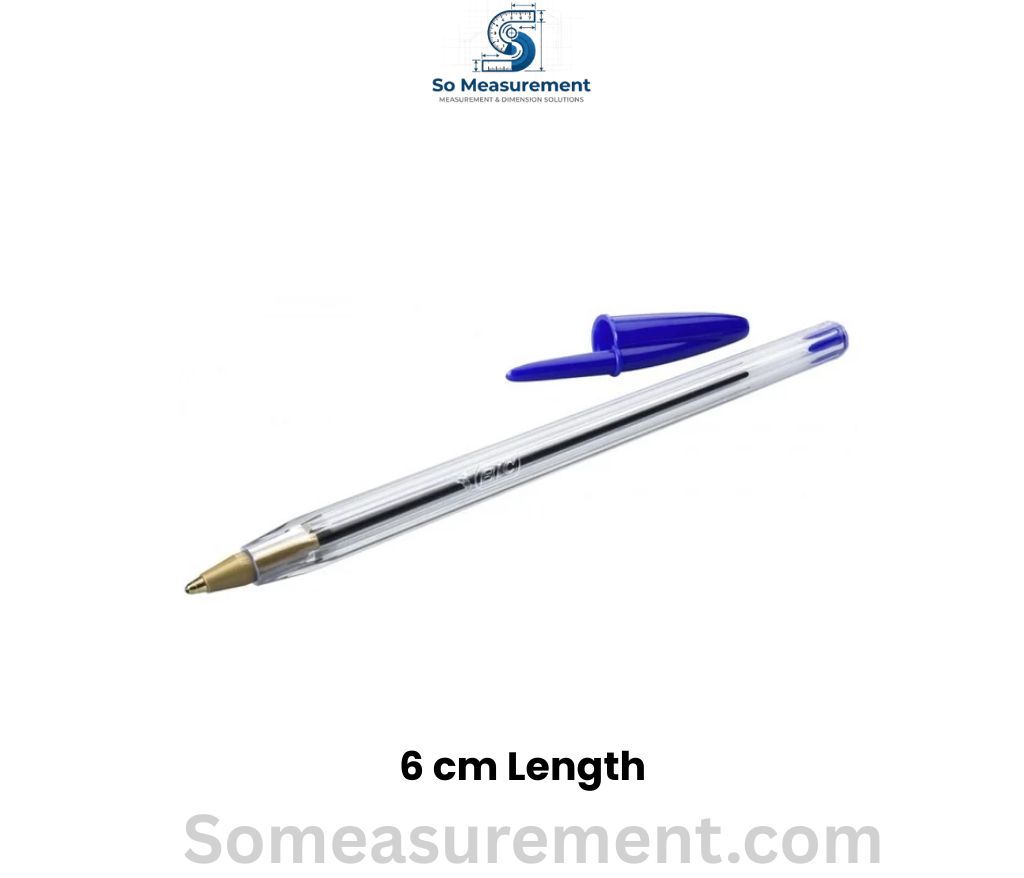
The BIC Cristal is one of the most produced pens in history, and its cap is a genuinely useful small-scale reference. The cap measures approximately 5.5 to 6 cm in length depending on the production batch and regional variation.
It is a narrow cylinder, so the comparison works best for understanding 6 cm as a linear length rather than a width or area. If you have ever absently clicked or removed a BIC cap while thinking, you already have a tactile sense of this measurement without realizing it.
5. Computer Mouse — Width
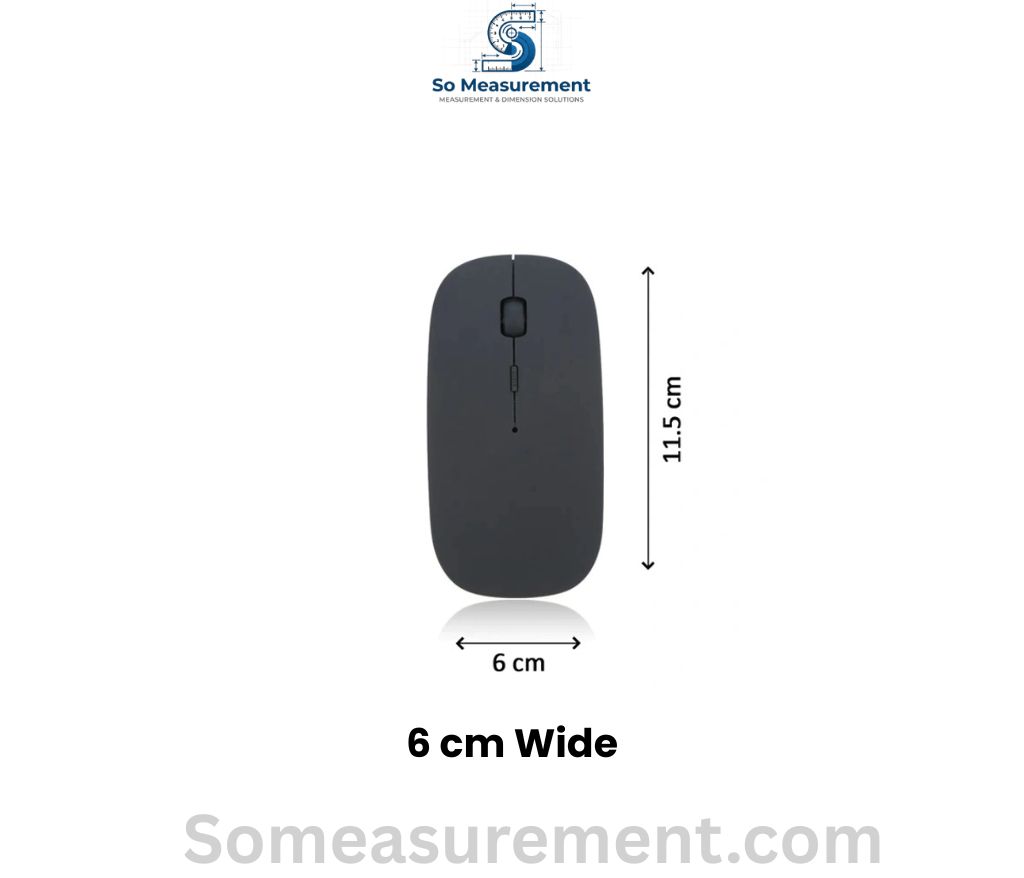
The width of a standard full-size computer mouse typically falls between 6 and 7 cm at its widest point. Compact or travel mice can be narrower, and ergonomic or gaming models are often wider, so this reference comes with natural variation.
What this comparison communicates well is that 6 cm is roughly the span your fingers cover when resting on a mouse. It is a width that feels comfortable for a hand grip, which places 6 cm in the practical zone of objects designed to be held.
6. Medium Lime
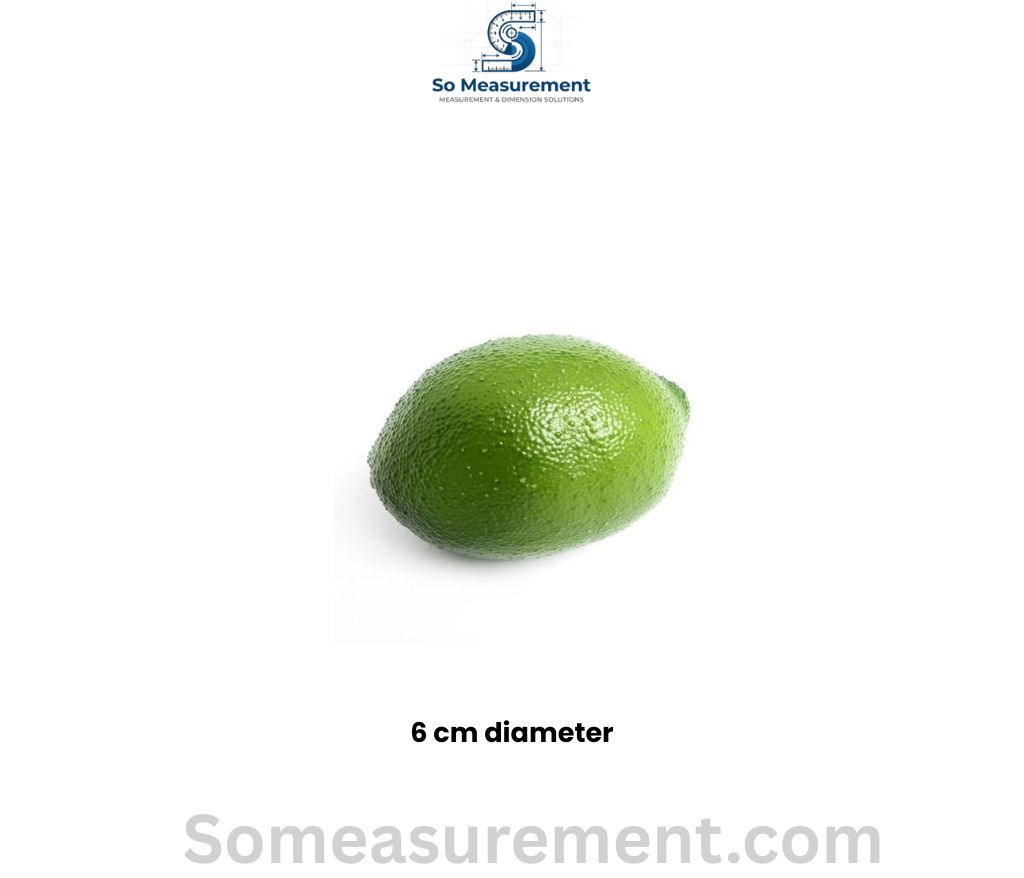
A medium lime bought from a typical grocery store measures roughly 5 to 6.5 cm in diameter, with most falling around the 5.5 to 6 cm range. The size varies with growing conditions and variety, so this is an approximate reference rather than a fixed one.
What a lime communicates that flat objects cannot is the three-dimensional nature of 6 cm. Holding a lime gives you a sense of 6 cm in all directions at once, making it one of the better references when you want to understand not just a length but a general scale.
Read also: How Big Is 1 cm? Everyday Things that are 1 cm Long or Big
7. BIC Mini Lighter
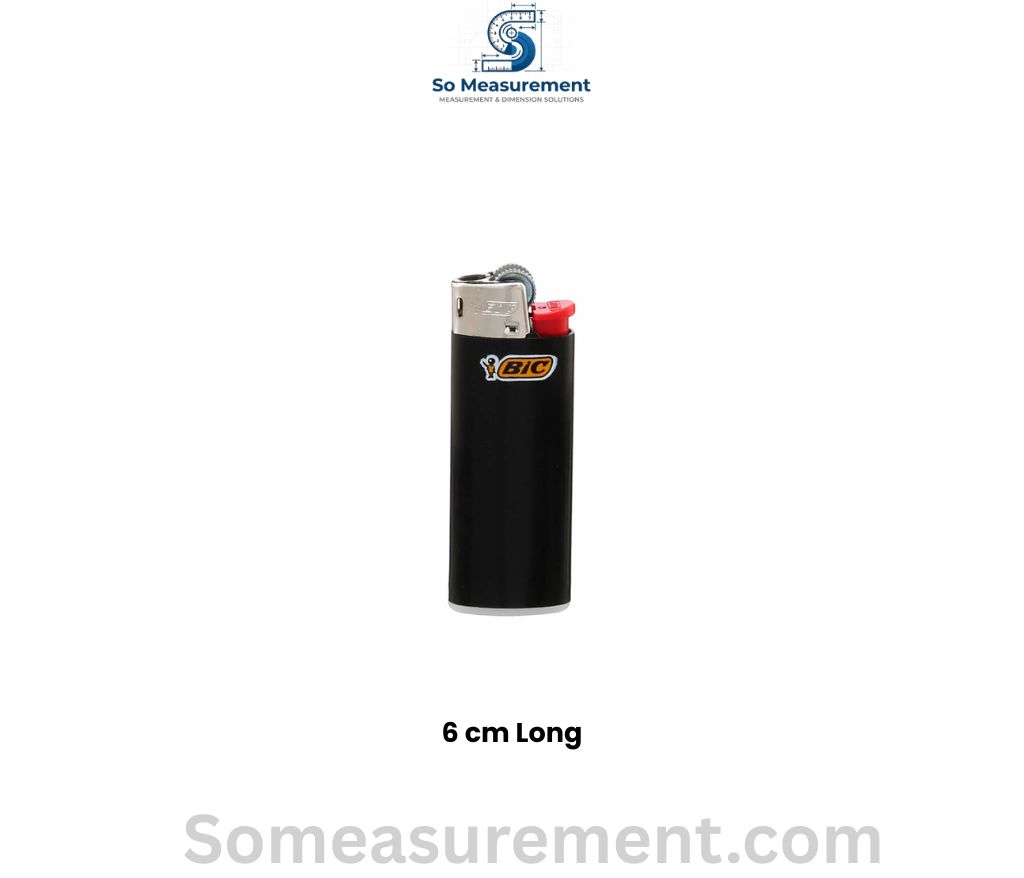
The BIC Mini lighter stands at approximately 6 cm tall, making it a surprisingly precise little reference for this measurement. The standard BIC Classic is taller at around 8 cm, but the Mini variant was specifically designed to be compact.
Because it is a vertical object by nature, the BIC Mini is particularly useful when you need to picture 6 cm as a height rather than a horizontal length. It is also widely available and instantly recognizable, which adds to its usefulness as a reference.
8. Small 2×2 Inch Sticky Note
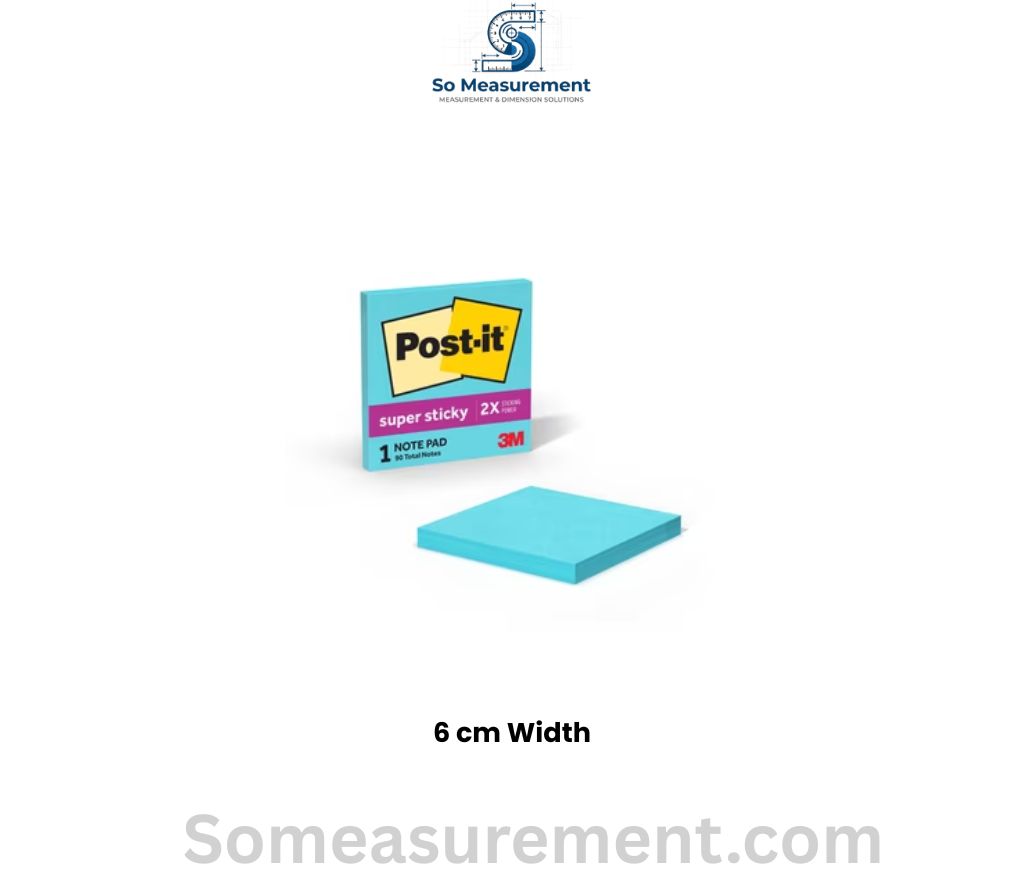
A 2×2 inch sticky note is just slightly smaller than 6 cm on each side. Two inches converts to exactly 5.08 cm, putting it about 9 mm short of the target. This makes it a near reference rather than a precise one.
The reason it earns a place on this list is that small square sticky notes are found on desks worldwide, and their consistent manufactured size makes them a reliable starting point. If you place one in your hand and imagine extending each side by roughly the width of your thumbnail, you get a good approximation of a 6 cm square.
Read also: How Big Is 60 cm? Objects, Conversions, and Tricks That Actually Work
9. Sticky Tape Roll — Outer Diameter

A small roll of clear tape, the kind that sits in a desktop dispenser, often has an outer diameter close to 6 cm once a reasonable amount of tape remains on the core. Fresh rolls from standard 19 mm width tape products commonly start with an outer diameter in this range depending on the total tape length wound onto the core.
This comparison works well for understanding 6 cm as a circular diameter in an object you can hold edge-on. It is also a reference that shifts over time as you use the tape, which is worth keeping in mind if you are using a partially used roll.
A Simple Way to Measure 6 cm Without a Ruler
If you need to mark off 6 cm and have no measuring tool nearby, the short edge of a credit card gives you just under 6 cm in a single placement. Lay the card down, mark the end of the short edge, and you are within about 2 mm of the target.
For a slightly more accurate approach, a standard pen cap placed end to end gives you a linear reference in roughly the right range, though variation between brands makes this less reliable than the card method.
What 6 cm Feels Like in Your Hand
Six centimeters is a size that sits comfortably between your thumb tip and the first knuckle of your index finger for most adults, though body proportions vary enough that this should be treated as a rough personal estimate rather than a measurement.
More usefully, it is the kind of dimension that describes the working parts of small everyday tools: the grip width of a pen, the face of a lighter, the short side of a wallet card. These are objects built to be held, operated, or carried, and 6 cm sits right in the zone where human hands interact with small things most naturally.
Read more:
How Big Is 4 cm? Size, Feel, and 11 Real Objects You Already Own
How Big Is 5 cm? 11 Everyday Things That Are About 5 Cm Long

Lev is passionate about helping readers understand sizes and dimensions of everyday objects. With a focus on clarity and practical examples, Lev shares accurate, trustworthy insights that make measurements relatable, useful, and easy to visualize for everyone.