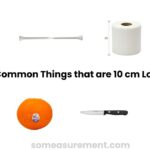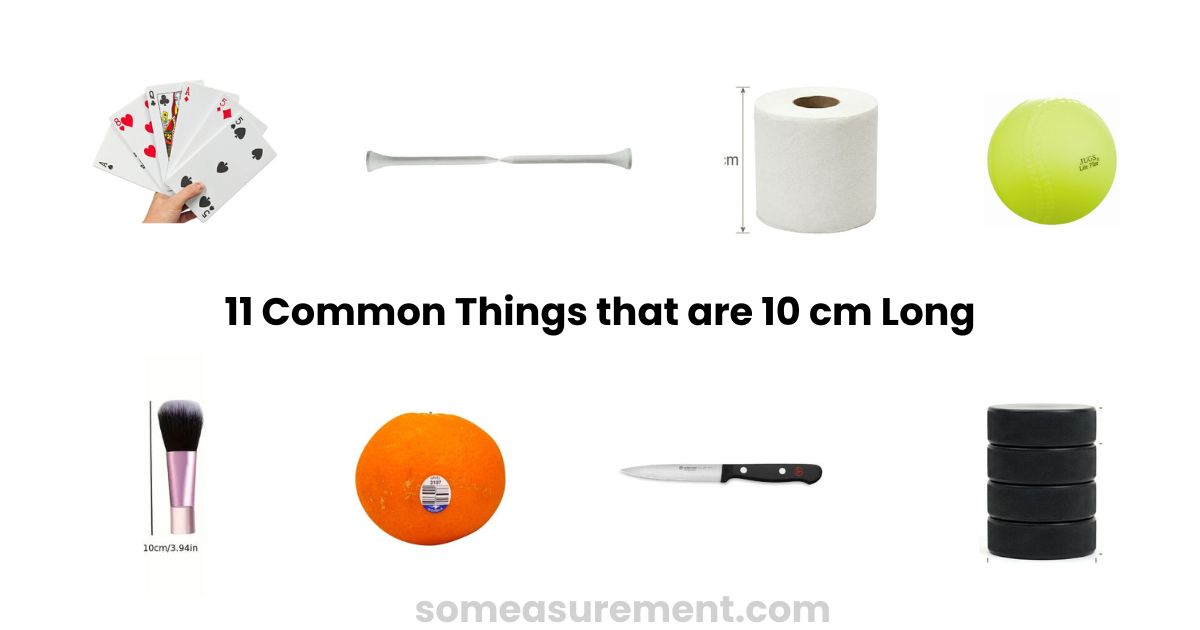
10 centimeters is exactly 3.94 inches, or just under 4 inches. It sits in a useful middle ground, small enough to fit in your palm but large enough to feel substantial. If you hold up your hand and spread your fingers, the distance from the base of your palm to the tip of your middle finger is often close to this on an average adult hand, though body sizes vary.
Knowing what 10 cm looks like in real life helps you estimate distances, check whether something will fit, or quickly gauge size without reaching for a ruler.
11 Daily-Use Things That Are 10 cm
| Object | Category | Dimension (cm) |
|---|---|---|
| Toilet paper roll (width) | Household | 10.0 |
| Standard pen barrel (grip section) | Stationery | 10–11 |
| Bar of soap (long side) | Household | 10.0 |
| Playing card (long edge) | Games | 8.9 |
| Kitchen paring knife blade | Kitchen | 9–10 |
| Softball (diameter) | Sports | 9.7–9.8 |
| Four hockey pucks stacked | Sports | 10.16 |
| Two golf tees end-to-end | Sports | 10.8 |
| Coffee stirrer / craft stick | Kitchen / Craft | 10–11.4 |
| Travel makeup brush | Personal Care | 9.5–10.5 |
| Medium navel orange (diameter) | Fruit | 9.5–10.0 |
1. Playing Card
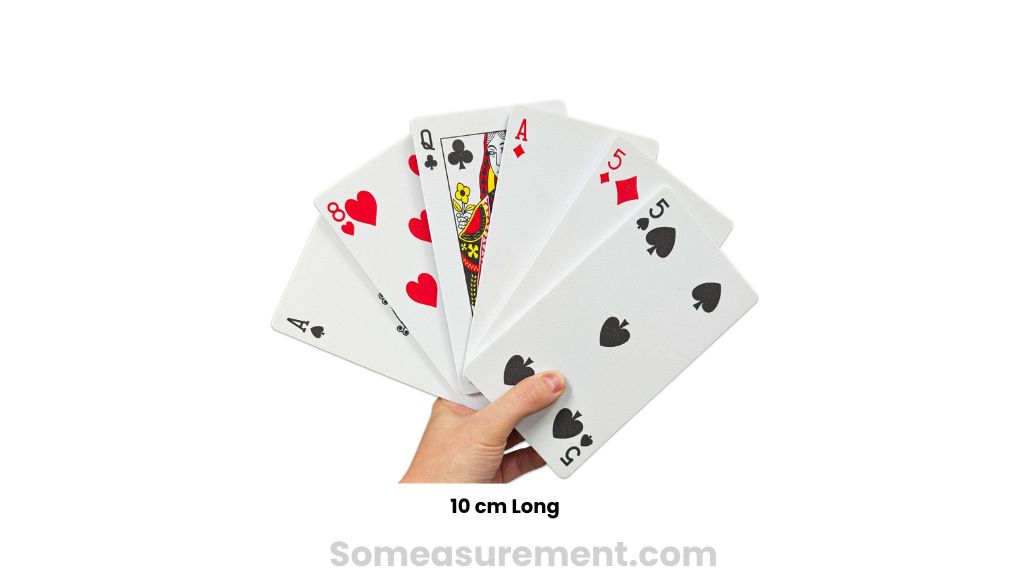
A standard playing card measures 8.89 cm wide and 6.35 cm tall. Neither dimension lands exactly on 10 cm, but the width comes close enough that two playing cards placed side by side are not far from 10 cm total height, and the card itself gives you a reliable pocket-sized reference for gauging objects in that range.
What makes a playing card especially useful is that the dimensions are consistent across virtually every standard deck. Whether it is a poker deck, a bridge deck, or a basic card game, the proportions stay the same. If you have a deck nearby, it is one of the most reliable improvised measuring references you will find.
2. Softball
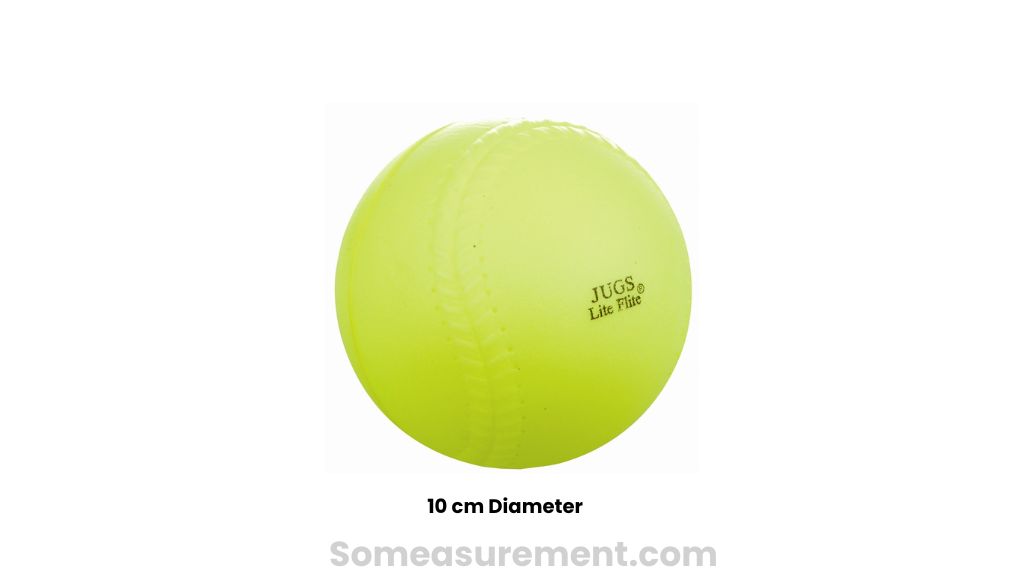
A regulation softball used in official play has a circumference of 30.5 cm, which works out to a diameter of roughly 9.7 to 10.1 cm depending on the specific ball. That puts it almost perfectly at the 10 cm mark in terms of width across the center.
Picking up a softball and holding it in your hand gives a direct sense of what 10 cm feels like in three dimensions. It is not a flat or linear measurement, but the diameter of the ball crossing your palm is a strong physical reference. A softball is also widely available in schools, sports facilities, and garages, which makes it a practical comparison object.
3. Kitchen Paring Knife Blade
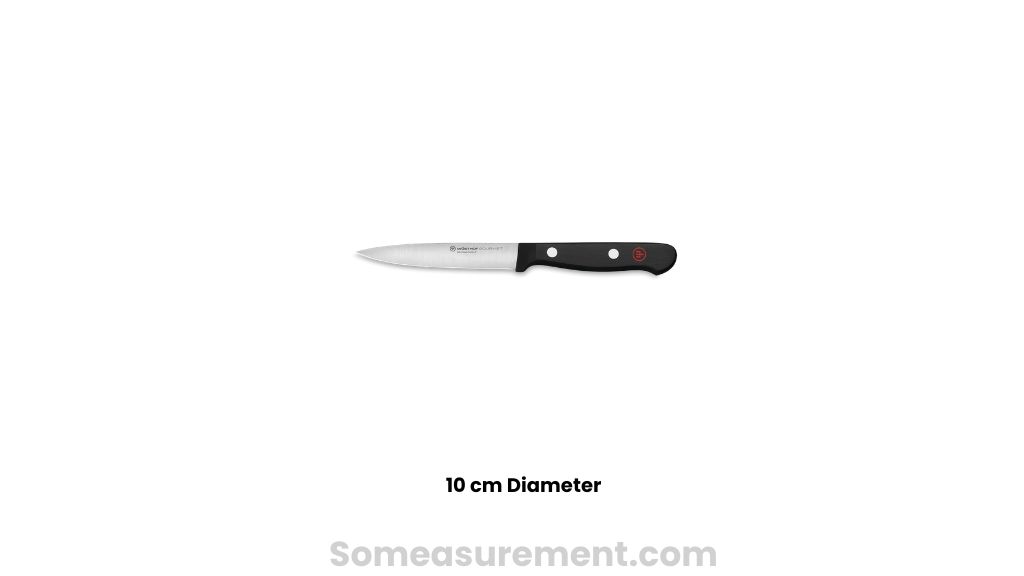
Paring knives are made for close, detail-oriented cutting work, and their blades are short by design. Most paring knife blades fall between 7 cm and 10 cm in length, with the 10 cm version sitting at the upper end of the standard range for this knife type.
A 10 cm paring knife blade is a common size found in kitchen sets and home stores. It is long enough to peel and slice small produce comfortably but short enough to control with precision. If you pull a paring knife from your kitchen drawer, there is a reasonable chance the blade is close to this length, though checking the manufacturer’s listed specification gives you the confirmed measurement.
Related Post: How Big Is 6 cm? Here’s What It Actually Looks Like
4. Bar of Soap
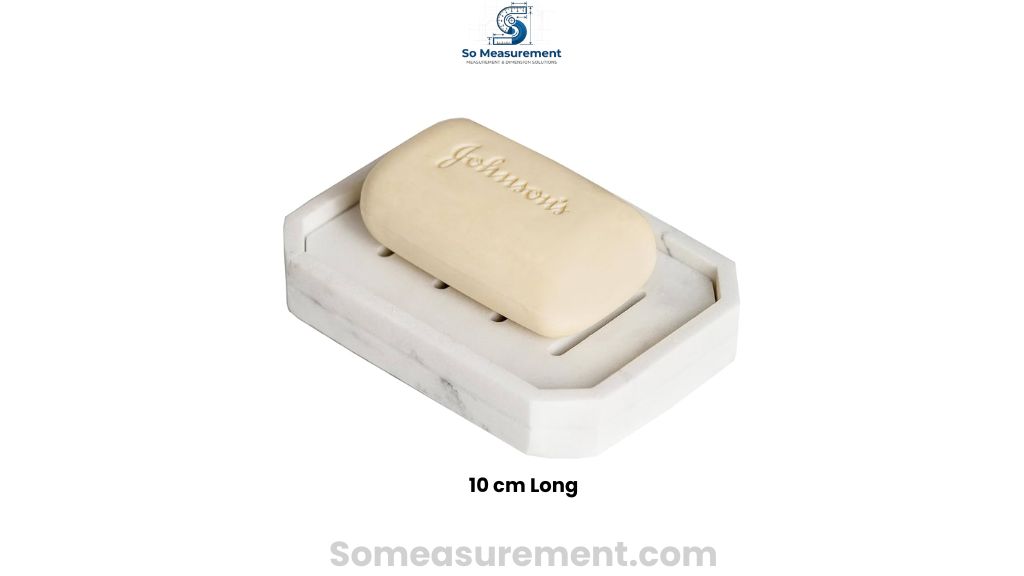
A standard bar of bath soap typically measures around 10 cm in its longest dimension, though soap bars vary by brand and format. Travel-size bars are smaller, and some specialty soaps are larger, but a regular household bar from a mainstream brand often lands within a centimeter or two of 10 cm.
The reason soap works as a visual reference is that most people handle one daily. The familiar feel of a full bar of soap in your hand, particularly across its longest edge, gives a comfortable and intuitive anchor for 10 cm. As the bar wears down with use, that reference shifts, so a new or nearly new bar is the better comparison.
5. Standard Pen Barrel
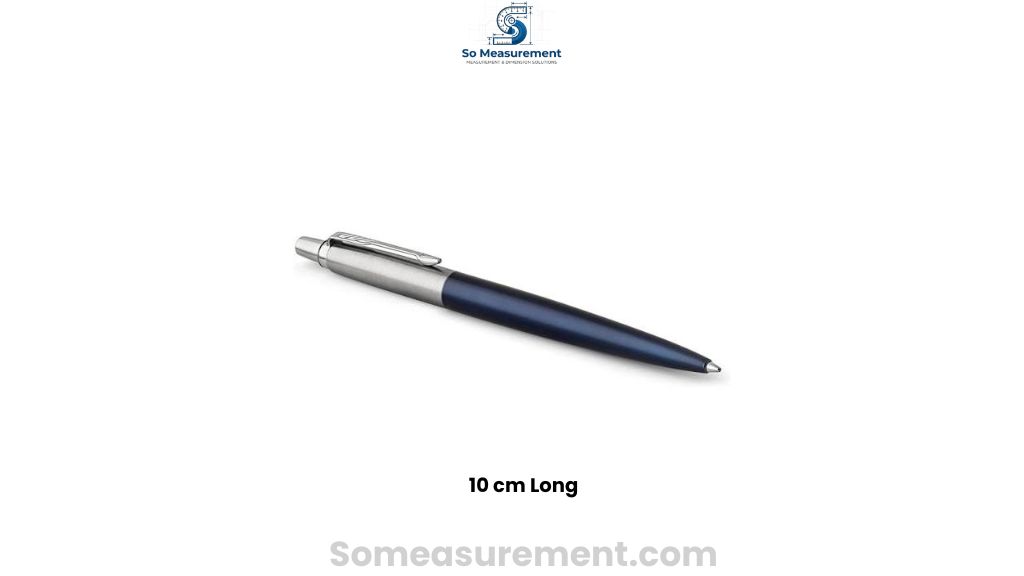
Most ballpoint pens and gel pens are around 14 to 15 cm in total length from cap to tip. The usable barrel section, excluding the clip area and the tip section, tends to be close to 10 cm. This is roughly the section of the pen that sits between your fingers when you write.
Because pens are in most people’s immediate environment, this is one of the easiest on-the-spot references for 10 cm. The barrel is also a linear, easy-to-read length, which makes it more intuitive than circular or volumetric objects. Gripping a standard pen and noting where your fingers naturally rest gives a fairly reliable sense of this measurement.
6. Four Hockey Pucks Stacked
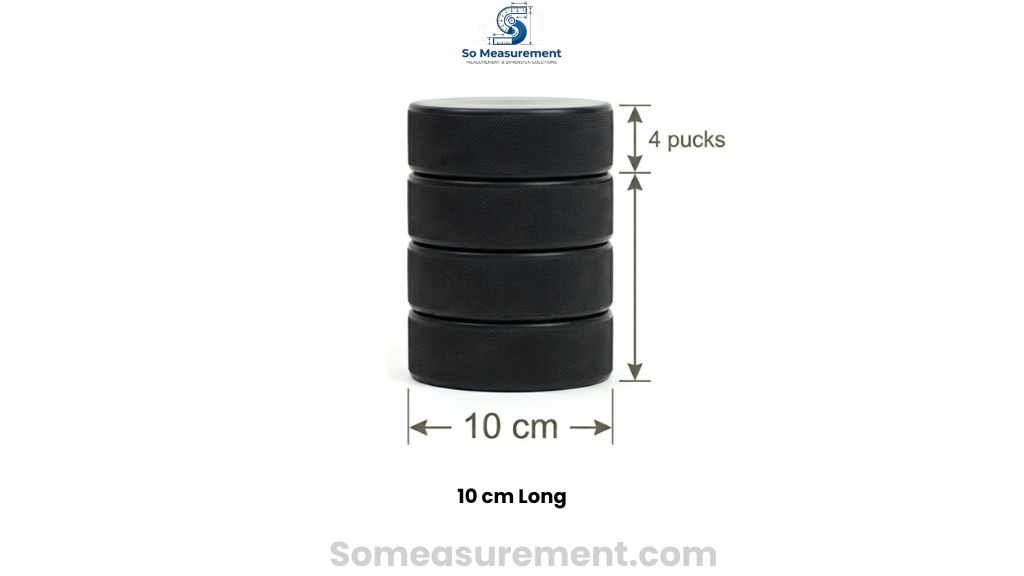
A single regulation ice hockey puck is 2.54 cm thick, which is exactly 1 inch. Stack four of them and you get 10.16 cm, which is just barely over 10 cm and close enough to serve as a reliable reference.
What makes this comparison interesting is that each puck contributes a known, standardized thickness. The stacking demonstrates how 10 cm can be built from smaller units, which can be a useful way to understand the measurement incrementally. Hockey pucks are dense and consistent in size, so this is one of the more precise comparisons on this list.
7. Toilet Paper Roll
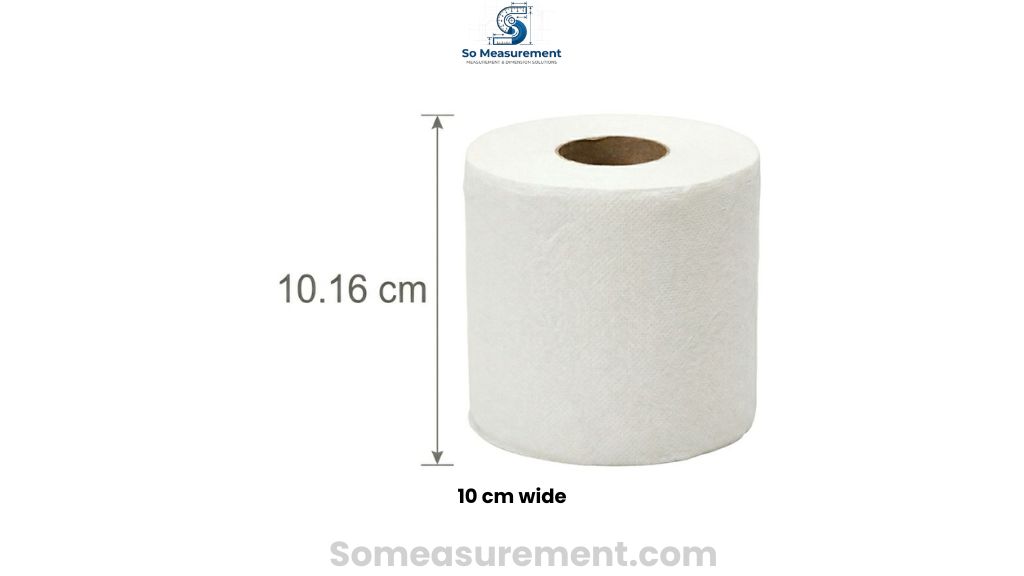
An empty toilet paper roll tube sits at about 10 to 11.4 cm tall, depending on the brand and the paper roll width. The inner cardboard tube specifically is usually close to this range, making it a surprisingly handy reference object.
Toilet paper rolls are also about 4.5 cm in diameter, which highlights that 10 cm is being measured along the tube’s height rather than across it. The tall dimension of the roll, when stood upright, is where you find the 10 cm approximation. Most households have one available at any given moment, which adds to its convenience as a quick reference.
8. Two Golf Tees End-to-End
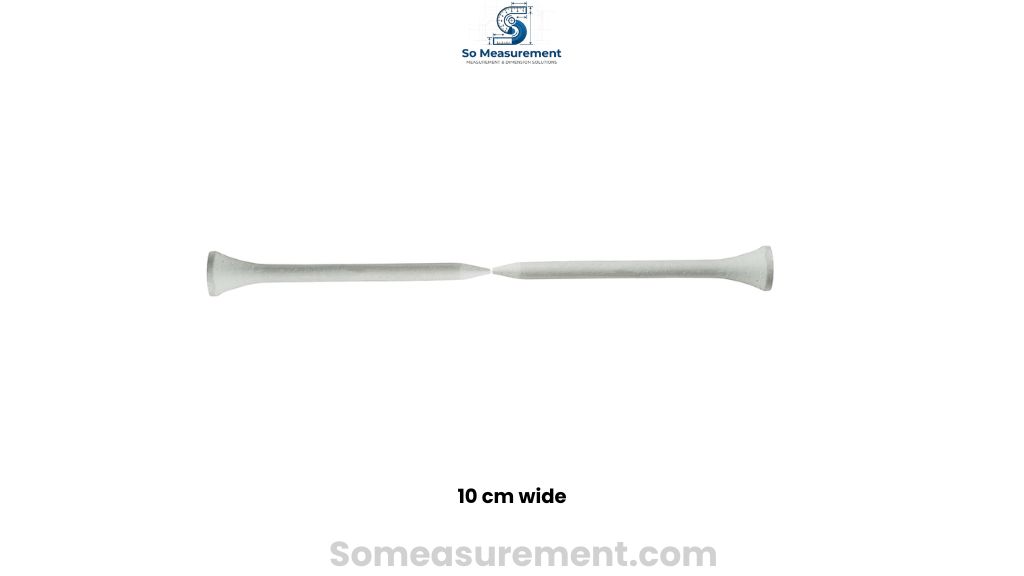
A standard golf tee is about 5.4 cm long, which means two placed end to end reach roughly 10.8 cm. That is only slightly over 10 cm, making the combination a workable approximation for the target measurement.
Golf tees are precisely manufactured to consistent lengths because the height of the tee affects ball trajectory. Standard tees are the most common and widely available type. If you have a few in a golf bag or junk drawer, lining two up end to end gives you an easy visual and physical reference for just over 10 cm.
Read also: How Big Is 1 cm? Everyday Things that are 1 cm Long or Big
9. Coffee Stirrer / Popsicle Stick
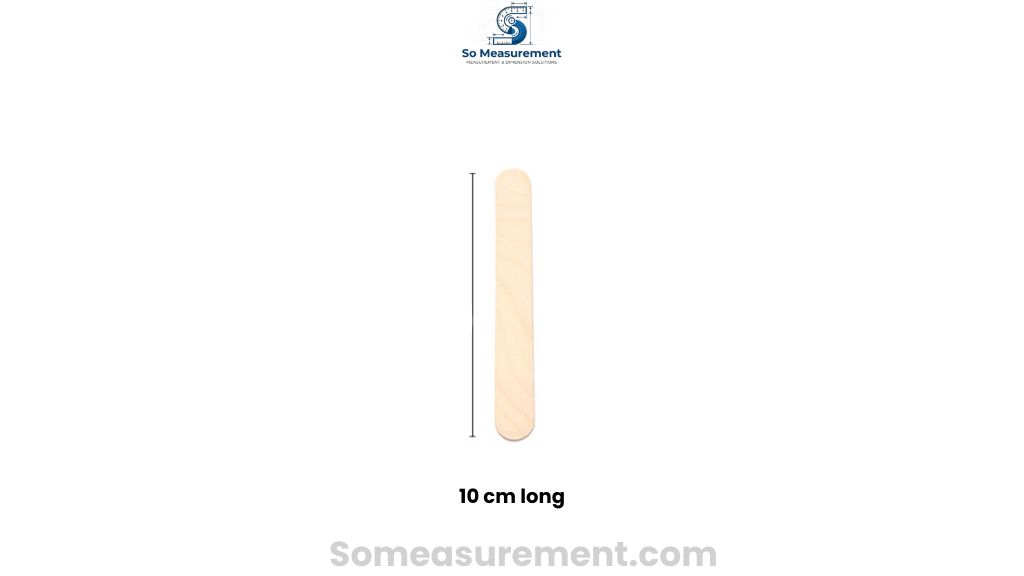
Wooden coffee stirrers and craft popsicle sticks are both typically around 11.4 cm long, which is close to 10 cm. The slight difference means these are approximate rather than exact references, but they are in the right neighborhood and are widely available in homes, cafes, and stores.
Both objects share a useful quality as a reference: they are flat, thin, and easy to lay alongside another object for a quick comparison. A popsicle stick placed next to something you want to measure gives a fast visual read on whether that object is close to 10 cm. Craft stores sell them in bulk, so they are also a practical tool for rough measurement tasks when no ruler is on hand.
10. Travel Makeup Brush

Travel-sized makeup brushes are designed to fit in small pouches and toiletry bags, and their handles commonly fall around 10 cm in length. Full-sized professional brushes are considerably longer, but travel versions are specifically sized down to fit compact spaces.
The brush handle length is the useful measurement here, not the bristle tip. The overall practical design intent of fitting into a small bag naturally produces a handle that lands close to this length. If you have a travel makeup kit, checking the handle of a smaller brush against a ruler will often confirm a length in the 9 to 11 cm range.
11. 10 cm Compared to Fruit
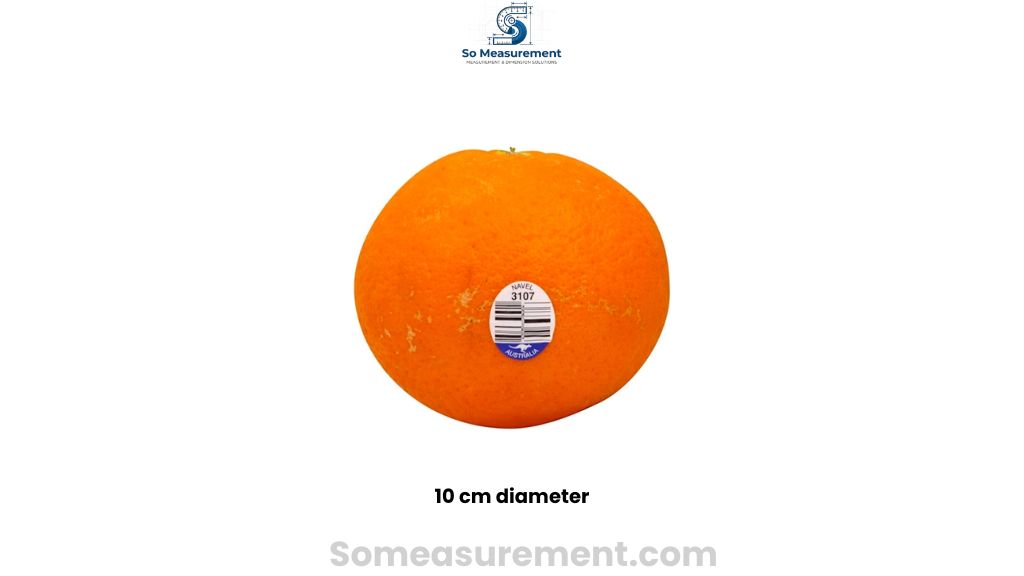
Fruit is variable by nature, but some common fruits land at or near 10 cm in at least one dimension. A medium clementine or small mandarin orange typically measures between 6 and 8 cm across, which falls just below 10 cm. A medium navel orange sits closer to 9 to 10 cm in diameter.
A small apple can also approach 10 cm in diameter depending on the variety and growing conditions. The variation in fruit means this is a rougher comparison than manufactured objects, but it serves a useful purpose: it shows that 10 cm is roughly the size of a piece of fruit you would hold in one hand. Not a grape, not a grapefruit, but something comfortably in between.
Estimating 10 cm Without a Ruler
A few quick methods that work reasonably well for rough estimation:
The width of an average adult’s four fingers held together is often close to 7 to 8 cm, so adding a thumb’s width can bring you near 10 cm, though this varies significantly between individuals. A more reliable improvised tool is a standard credit card, which is 8.56 cm wide. The card’s width plus a small gap of about 1.4 cm gets you to 10 cm.
For anything where precision actually matters, such as a construction project, a custom fitting, or a product purchase, use a ruler or tape measure. Household object comparisons are for quick visualization, not accurate measurement.
Read more: How Big Is 5 cm? 11 Everyday Things That Are About 5 Cm Long

Lev is passionate about helping readers understand sizes and dimensions of everyday objects. With a focus on clarity and practical examples, Lev shares accurate, trustworthy insights that make measurements relatable, useful, and easy to visualize for everyone.