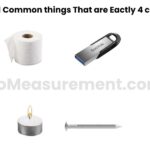
Four centimeters is a small but surprisingly useful size to understand. It converts to roughly 1.57 inches, sitting comfortably between one and two inches. That puts it in the range of small everyday objects, the kind you hold, carry, or use without ever thinking much about their size.
The comparisons below are drawn from common household and office items. Some are standardized, some vary slightly by brand or model, and that’s noted where it matters.ose to this mark. Noticeable, but compact.
11 Daily Use Things That Are 4 cm
| # | Object | Approximate Measurement | Dimension |
|---|---|---|---|
| 1 | Ping Pong Ball | 4 cm | Diameter |
| 2 | Large Tealight Candle | 3.8–4 cm | Diameter |
| 3 | Toilet Paper Roll (Inner Opening) | ~4 cm | Inner diameter |
| 4 | Standard Jeans Belt | ~3.8–4 cm | Width |
| 5 | Classic Pink Eraser | ~4 cm | Width |
| 6 | Mini Sticky Note Pad | ~4 cm | One side |
| 7 | USB Flash Drive Body | ~3.8–4.2 cm | Length |
| 8 | Standard Staple Box (Width) | ~4 cm | Width |
| 9 | Keyring Carabiner | ~4 cm | Length |
| 10 | Large Wood Screw or Anchor Nail | ~4 cm | Length |
| 11 | Door Thickness (Standard Interior) | ~3.5–4 cm | Thickness |
These aren’t textbook examples. These are objects sitting in your home, your pocket, and your office drawer right now.
1. Ping Pong Ball
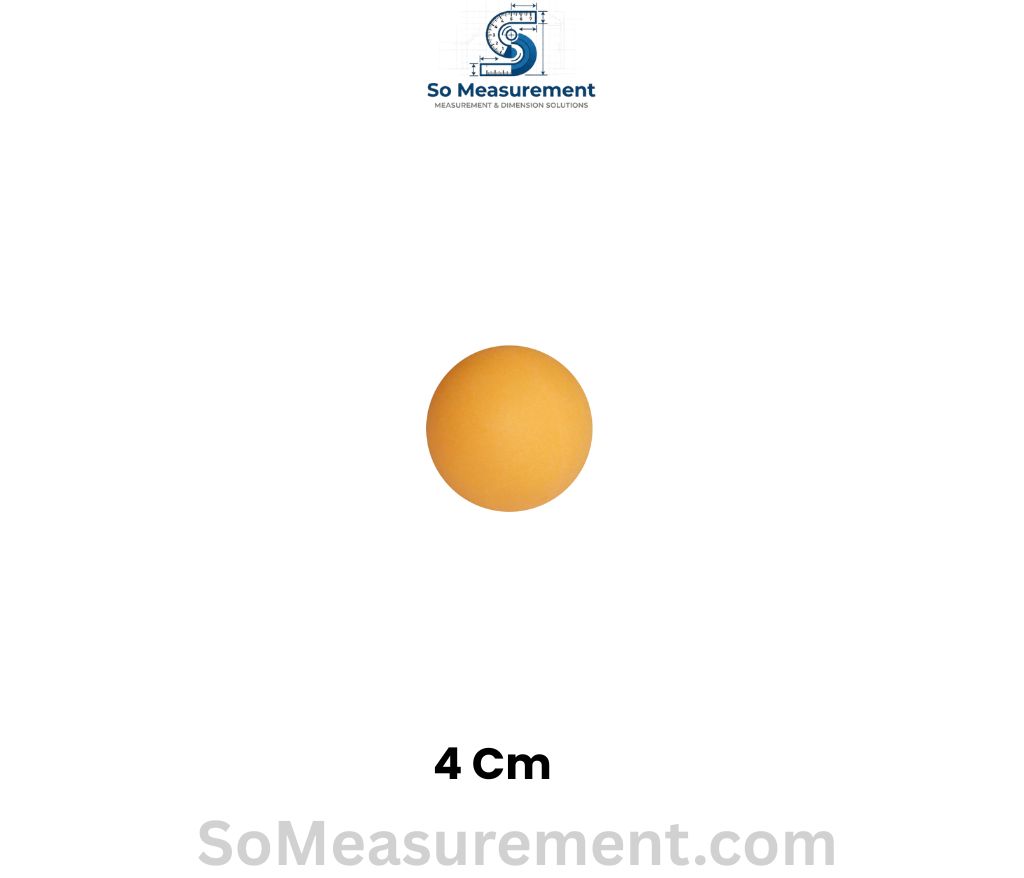
A regulation ping pong ball has an officially standardized diameter of exactly 40 mm, which is 4 cm. This makes it one of the most precise and reliable references for this measurement you can find in everyday life.
Because the size is set by international table tennis rules, every regulation ball you pick up will be exactly this diameter regardless of brand. If you have one nearby, it gives you a near-perfect physical feel for what 4 cm actually occupies in space.
2. Large Tealight Candle
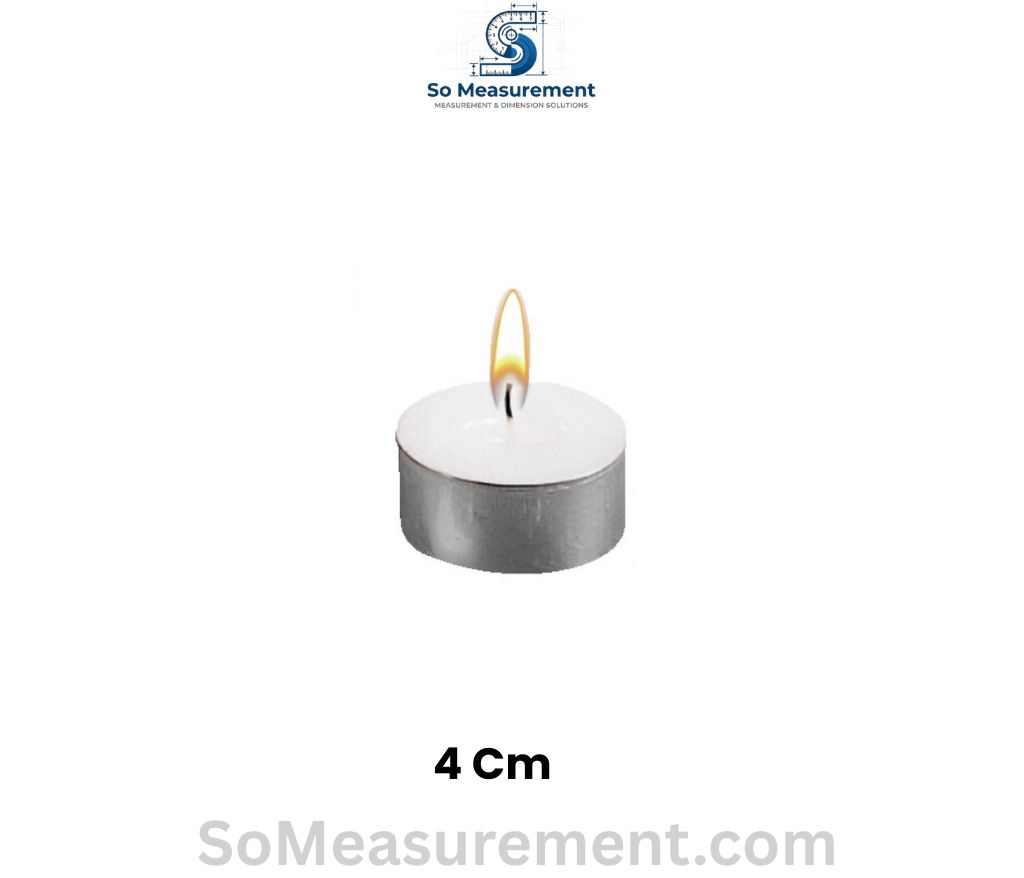
Standard tealight candles come in two common sizes: the small version sits around 3.8 cm in diameter, while the large tealight version reaches right at or just above 4 cm across. The aluminum cup holding the wax is what you’re measuring here.
Large tealights are sold widely in home goods stores and online, making them easy to find as a reference. The circular shape also helps you picture 4 cm as a diameter rather than a flat edge, which gives a slightly different but equally useful visualization.
3. Toilet Paper Roll (Inner Opening)

The cardboard tube inside a toilet paper roll has an inner diameter that typically falls close to 4 cm, around 38 to 45 mm depending on the manufacturer. The inner opening, rather than the outer tube, is what lands nearest to the 4 cm mark.
This is a practical reference because nearly everyone has one in arm’s reach. It also shows 4 cm as a circle you can see through rather than just a line on a ruler, which helps with understanding it as a spatial dimension.
4. Standard Jeans Belt
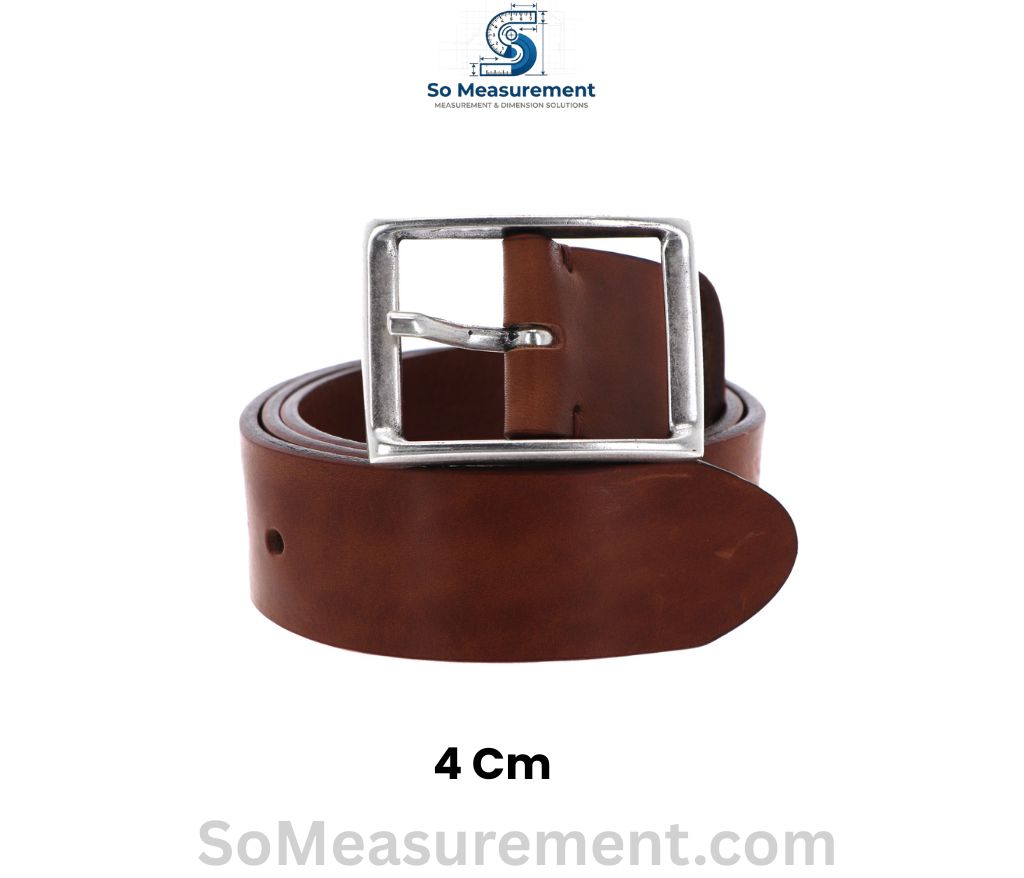
Walk to your closet and pull out any standard jeans belt. The width of the strap itself measures 40 mm, or 4 cm. This is a global manufacturing standard, not a coincidence. Belt loops on denim jeans are sized to match this exact width, which is why belts from different brands fit the same pants.
Fashion and textile manufacturers have held this spec consistent for decades. It’s the kind of measurement that exists quietly in the background of everyday life. You’ve buckled a 4 cm object onto yourself every morning without noticing.
Read more: How Big Is 10 cm? Here’s What It Actually Looks Like in Real Life
5. Classic Pink Eraser
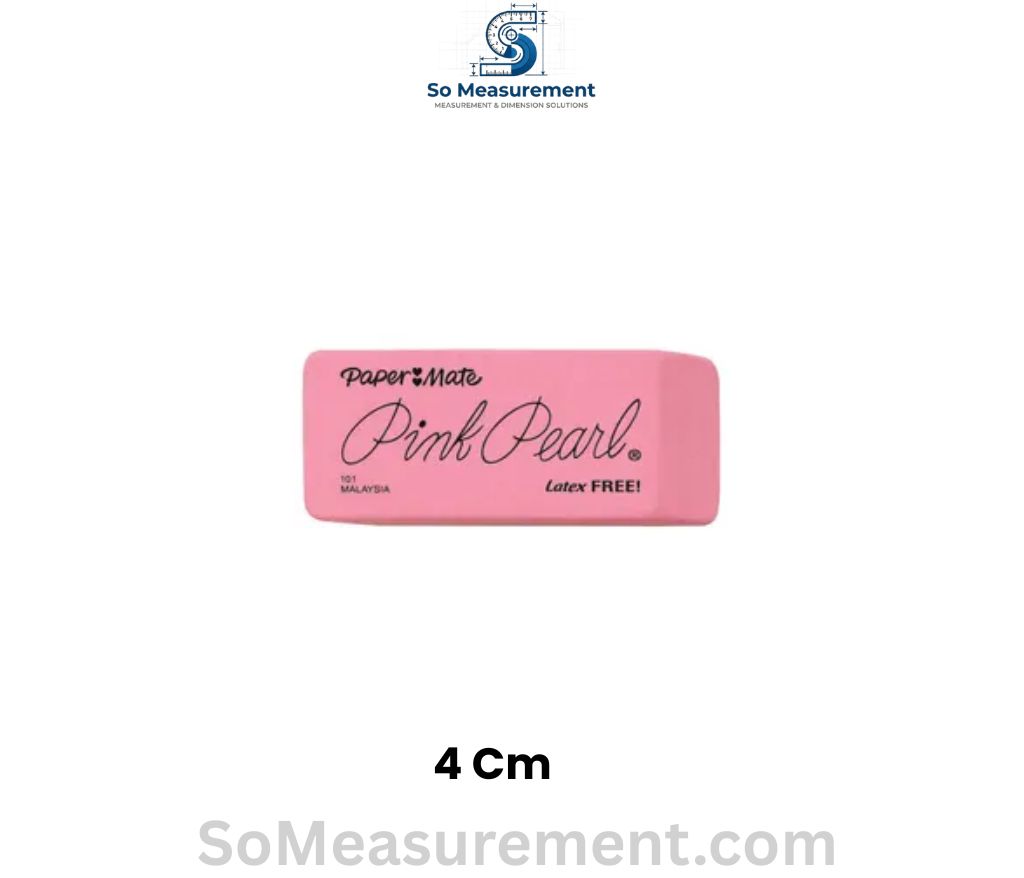
The rectangular pink erasers used in schools for decades, the kind that comes as a separate block rather than attached to a pencil, commonly measure around 4 cm in their shorter width dimension. The exact size varies slightly by brand, but most fall within a few millimeters of this.
What makes this a useful reference is that the eraser sits flat and you can clearly see one face of it. Running your thumb across the shorter side gives you a tactile sense of the 4 cm span in a way that’s easy to remember.
6. Mini Sticky Note Pad
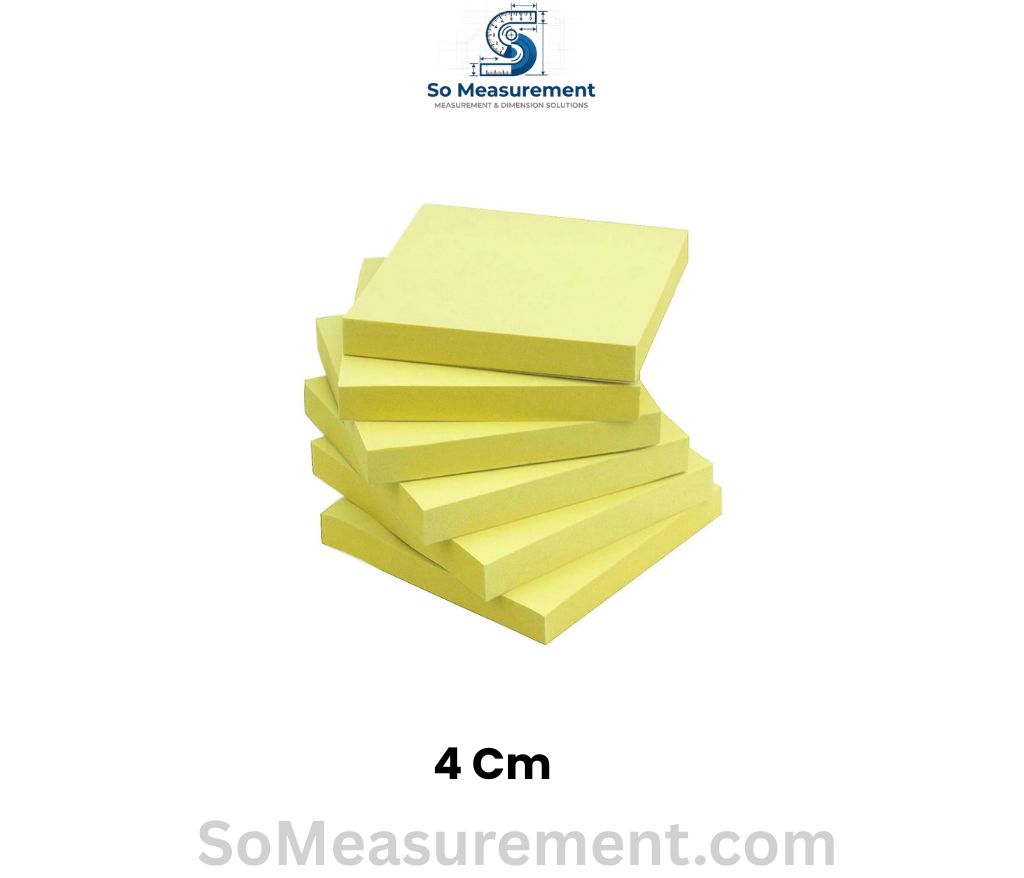
The smallest common sticky note pads, often sold in multipacks or used as flags and tab markers, are frequently cut to around 4 cm on their shorter side. These are distinct from the full 3×3 inch standard notes, which are considerably larger.
The mini format is popular for labeling, bookmarking, and small reminders. One side of that little paper square maps nicely onto 4 cm, and the thin stack of paper makes it easy to hold and compare against other small objects.
7. USB Flash Drive Body
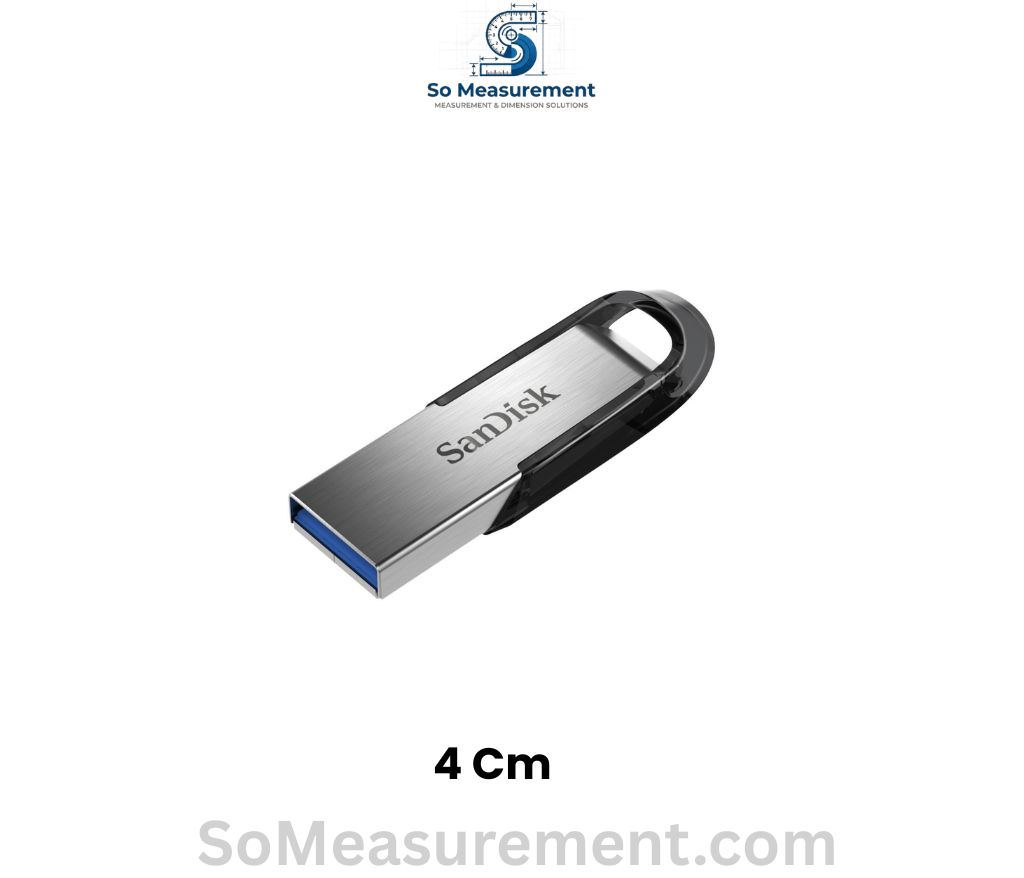
The plastic or metal body of a standard USB flash drive, not counting the connector cap, typically runs between 38 and 45 mm in length depending on the design. Many of the most common slim and rectangular drives land right at or around 4 cm in body length.
This is a comparison that works well because flash drives are portable and familiar. Pull one from your bag or desk, hold it between your fingers, and the length of the main body gives a good approximation of the 4 cm scale.
Read also: How Big Is 6 cm? Here’s What It Actually Looks Like
8. Standard Staple Box (Width)
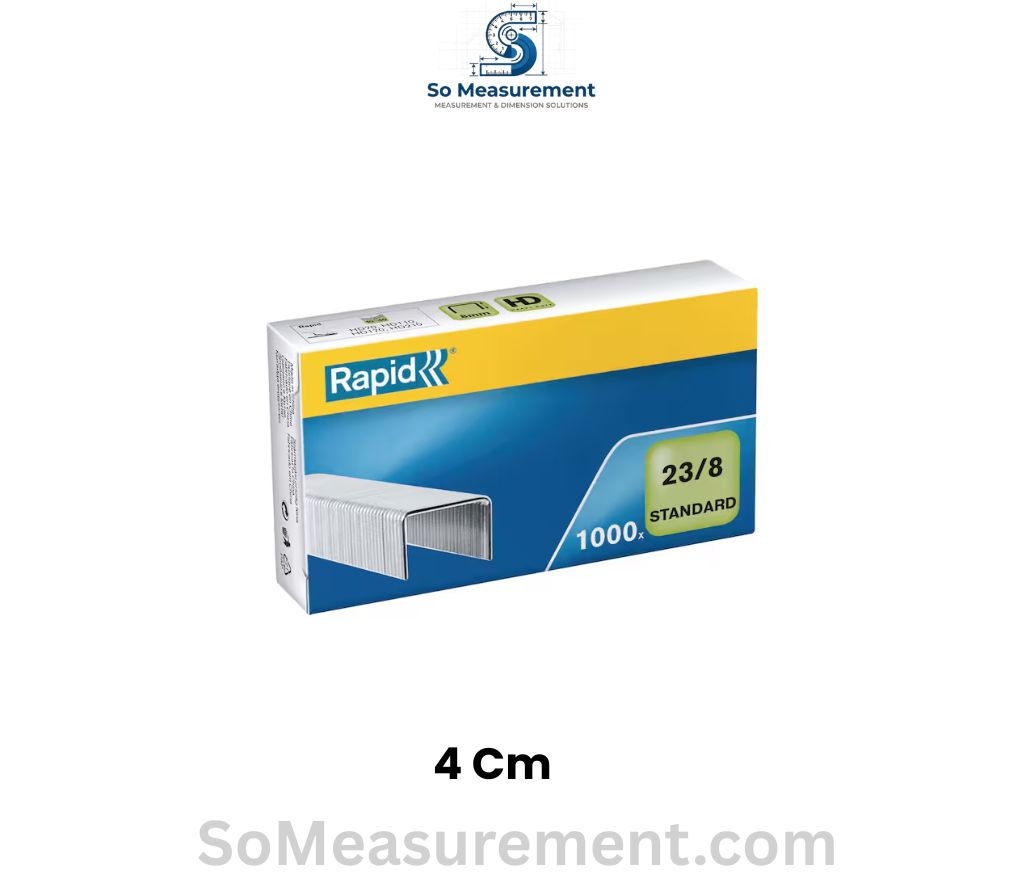
The small cardboard boxes that standard staples come in, the kind holding 5,000 staples in a single strip-packed box, are commonly around 4 cm wide. The width is the shorter horizontal dimension when the box is sitting upright.
Staple boxes are consistent in size because the staple strip dimensions are standardized. This makes the box a reliable reference rather than a variable one. If you have a box of staples in a desk drawer, the width across the face of the box is a decent 4 cm check.
9. Keyring Carabiner
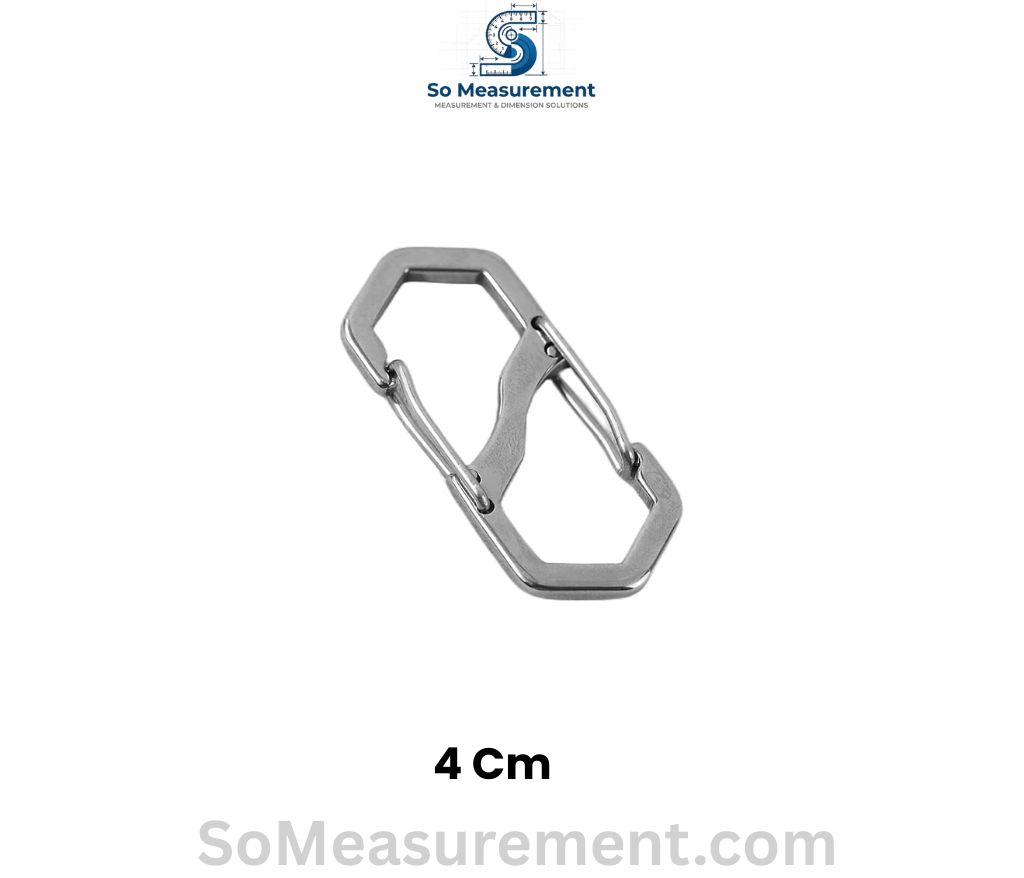
Small keyring carabiners, the lightweight aluminum ones used to clip keys or small bags rather than climbing gear, are typically around 4 cm in total length when measured from the top of the spine to the tip of the gate. Sizes vary between about 35 and 50 mm, with the most common everyday variety landing close to 4 cm.
These are widely sold in hardware and outdoor stores in a compact format. The oblong shape means you’re measuring the full loop length, and that length is a familiar scale for anyone who carries keys on one.
10. Large Wood Screw or Anchor Nail

A 4 cm screw or nail is a very common fastener size used in furniture assembly, light carpentry, and wall anchoring. Wood screws in this length are standard in most hardware assortments, typically sold alongside 3 cm and 5 cm lengths as middle-of-the-range options.
Holding a 4 cm screw gives a sharp, easy-to-feel length. Unlike round or flat objects, the linear nature of a nail or screw makes the full length of 4 cm immediately apparent from tip to head, which is useful for understanding the measurement as a straight distance.
Read more: How Big Is 60 cm? Objects, Conversions, and Tricks That Actually Work
11. Door Thickness (Standard Interior)
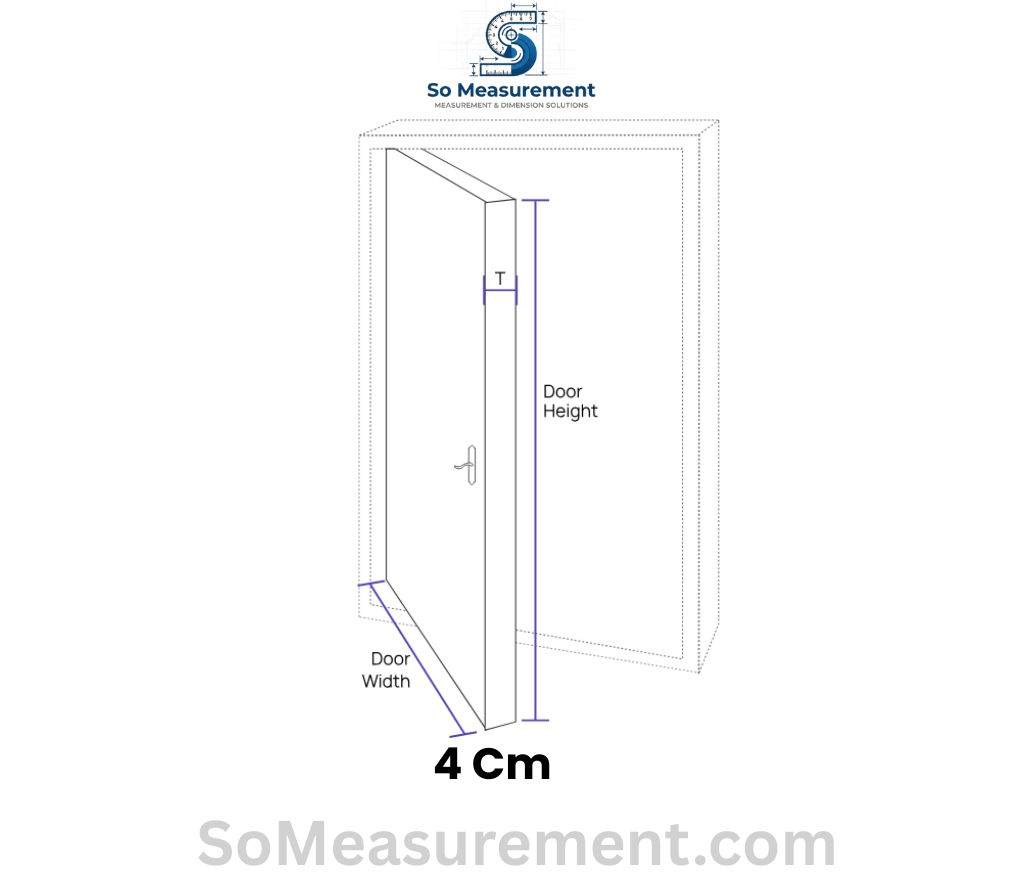
Interior residential doors in most countries are built to a standard thickness that falls between 35 mm and 45 mm, with 38 to 40 mm being the most common range. That places the edge of a typical interior door right at or very near 4 cm thick.
This is a fixed architectural reference you can check in most homes. Run your fingers along the edge of a closed interior door and feel the thickness of the slab. That narrow depth of wood you’re gripping is approximately 4 cm, giving you a sense of the measurement as a structural thickness rather than a handheld object.
Keeping It in Perspective
Four centimeters is a size that comes up constantly in everyday objects without most people noticing. It’s small enough to fit entirely in your palm, yet large enough to be the defining dimension of dozens of practical items.
The ping pong ball remains the single most precise and easy-to-find reference if you want an exact match. For a flat width, the jeans belt or classic eraser works well. For length as a straight line, a 4 cm screw is hard to beat. Whichever object is closest to hand will give you a reliable sense of this measurement in real life.
Read more:
How Big Is 3 cm? Here’s What It Actually Looks Like
How Big Is 2 cm? The Size You Can Actually Picture

Lev is passionate about helping readers understand sizes and dimensions of everyday objects. With a focus on clarity and practical examples, Lev shares accurate, trustworthy insights that make measurements relatable, useful, and easy to visualize for everyone.