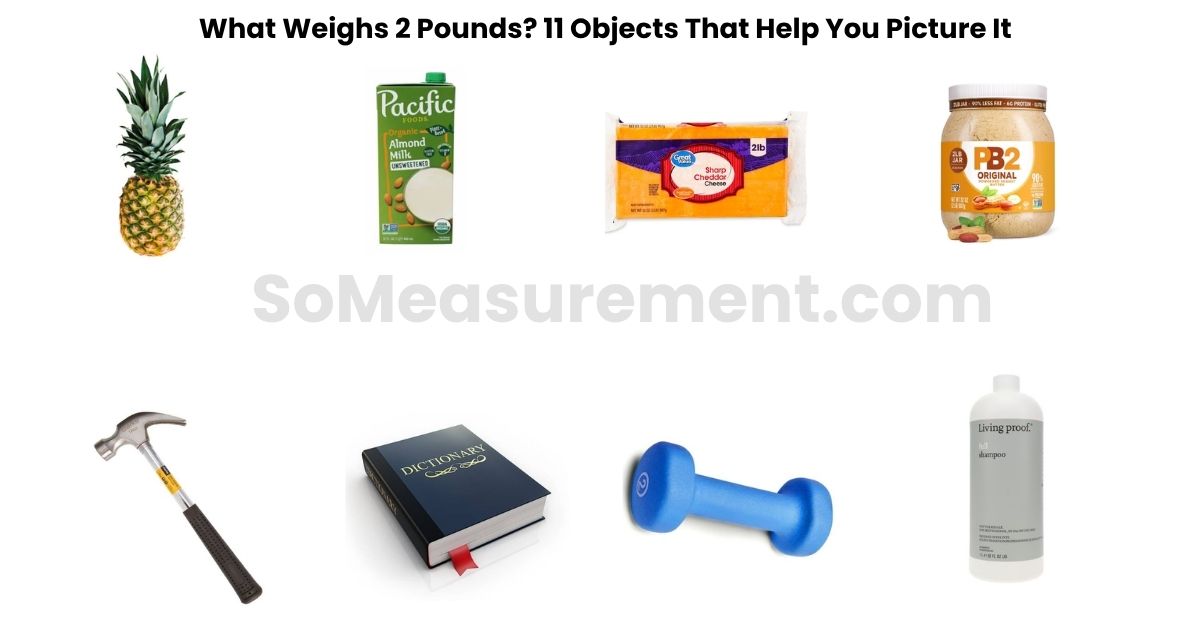
Two pounds can be harder to imagine than it sounds. Most people know the number but not the feeling. The easiest way to understand What Weighs 2 Pounds is to compare it with familiar things you can hold, carry, or find around the house. From a carton of milk to a fresh pineapple, real-world examples turn an abstract measurement into something practical and easy to remember.
The 2 Pounds Weight in Numbers
| Unit | Value |
| Pounds | 2 lb |
| Ounces | 32 oz |
| Grams | 907 g |
| Kilograms | 0.907 kg |
All conversions follow the International Yard and Pound Agreement (1959), which defines one pound as exactly 453.592 grams — the global standard behind every food label, postal scale, and gym weight you’ve ever used.
11 Things That Weighs 2 Pounds
| Object | Category | Weight |
| Whole Fresh Pineapple | Fruit | 2 lb |
| Carton of Milk (32 oz) | Grocery Item | 2 lb |
| Block of Cheddar Cheese (32 oz) | Dairy Product | 2 lb |
| Rack of Baby Back Ribs | Meat | 2 lb |
| Large Jar of Peanut Butter (32 oz) | Pantry Item | 2 lb |
| Full-Size Metal Claw Hammer | Tool | 2 lb |
| Paperback Dictionary or Textbook | Book | 2 lb |
| Full Shampoo Bottle (32 oz) | Household Item | 2 lb |
| Adult Knit Wool Sweater | Clothing | 2 lb |
| Gel Ice Pack | Medical Item | 2 lb |
| Travel Dumbbell | Fitness Equipment | 2 lb |
1. A Whole Fresh Pineapple
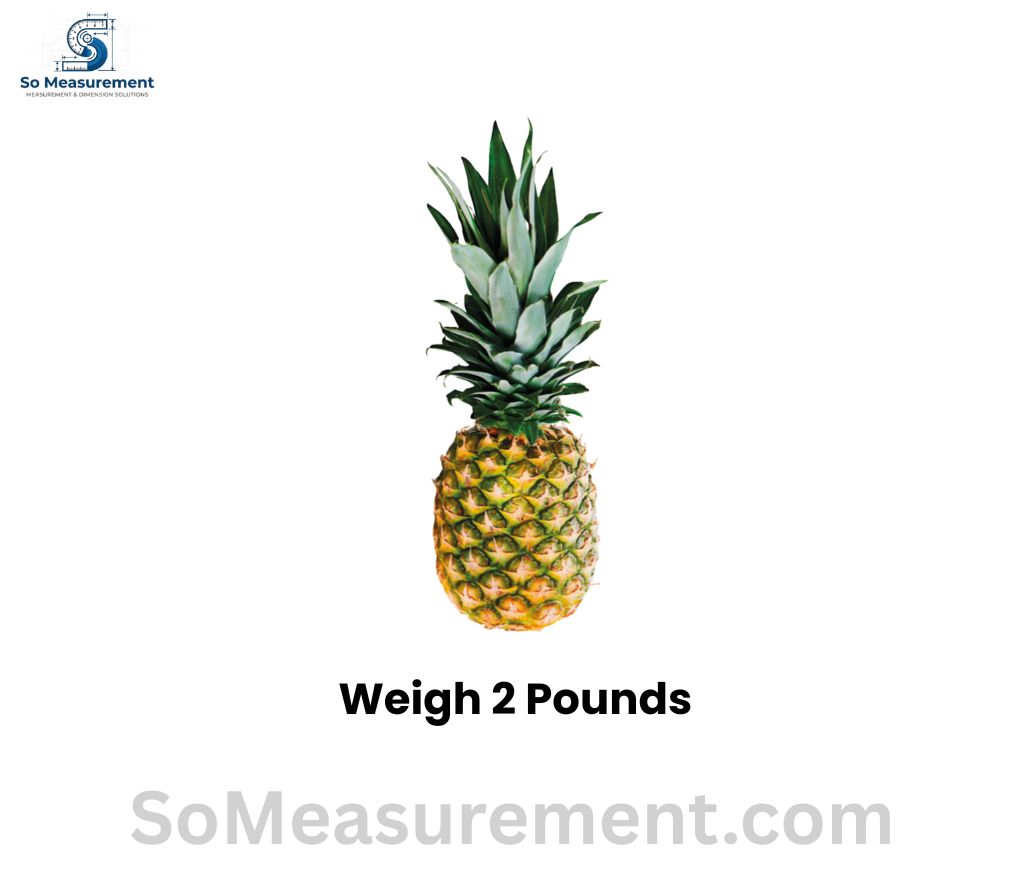
Pick one up at the grocery store and you’re holding a near-perfect 2-pound reference. Medium-sized pineapples land right in this range consistently — the dense core, the thick skin, and the crown all add up.
What makes this a great mental anchor is the grip. The spiky surface forces your fingers to spread wide, and the fruit presses firmly into your palm. It feels heavier than it looks because the mass is packed tightly into a compact shape. This is 2 pounds with texture you can actually feel.
2. A 32 oz Carton of Milk or Heavy Cream
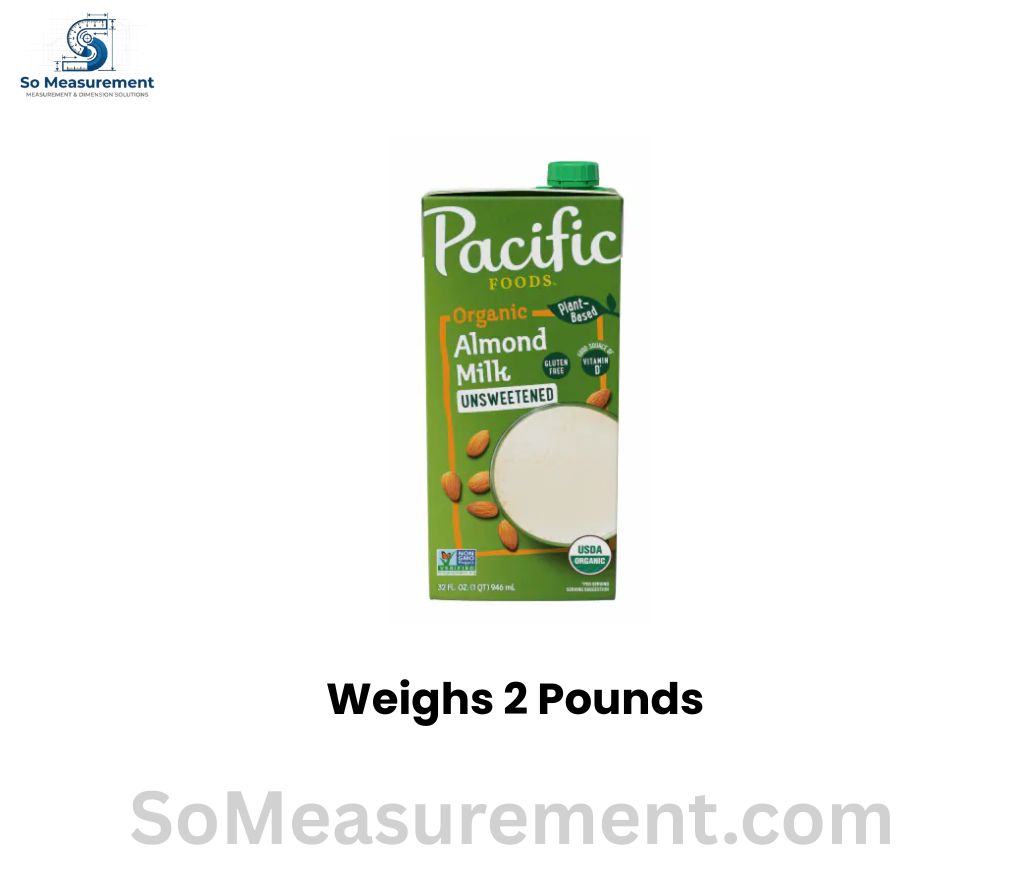
A one-quart carton of whole milk weighs almost exactly 2 pounds. The weight distributes evenly inside the cardboard box, so it feels balanced — almost like a small brick sitting flat in your hand.
You’ve grabbed one from the fridge hundreds of times. The interesting thing is that it never feels “heavy,” yet it’s hitting the 2-pound mark every single time. Familiarity dulls the perception of weight. This object proves it.
3. A 32 oz Block of Cheddar Cheese
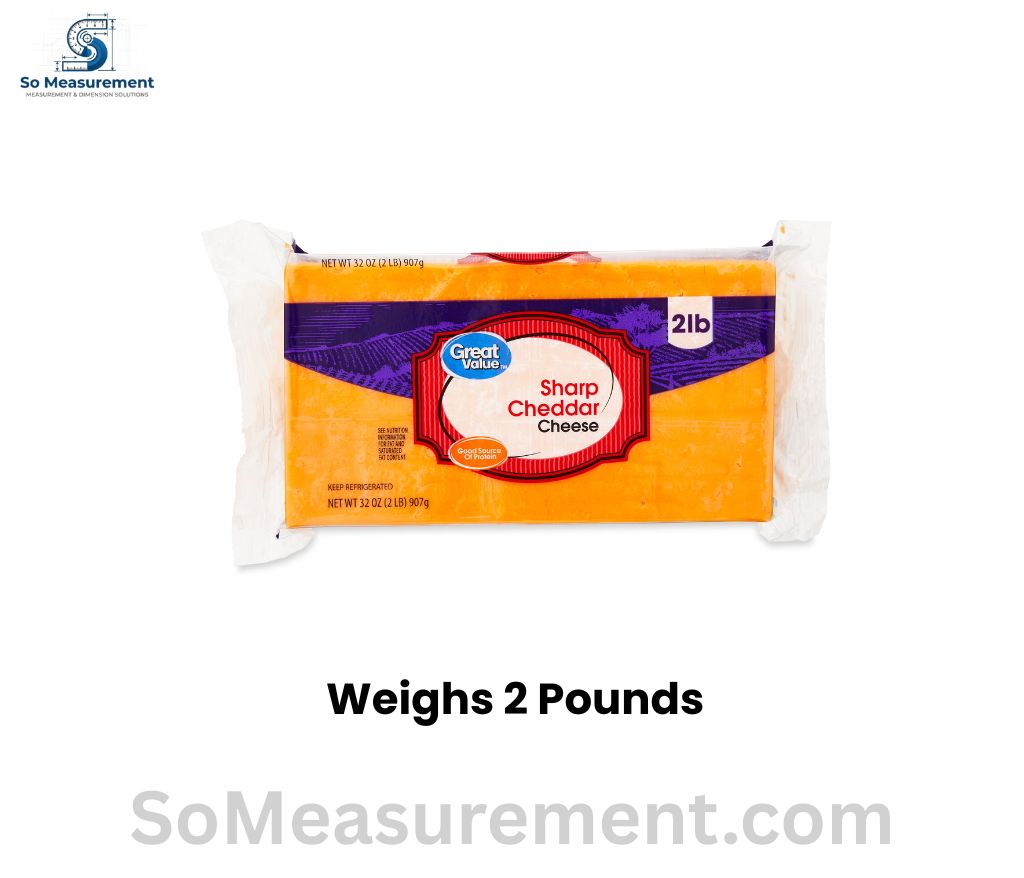
The large rectangular bricks of sharp cheddar sold at warehouse stores weigh right at 2 pounds. Cold, firm, and dense — press your fingers into the sides and there’s zero give. It’s a solid, clean rectangle that fits in both hands naturally.
The shape helps here. Because it’s flat and uniform, the weight feels controlled and easy to hold. Slice it into quarters and each piece weighs about 8 ounces. That’s a genuinely useful kitchen reference — not just a curiosity.
4. A Rack of Baby Back Ribs
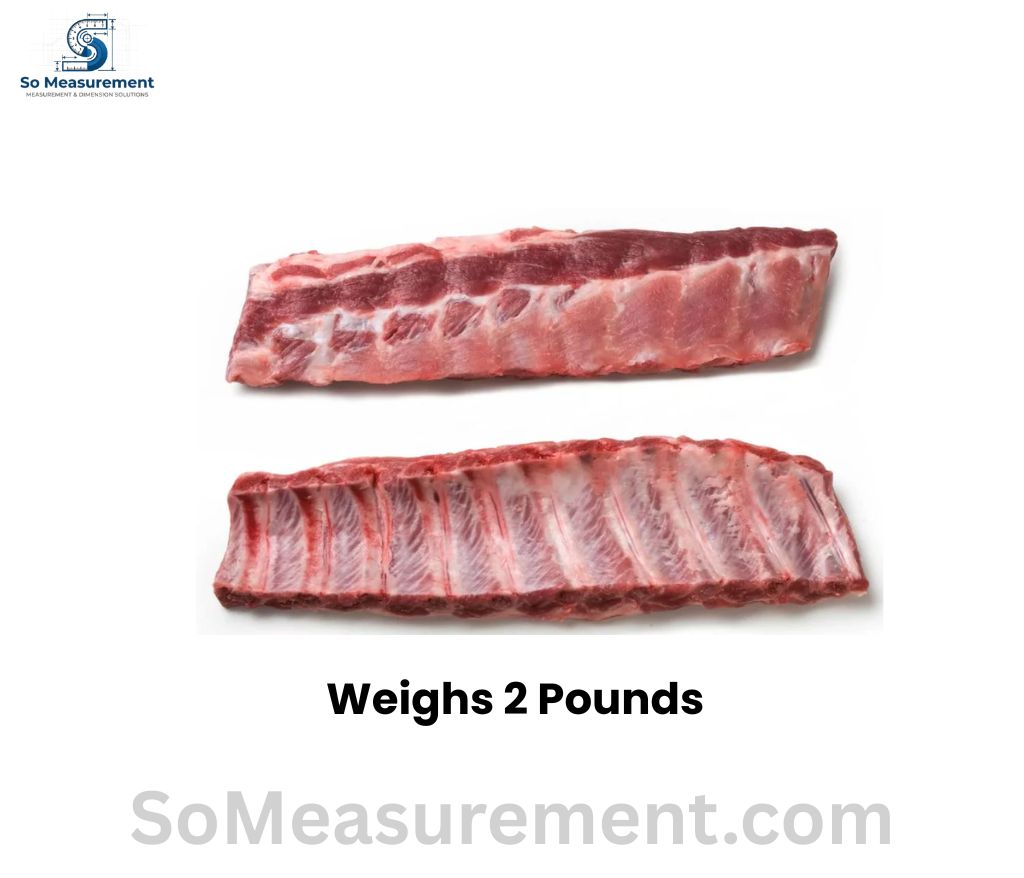
Before cooking, a single rack of baby back ribs runs between 1.75 and 2.25 pounds. The midpoint is right at 2. Butchers and grocery meat sections sell them consistently in this range, which makes them a reliable reference at the meat counter.
The weight doesn’t feel like 2 pounds because it’s spread across a long, flat surface. You’d carry it with one hand underneath like a thin cutting board. That’s the trick with distributed weight — it registers lighter than a compact object of the same mass.
5. A Large Jar of Peanut Butter (32 oz)
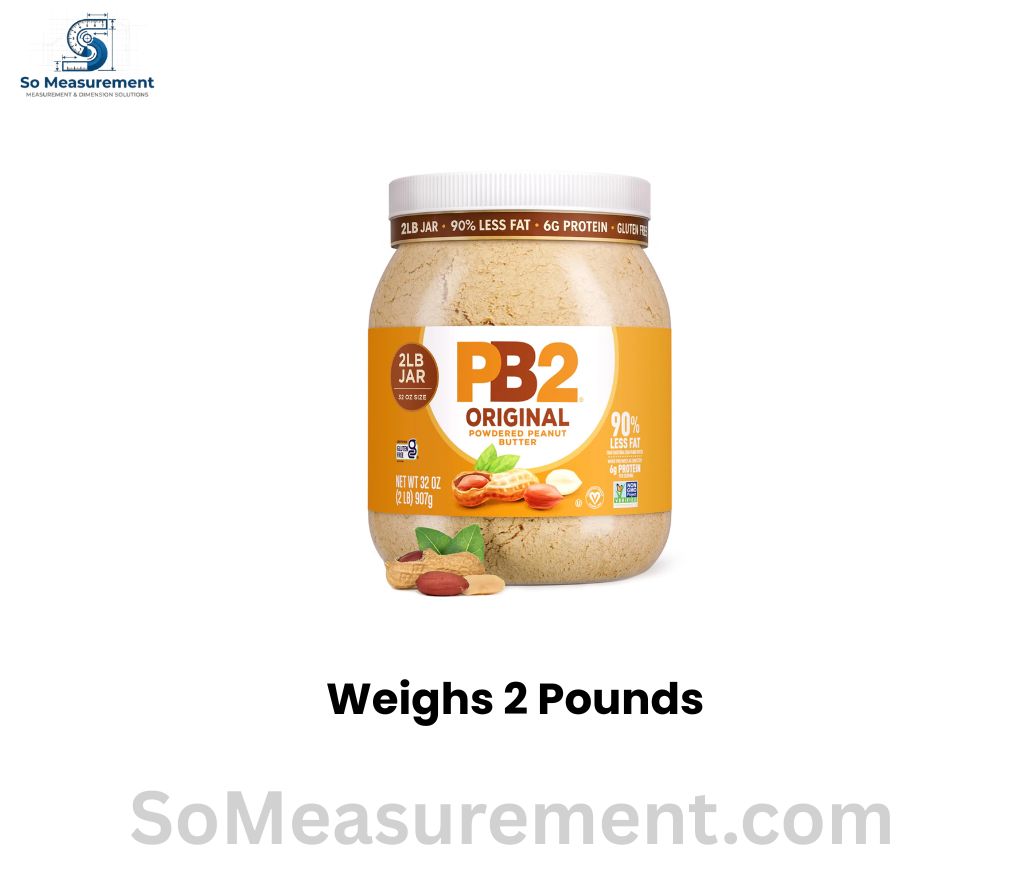
Wide, squat, and full — the family-sized peanut butter jar is one of the most common 2-pound objects in any kitchen. The label usually says both “32 oz” and “2 lb” right on the front.
Hold it by the lid and the weight pulls your wrist down steadily. Hold it from the base and it settles comfortably in your palm. This is a useful shipping reference too: if your package feels about as heavy as a full peanut butter jar, you’re close to 2 pounds.
6. A Full-Size Metal Claw Hammer
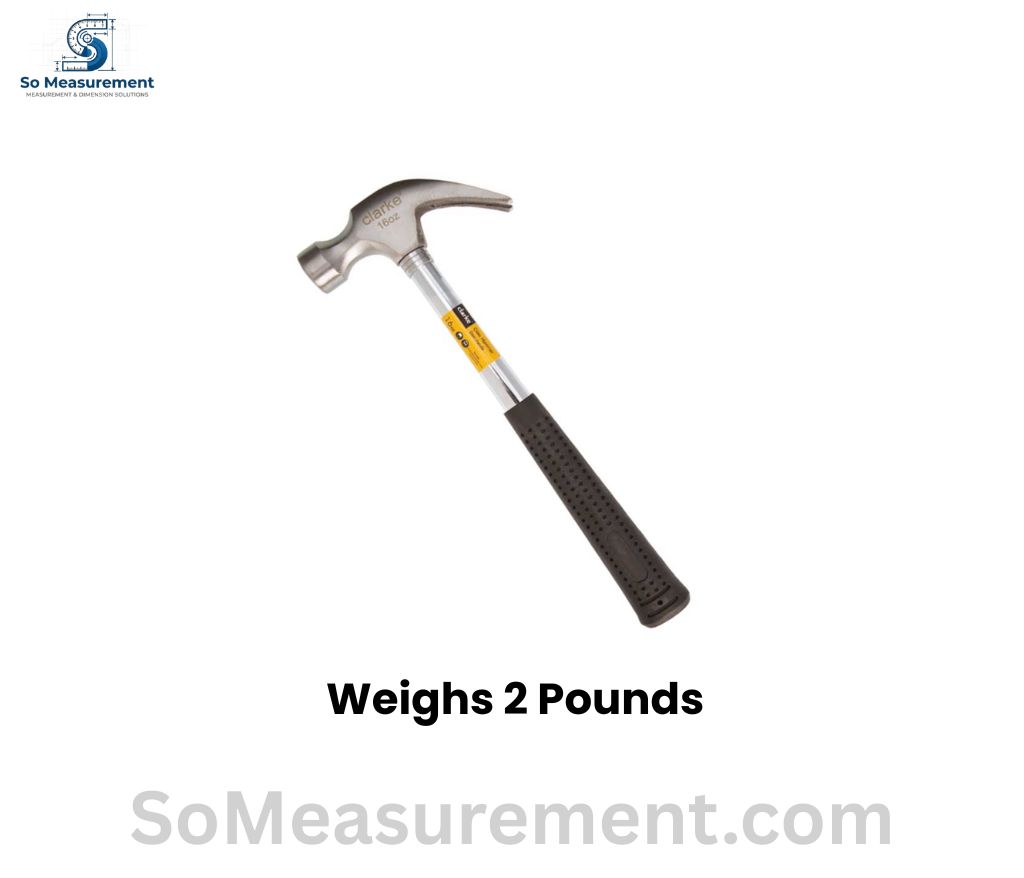
A standard 20-ounce to 24-ounce framing hammer — the kind used for actual construction work, not a lightweight tack hammer — comes in right around 2 pounds with the handle included. The weight sits at the metal head, not the grip end.
This is what makes hammers feel deceptively heavy. Hold one at the very end of the handle and the head pulls hard. Choke up on the grip and it feels manageable. Either way, you’re working with roughly 2 pounds of tool — the same weight as that jar of peanut butter, just distributed very differently.
7. A Thick Paperback Dictionary or Textbook
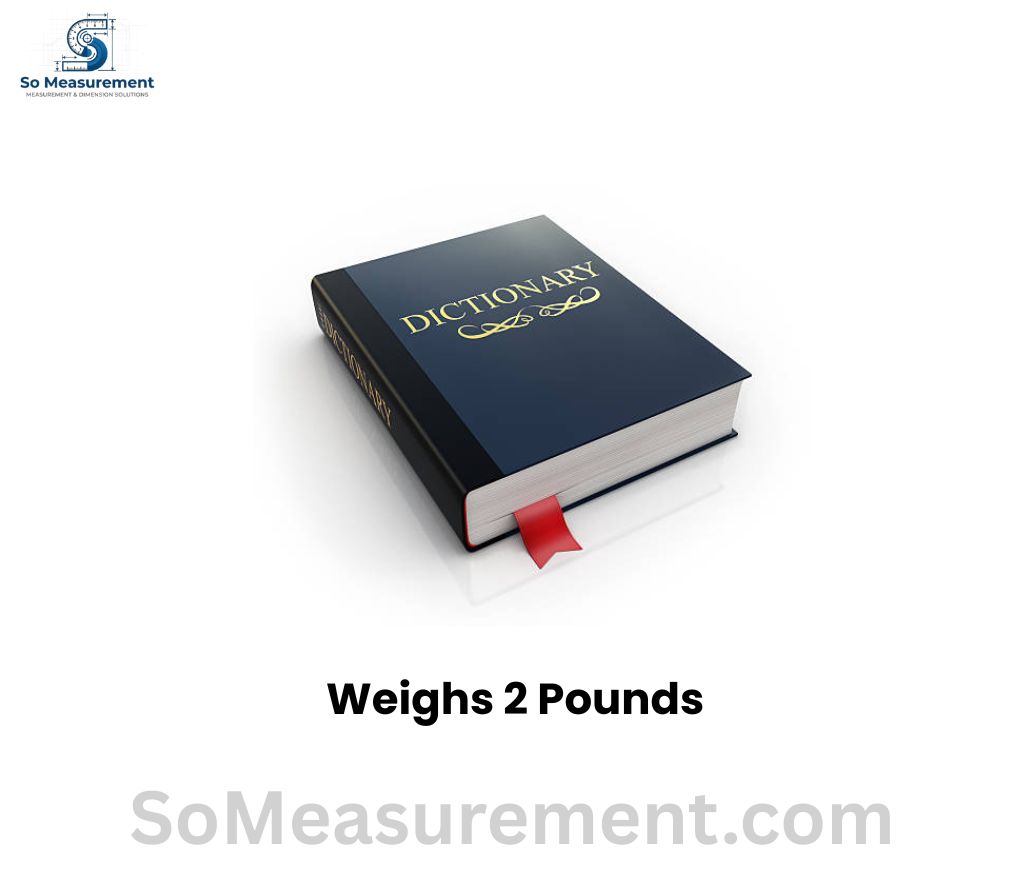
A mid-sized collegiate dictionary or single-subject paperback textbook typically lands between 1.8 and 2.2 pounds. The pages compress together tightly, and that density surprises people — a book this size looks lighter than it is.
Hold one flat in one hand for 30 seconds. Your wrist will start to notice it. That slow buildup of fatigue is actually a better gauge of 2 pounds than a quick lift, because the weight has time to register in your muscles rather than just your grip.
8. A Full 32 oz Shampoo or Conditioner Bottle
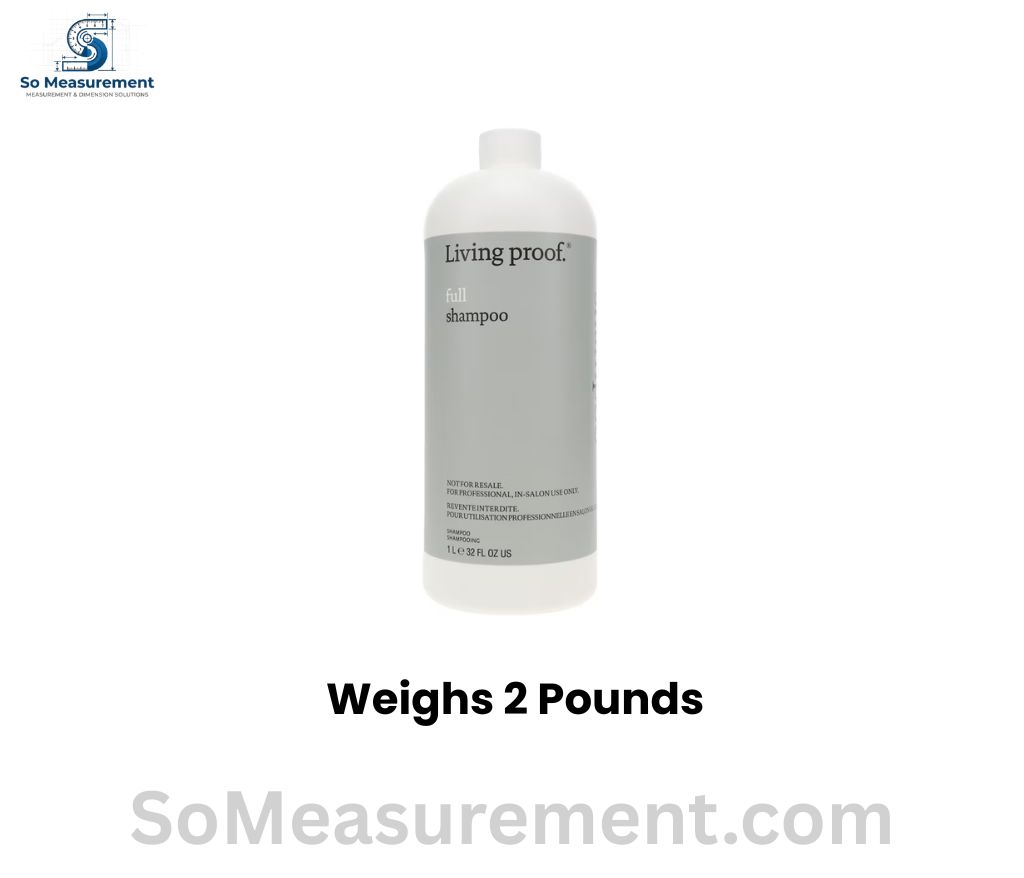
Large pump bottles of shampoo and conditioner — the 32-ounce size sold at most drugstores and big-box retailers — weigh right at 2 pounds when full. The liquid shifts slightly as you move the bottle, which makes your hand work harder to keep it steady.
That movement is the key difference from a solid object. Same weight, different experience. It’s a good reminder that how weight feels depends on more than just numbers — distribution, shape, and movement all change the perception.
9. A Knit Wool Sweater (Adult, Medium or Large)
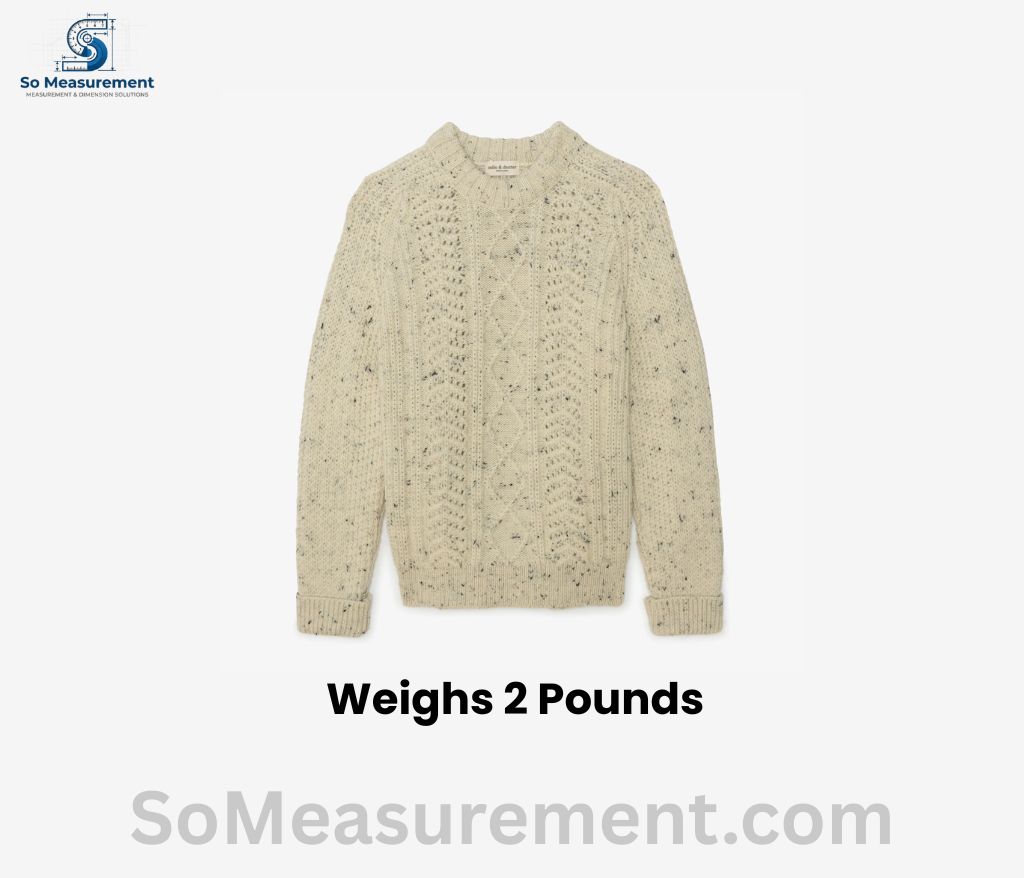
This one surprises most people. A medium or large adult knit sweater — especially wool or a wool blend — typically weighs between 1.8 and 2.1 pounds. Fabric doesn’t feel heavy because it drapes and compresses. Fold it flat and set it on a postal scale, though, and it often registers right at 2 pounds.
This matters practically for anyone packing a carry-on or shipping clothes. A single heavy sweater can eat up nearly a full pound of your baggage allowance before you’ve added anything else.
10. A Gel Ice Pack (Physical Therapy Size)
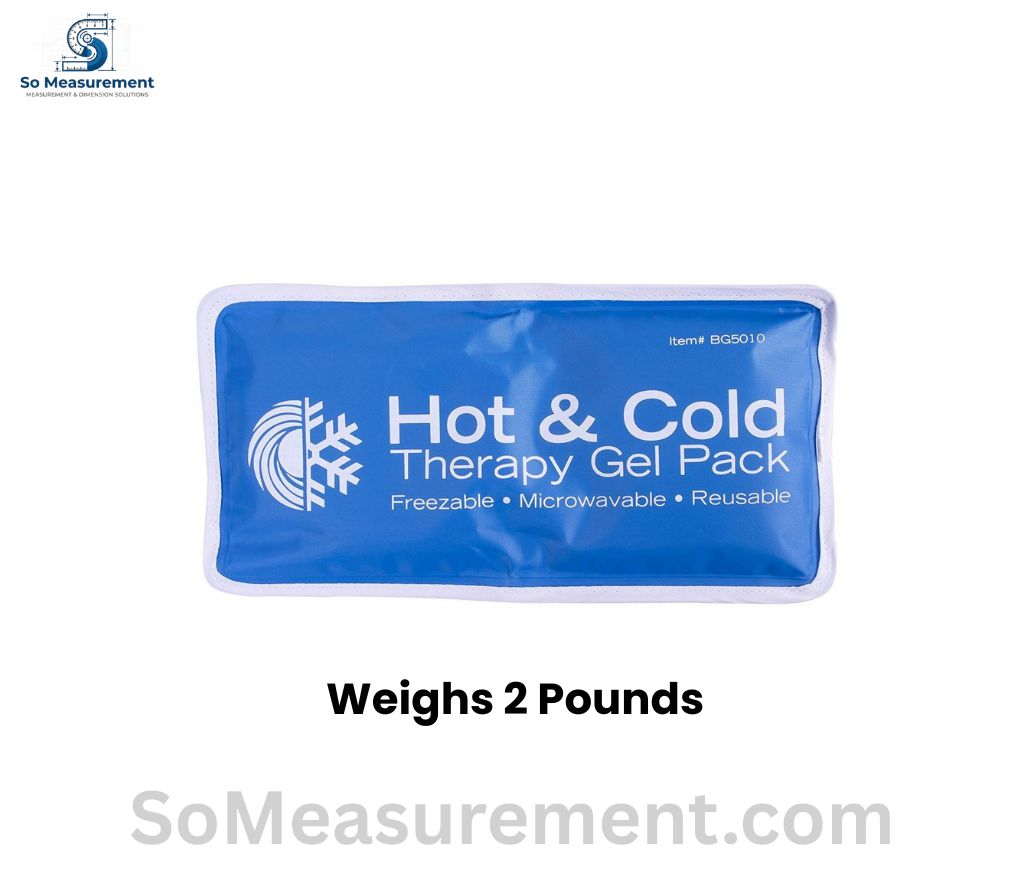
Standard weighted gel packs used in physical therapy — the ones strapped around a knee or shoulder — are most commonly designed at 2 pounds. That weight is intentional: enough to provide compression and hold the pack against the joint without adding strain to the area being treated.
Unfrozen, it’s flexible and drapes across your hand like a thick piece of fabric. Frozen, it becomes a firm, dense slab. Same 2 pounds, two completely different textures. Physical therapists work with this weight range daily precisely because it sits at the edge of “noticeable” without being “burdensome.”
11. A 2-Pound Travel Dumbbell
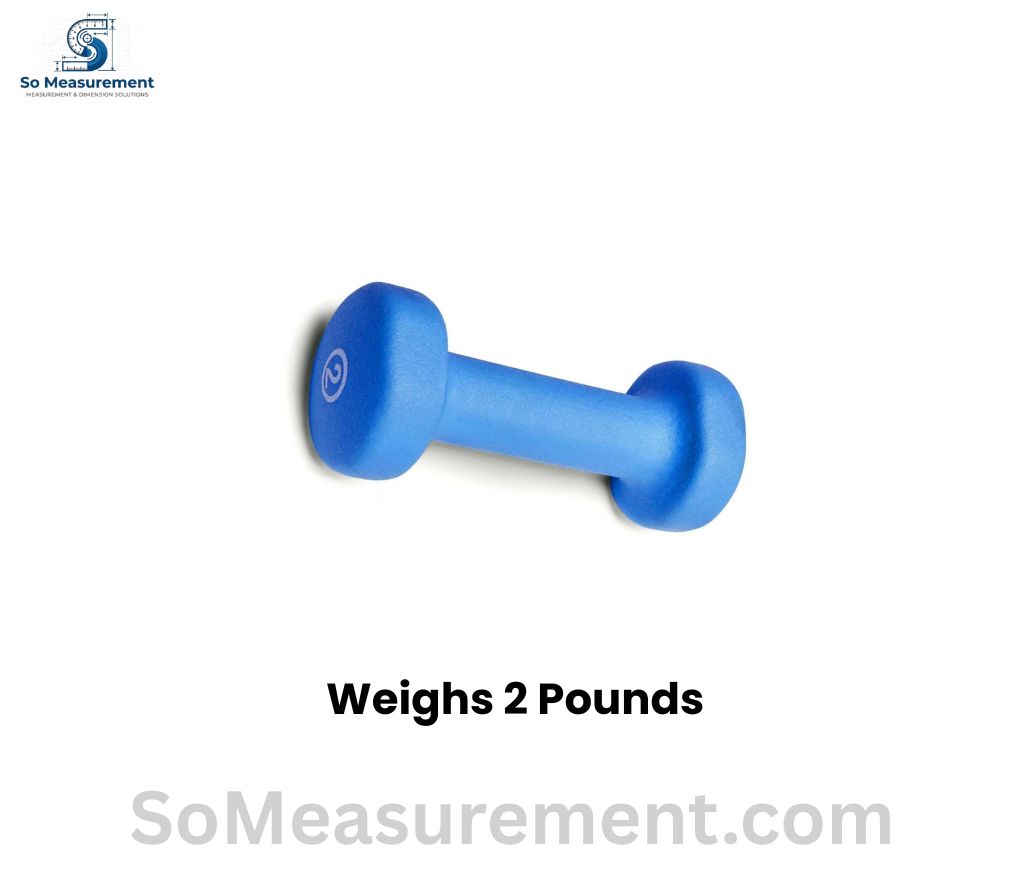
The lightest widely available dumbbell size is 2 pounds. Small enough to fit in a gym bag side pocket, compact enough to use at a desk. The metal is smooth and cold, shaped either as a short cylinder or a hexagonal weight.
For someone new to exercise or working through physical rehabilitation, 2 pounds is a real and meaningful resistance — not a token weight. Holding one next to a full peanut butter jar is a useful exercise: two completely different objects, identical weight. Your hand can’t tell the difference.
How to Estimate 2 Pounds Without a Scale
The bathroom scale trick. Step on, note your weight. Pick up the object. The difference is its weight. It won’t give you decimal precision, but a 2-pound jump reads clearly on any standard scale.
Read the label. A 32-ounce product label means 2 pounds of contents. Milk, juice, peanut butter, shampoo — if it says 32 oz, you’re holding 2 pounds of product. The packaging weight adds a little, but the contents alone are right there.
Two soup cans plus a small apple. A standard 10.5-ounce condensed soup can weighs just under 11 ounces. Two of them sit around 21–22 ounces. Add a medium apple at about 8–10 ounces and you’re at 2 pounds. It’s a rough method, but it works when nothing else is available.
Two Mistakes People Make With This Weight
Mixing up net weight and total weight. A “32 oz” label refers to the contents only. The jar, bottle, or carton adds more. A 32-ounce glass jar of peanut butter might weigh 2.3 or 2.4 pounds total. For cooking, net weight is what matters. For shipping, gross weight — packaging included — is what the carrier charges for.
Assuming 2 pounds equals 1 kilogram. It doesn’t. One kilogram is 1,000 grams. Two pounds is 907 grams. The difference is about 93 grams — roughly the weight of a large egg. Close enough for casual estimation, meaningfully different for anything precise.
Read also –
14 Everyday Items That Weigh 20 Pounds
What Weighs 3 Pounds? 11 Real Objects That Hit This Weight
FAQ’s about 2 Pounds
How can I estimate 2 pounds without a scale?
A quick way is to compare the item to a full 32-ounce carton of milk or a large jar of peanut butter. Both are close to 2 pounds and provide a useful everyday reference.
Why do some 2-pound objects feel heavier than others?
Shape and weight distribution change how an object feels. A compact item like a peanut butter jar often feels heavier than a sweater, even when both weigh the same amount.
Is 2 pounds considered heavy?
For most adults, 2 pounds is light enough to carry comfortably with one hand. However, holding it for a long time can cause fatigue, especially if the weight is unevenly distributed.
What common grocery items weigh about 2 pounds?
Many grocery products come close to this weight, including a medium pineapple, a 32-ounce milk carton, a large block of cheese, and a family-size jar of peanut butter.
Why is knowing what weighs 2 pounds useful?
It helps with packing luggage, estimating shipping costs, portioning food, and understanding product weights when a scale is not available.

Lev is passionate about helping readers understand sizes and dimensions of everyday objects. With a focus on clarity and practical examples, Lev shares accurate, trustworthy insights that make measurements relatable, useful, and easy to visualize for everyone.