100 pounds is 45.36 kilograms, 7.14 stone, or 1,600 ounces. Most people hear that number and nod — but they can’t actually picture it. That’s the problem. A number without a reference point is just a number.
The things on this list will change that. Some will surprise you. A few will make you rethink how you carry groceries.
100 Pounds — Fast Conversion
| Unit | Value |
| Kilograms | 45.36 kg |
| Stone | 7.14 st |
| Grams | 45,360 g |
| Ounces | 1,600 oz |
All conversions follow the International Yard and Pound Agreement of 1959 — the global standard linking imperial and metric weight systems.
13 Daily-Use Things That Weigh 100 Pounds
| Object | Category | Weight |
| Two 50-lb Bags of Dog Food | Pet Supplies | 100 lb |
| Two 50-lb Bags of Concrete Mix | Construction | 100 lb |
| Empty 100-lb Propane Tank | Home & Utility | 100 lb (empty) |
| Four 25-lb Olympic Weight Plates | Fitness Equipment | 100 lb |
| Ten 10-lb Dumbbells | Fitness Equipment | 100 lb |
| Three Standard 8-inch Cinder Blocks | Building Material | 100 lb (approx.) |
| 12 Gallons of Fresh Water | Liquid | 100 lb (approx.) |
| Twenty Reams of Printer Paper | Office Supplies | 100 lb |
| Two 50-lb Bags of Play Sand | Landscaping | 100 lb |
| 2-Month-Old Foal | Animal | About 100 lb |
| Heavy Punching Bag | Sports Equipment | 100 lb |
| Two 50-lb Bags of Livestock Feed | Farm Supplies | 100 lb |
| Average 12-Year-Old Child | Human | About 100 lb |
1. Two 50-lb Bags of Dog Food

Large pet stores stock dog food in 50-pound bags — not as a rough estimate, but as a machine-filled, sealed, verified weight. Grab two and you’re holding exactly 100 pounds before you’ve even reached the checkout.
What catches people off guard is the shape. Each bag is wide, soft-sided, and awkward. The weight isn’t balanced — it shifts as you move. That’s what makes two bags of dog food feel harder than a 100-pound barbell. Same weight, completely different experience in your hands.
If you buy in bulk for a large dog, you already know this struggle. A hand truck isn’t optional — it’s essential.
2. Two 50-lb Bags of Concrete Mix
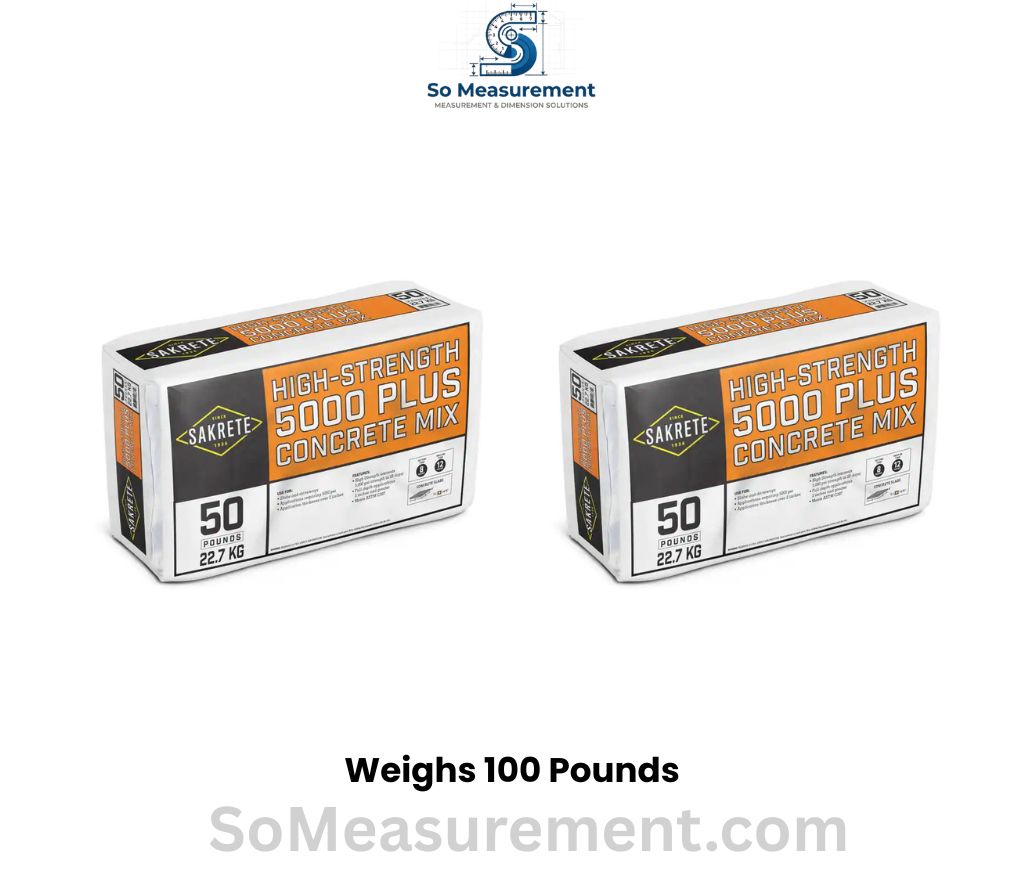
Quikrete and similar brands package concrete in 50-pound paper bags, sealed at the factory to that exact weight. Two bags, 100 pounds. Simple math with a brutal physical reality.
Here’s what makes this one interesting: concrete bags are dense. They don’t take up much space. So when you pick one up, the weight hits you faster than expected. There’s no visual warning. It just… pulls. Two of them together is a load that most people can move but not carry far without resting.
DIY builders deal with this constantly. If you’ve ever tiled a floor or set a fence post, you’ve met this weight.
3. An Empty 100-lb Propane Tank

This one is genuinely surprising. The large residential propane cylinders used for home heating — not the small backyard grill tanks — have a tare weight of exactly 100 pounds when completely empty. That tare weight is legally stamped on the collar by the manufacturer.
Most homeowners don’t discover this until they try to move one. Empty feels like it should mean light. It doesn’t. An empty 100-pound propane tank is still a serious lift, still awkward, and still requires two people or a dolly to move safely.
When full, these tanks weigh considerably more. The empty weight alone is already at the upper limit of what most adults should lift solo.
4. Four 25-lb Olympic Weight Plates

Olympic weight plates are calibrated during casting. A 25-pound plate isn’t approximate — it’s standardized for competitive use, and the number is stamped right into the iron. Stack four of them and you have a verified 100-pound load.
Hold one in each hand and you feel 50 pounds — manageable for most fit adults. Now double it. That’s where 100 pounds starts to demand real grip strength, core engagement, and respect.
This comparison works well as a gym benchmark. Many beginner strength programs use 100 pounds as an early milestone for the deadlift or squat. Four plates on the floor makes that goal feel concrete and real.
5. Ten 10-lb Dumbbells
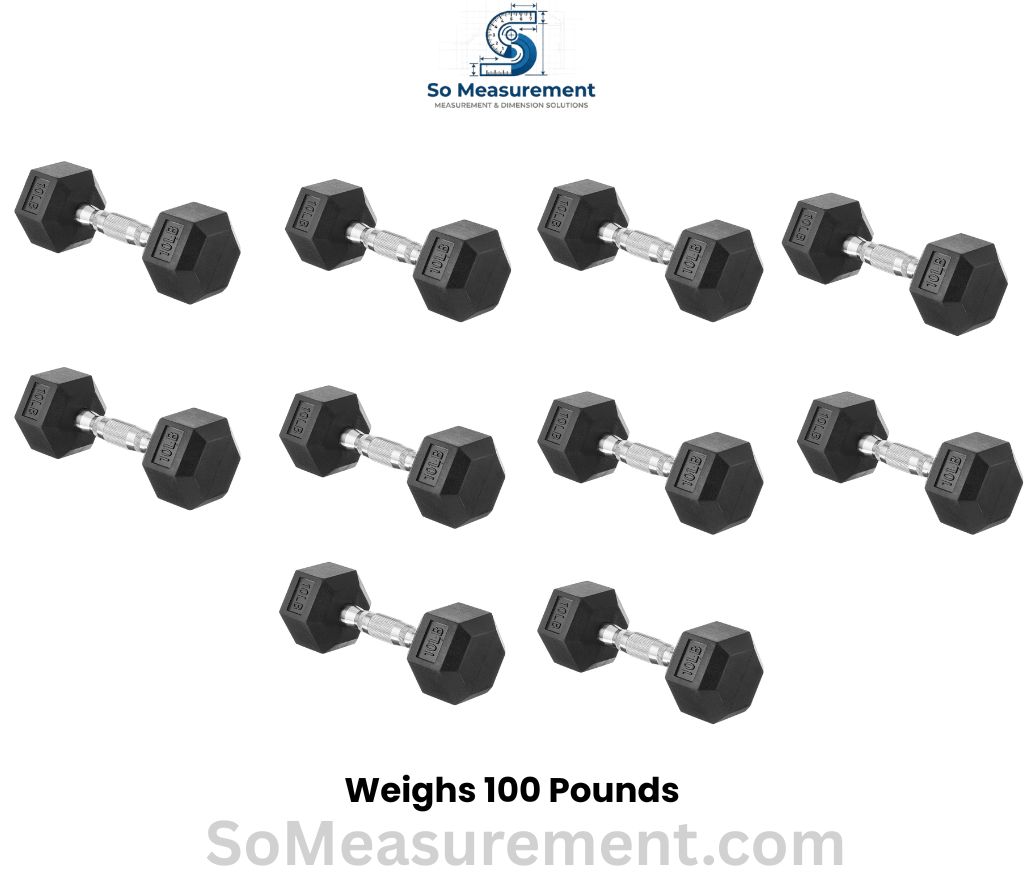
A 10-pound dumbbell is one of the most common objects in any gym. It’s what most people reach for when they first start working out. Light, compact, manageable. Now imagine ten of them in a pile.
That pile weighs 100 pounds. Visually it’s surprising — ten small dumbbells somehow equal a serious barbell load. Pick one up and hold it in your hand for a second. That sensation, multiplied by ten, is what 100 pounds actually is.
This is one of the best mental tricks for understanding weight. You already know what a 10-lb dumbbell feels like. Scale it up from there.
6. Three Standard 8-inch Cinder Blocks
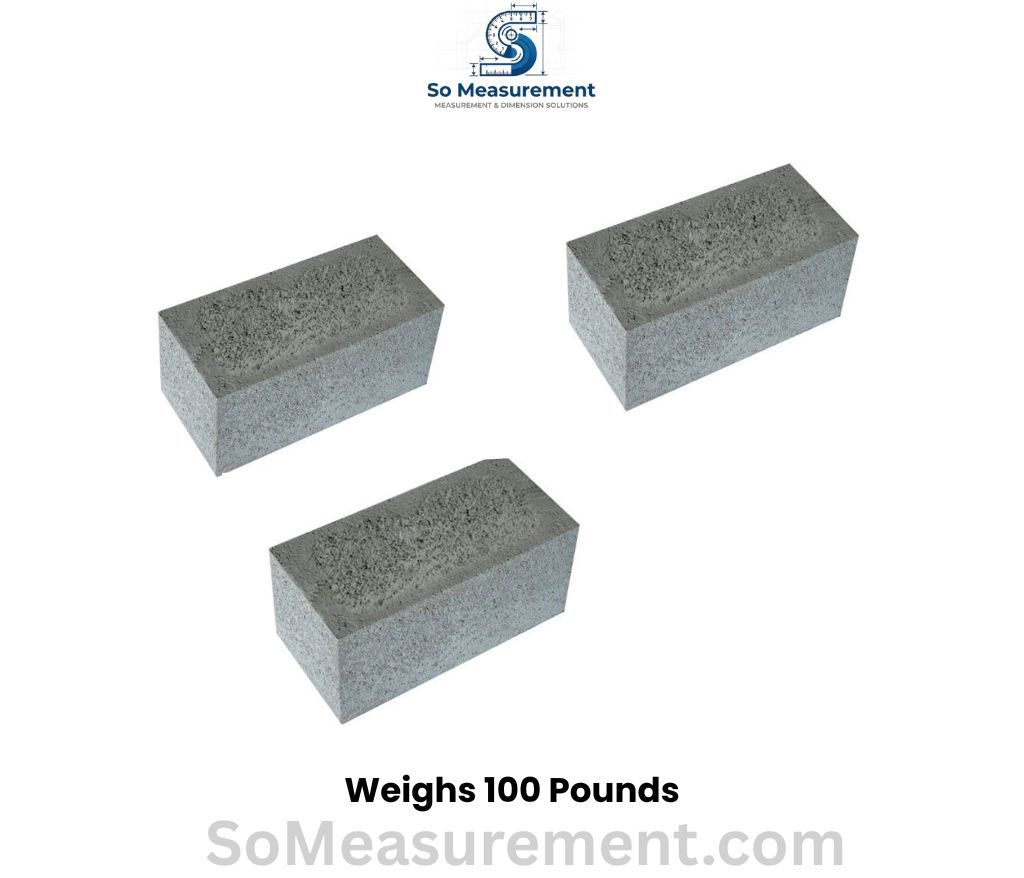
Construction cinder blocks aren’t random shapes. A standard 8-inch concrete block is engineered to weigh 33.3 pounds — that precision matters for structural load calculations in walls and foundations. Three of them stack up to exactly 100 pounds.
What’s striking here is the size. Three cinder blocks don’t take up much space at all. You could fit them in a milk crate. But try lifting that milk crate and your lower back will immediately understand the scale.
Dense, rigid, and unforgiving — this is 100 pounds in one of its most concentrated forms.
7. 12 Gallons of Fresh Water
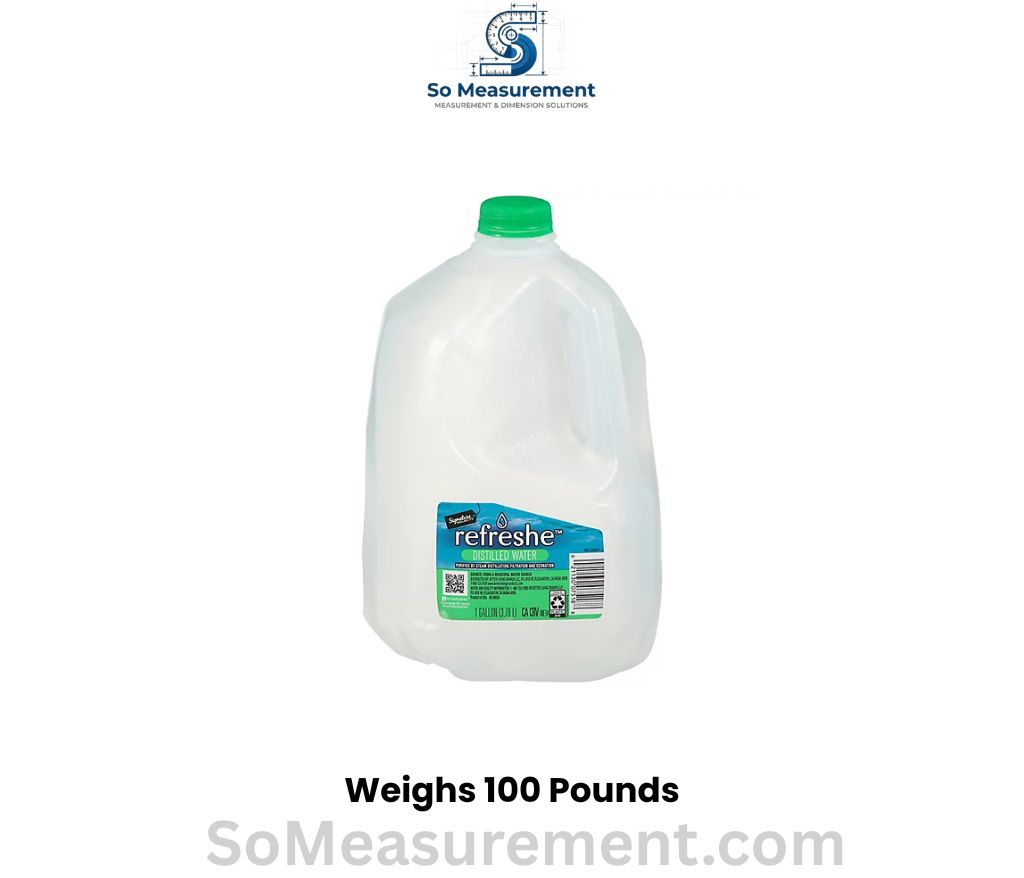
Water has a fixed density at room temperature: one gallon weighs exactly 8.34 pounds. Multiply that by 12 and you get 100.08 pounds — close enough to be the go-to example for this weight.
Most people wildly underestimate water weight. A 12-gallon container looks like something you could carry with one hand. You cannot. The weight is real, and unlike bags or plates, water shifts inside the container as you move. That sloshing motion throws off your balance and makes it feel even heavier than the scale says.
Emergency preparedness guides often recommend water storage in containers no larger than 5–7 gallons for exactly this reason. Anything bigger becomes a two-person job when full.
8. Twenty Reams of Printer Paper

A standard ream of 500-sheet letter-size printer paper weighs exactly 5 pounds. Order a full case of 20 reams — which offices and print shops do regularly — and that box sits at 100 pounds on the scale.
Paper is deceptive. The box looks manageable. It has handles. It’s a clean rectangle with no awkward shifting weight inside. But the moment you try to lift a full case, the density hits you. It’s compact, it’s rigid, and it’s heavy in a way that catches people off guard because nothing about the outside of the box signals danger.
Delivery drivers know this one well. A single case of paper is one of those household items that quietly weighs as much as a person.
9. Two 50-lb Bags of Play Sand

Hardware stores sell playground sand in plastic bags pre-filled to exactly 50 pounds each. Two bags, 100 pounds — the same math as the dog food and concrete, but with a completely different feel.
Sand moves. It shifts and settles inside the bag as you grip it, which means your hands are constantly adjusting. The weight isn’t stable. That constant micro-adjustment is exhausting in a way that a rigid 100-pound object simply isn’t. Two bags of play sand is one of the most physically demanding ways to experience this weight.
Parents building backyard sandboxes discover this quickly. Budget for a wheelbarrow.
10. A 2-Month-Old Foal

A newborn foal from a standard light-breed horse arrives at roughly 100–130 pounds at birth. By two months old, many foals from lighter breeds sit right at the 100-pound mark depending on diet and breed.
The reason this comparison sticks in your memory is the visual disconnect. A 2-month-old foal looks like a tiny, long-legged, alert animal full of energy. It doesn’t look like 100 pounds. But pick one up — which foal handlers occasionally do for medical exams or transport — and you understand immediately. Long limbs, shifting weight, and a moving animal make this one of the most challenging 100-pound lifts imaginable.
It’s a reminder that weight and size aren’t the same thing.
11. A 100-lb Heavy Punching Bag
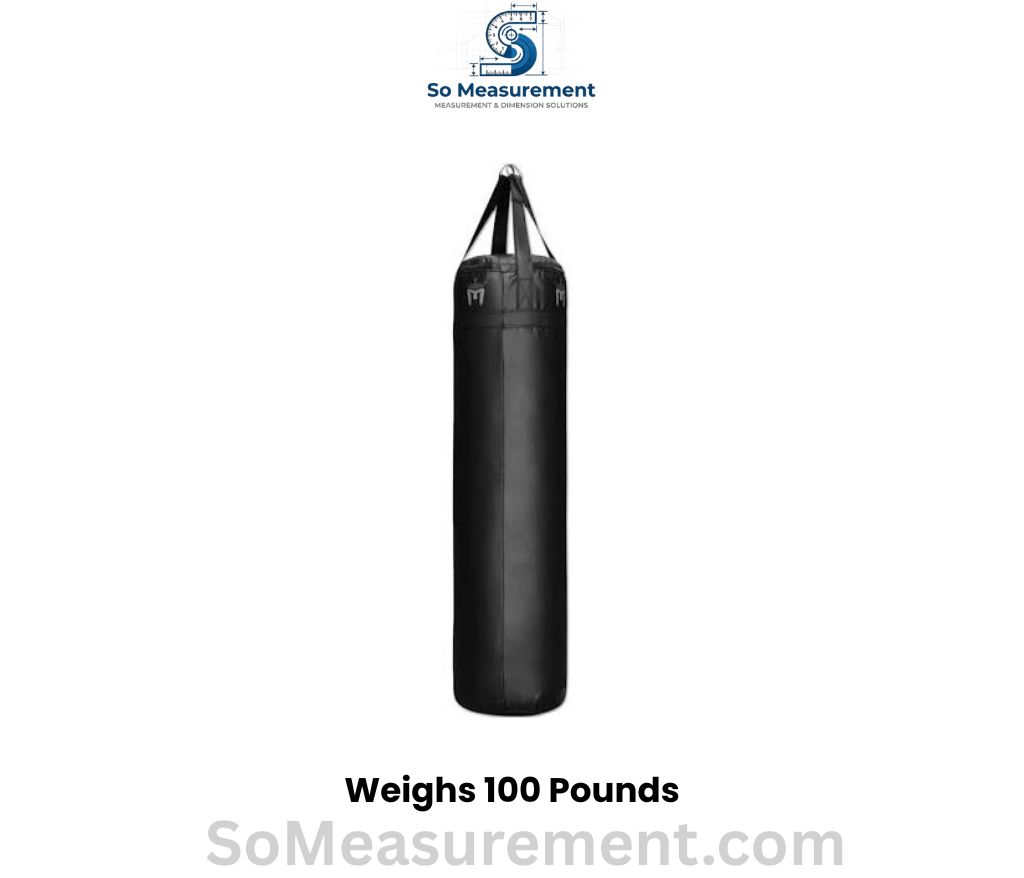
Commercial boxing gyms use heavy bags packed with compressed sand, shredded fabric, and rubber filler to reach a certified hanging weight of 100 pounds. That weight is labeled on the bag. It’s not a coincidence — it’s the standard size for adult training in boxing, Muay Thai, and general fitness.
When you punch a 100-pound bag, the resistance is immediately different from a lighter one. It doesn’t swing freely. It absorbs the hit and pushes back. That physical feedback is actually what makes it useful for training — the weight creates honest resistance.
Hanging one at home requires ceiling joists rated for dynamic loads, not just the static 100-pound weight. A swinging bag generates significantly more force than a still one.
12. Two 50-lb Bags of Livestock Feed

Farm supply stores sell grains, oats, and chicken feed in heavy-duty paper sacks at exactly 50 pounds each. These weights are regulated by agricultural departments — it’s not just a label, it’s a legal standard for selling feed by weight. Two bags equal 100 pounds.
Farmers handle this quantity as a regular part of their day. Loading bags from truck beds, stacking them in storage barns, carrying them to feeding areas — it’s repetitive physical work with no shortcuts. 100 pounds is just another load when you do it daily.
For the rest of us, two bags of livestock feed is a useful reference because the bags are identical, the weight is verified, and the total is exactly what it claims to be.
13. An Average 12-Year-Old Child

CDC pediatric growth charts place the median weight for a healthy 12-year-old in the United States right around 100 pounds. This is one of the most human and relatable comparisons on this list.
Think about the last time you lifted a child — helped one out of a pool, carried a sleeping kid to bed, or lifted one over a fence. That effort you remember from your lower back, your arms, and your grip? That’s this weight. It’s not abstract anymore.
What makes this comparison powerful is the movement. A child shifts, wriggles, or goes limp. It’s 100 pounds that doesn’t cooperate. That’s why parents develop real functional strength just from years of picking up their kids.
Is 100 Pounds Heavy to Lift?
It depends on two things: your training background and the shape of the object.
For untrained adults, 100 pounds lifted from the floor is genuinely hard. It’s not dangerous if your form is correct — knees bent, back flat, core tight, weight close to your body. But most people’s instinct is to bend at the waist and pull with their back. That’s where injuries happen.
For people who lift regularly, 100 pounds is a moderate working weight. Many intermediate lifters move this load multiple times per session without much thought.
The shape factor is real and underappreciated. A 100-pound barbell is far easier to lift than 12 gallons of water in a loose container, or two bags of sand with shifting contents. Same weight on a scale. Completely different experience in your body.
What Does 100 Pounds Feel Like for Women?
In terms of body weight, 100 pounds sits well below the average adult female weight in the United States, which is closer to 170 pounds. A woman at 100 pounds would typically be quite petite or an adolescent.
For lifting, 100 pounds is a meaningful milestone. Many women in consistent strength training programs reach a 100-pound deadlift within their first year. It’s not a beginner number, but it’s an achievable one — and hitting it for the first time feels significant.
Mistakes People Make When Estimating 100 Pounds
Confusing net weight with gross weight. Product labels show the weight of the contents. The packaging adds to that. For shipping, moving, or engineering purposes, always check whether the number is net or total.
Underestimating water. 12 gallons looks like a mid-sized container. It weighs 100 pounds. People plan storage and transport around the size of the container and forget to account for what filled water actually weighs.
Assuming all 100-pound loads feel the same. They don’t. Shape, density, and balance change everything. A rigid box of paper and a shifting bag of sand are both 100 pounds. One is manageable. The other is a workout.
Read more:
What Weighs 40 Pounds? 10 Daily Objects at This Exact Weight
What Weighs 50 Pounds? 11 Things That Actually Hit This Weight
Frequently Asked Questions
Is 100 pounds heavy for one person to lift?
For many adults, yes. Whether you can lift 100 pounds depends on your strength, experience, and the object itself. A balanced barbell is usually easier to lift than a large bag of sand or a container of water because the weight stays steady.
Why can two objects that weigh 100 pounds feel different?
The scale may show the same weight, but the shape and balance change how heavy it feels. A solid box is easier to carry than something that shifts, like water, sand, or a moving animal. Your body works harder to keep an unstable load under control.
What jobs or hobbies commonly involve lifting around 100 pounds?
People in construction, farming, warehousing, landscaping, and moving often handle loads close to 100 pounds. Weightlifters, mechanics, and some pet owners also come across this weight when working with equipment, supplies, or large bags of feed.
What is the safest way to move something that weighs 100 pounds?
Keep the object close to your body, bend your knees instead of your back, and avoid twisting while lifting. If the item is bulky or awkward, use a hand truck, dolly, or ask someone to help. Moving safely is more important than lifting alone.

Lev is passionate about helping readers understand sizes and dimensions of everyday objects. With a focus on clarity and practical examples, Lev shares accurate, trustworthy insights that make measurements relatable, useful, and easy to visualize for everyone.