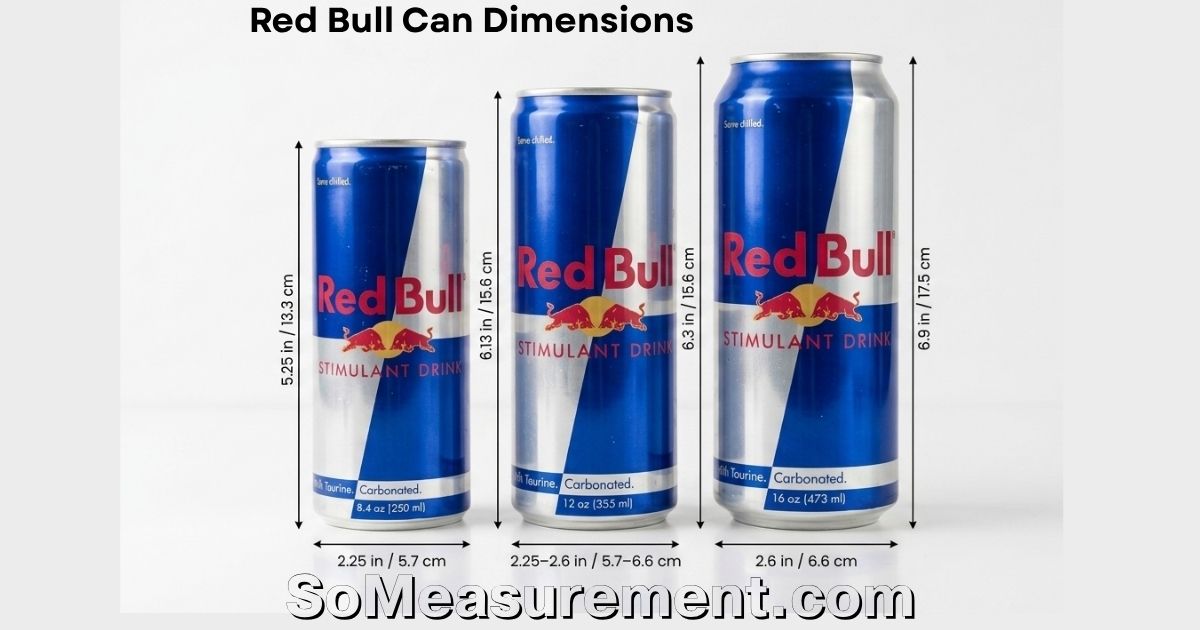
The standard Red Bull can — the 8.4 oz (250 ml) original — stands 5.25 inches (13.3 cm) tall with a diameter of 2.25 inches (5.7 cm). That’s the quick answer most people need. If you’re here for a specific size, a design project, or just curious why Red Bull cans look so different from regular soda cans, everything is below.
What Are the Red Bull Can Dimensions?
Red Bull produces five sizes. The width stays nearly the same across all of them — what changes is the height.
| Volume | Height (in) | Height (cm) | Diameter (in) | Diameter (cm) | Circumference |
|---|---|---|---|---|---|
| 207 ml (Mini) | 4.75″ | 12.1 cm | 2.12″ | 5.3 cm | ~16.7 cm |
| 250 ml (Original) | 5.25″ | 13.3 cm | 2.25″ | 5.7 cm | ~18.0 cm |
| 355 ml (Medium) | 6.2″ | 15.7 cm | 2.25″–2.6″ | 5.7–6.6 cm | ~20.7 cm |
| 473 ml (Large) | 6.9″ | 17.5 cm | 2.6″ | 6.6 cm | ~20.8 cm |
| 591 ml (Extra Large) | 7.6″ | 19.3 cm | 2.8″ | 7.1 cm | ~22.3 cm |
From smallest to largest, the diameter grows less than 2 cm total. The height jumps nearly 3 full inches. That’s Red Bull’s entire design logic in one table.
The 250 ml Red Bull Can Original — The Most Searched Size
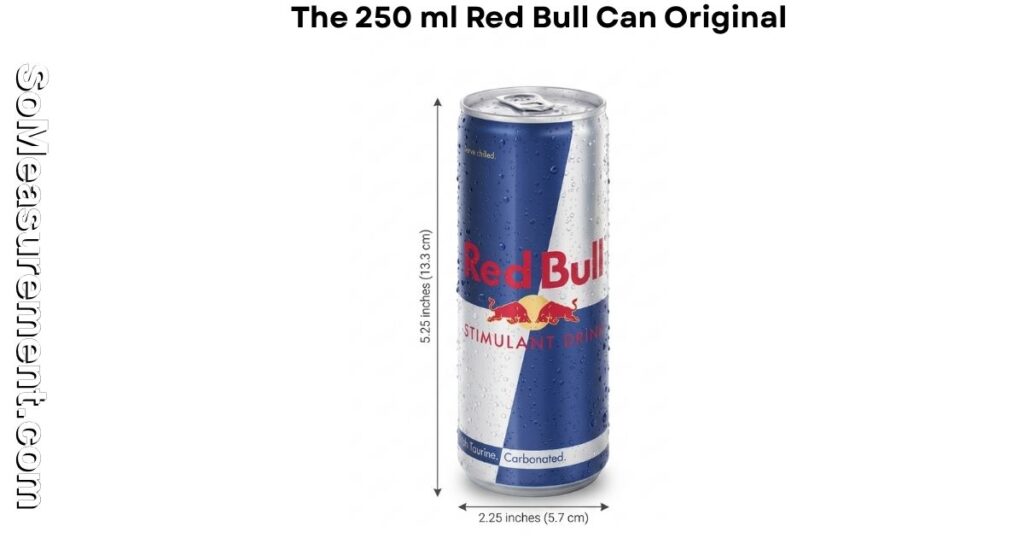
When people look up Red Bull can dimensions in inches or Red Bull can dimensions in cm, this is almost always the can they mean.
- Height: 5.25 inches / 13.3 cm
- Diameter: 2.12 to 2.25 inches / 5.3 to 5.7 cm
- Circumference: ~7.1 inches / 18 cm
The circumference matters most for designers and crafters. A label or sleeve wraps the full circle — not just the width. For the 250 ml, that’s 18 cm of material needed to go all the way around.
One thing worth knowing: other brands sell 250 ml cans in a shorter, stubbier shape. Red Bull’s version is taller and slimmer than most. A generic 250 ml can template won’t match if you’re designing specifically for Red Bull.
355 ml Red Bull Can Dimensions — Where It Gets Tricky
Why the Diameter Varies
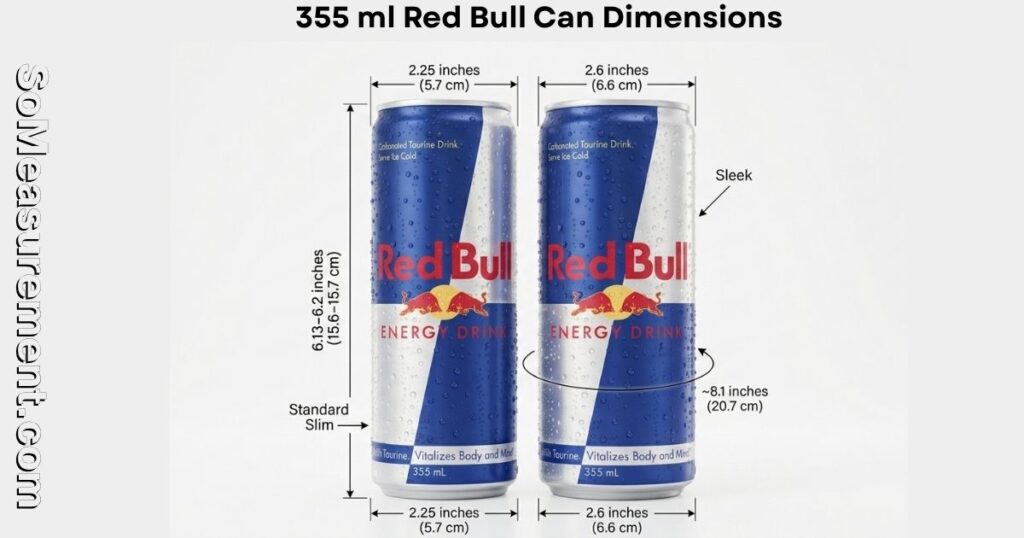
The 12 oz Red Bull can dimensions aren’t perfectly fixed at one number, and that confuses people.
- Height: 6.13 to 6.2 inches / 15.6 to 15.7 cm
- Diameter: 2.25 to 2.6 inches / 5.7 to 6.6 cm
- 12 oz Red Bull can circumference: ~8.1 inches / 20.7 cm
The variation exists because Red Bull uses two formats for this size. Standard 355 ml cans use the slim profile. Some special edition flavors use a slightly wider sleek format to fit retail shelf systems built for regular soda cans. If you’re cutting a sleeve or insert for a specific edition, measure the actual can first. The difference is small but enough to matter for a snug fit.
473 ml and 591 ml Red Bull Can— The Larger Sizes
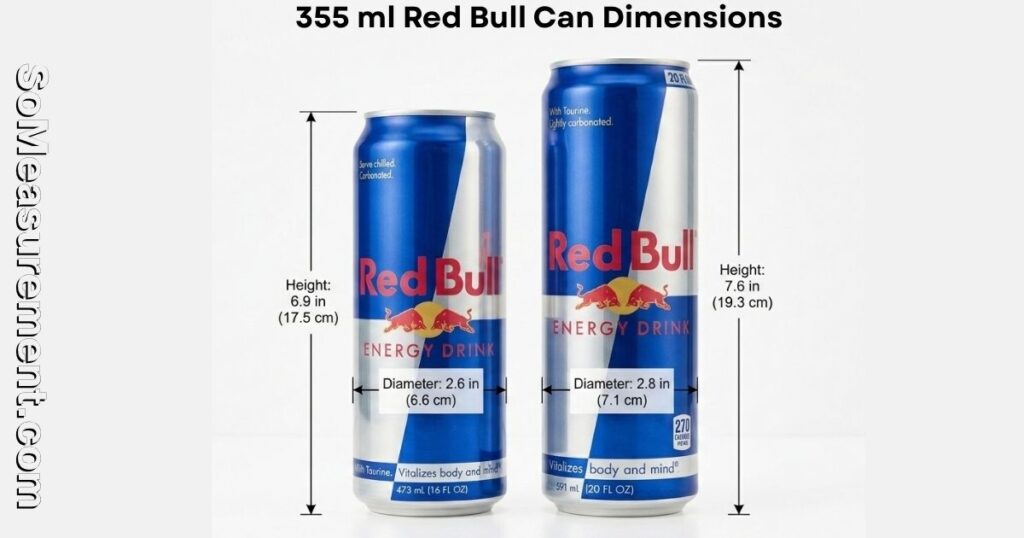
These are common across North American gas stations and convenience stores.
16 oz / 473 ml
- Height: 6.9 inches / 17.5 cm
- Diameter: 2.6 inches / 6.6 cm
- Circumference: ~8.2 inches / 20.8 cm
20 oz Red Bull Can Dimensions
- Height: 7.6 inches / 19.3 cm
- Diameter: 2.8 inches / 7.1 cm
- Circumference: ~8.8 inches / 22.3 cm
The 20 oz full can weighs around 1.3 lbs. Red Bull reinforces the aluminum base on this size — a larger can holds more carbonation pressure, so the bottom needs to be structurally stronger. You can actually feel it when you press the base compared to the original.
Cup Holder Fit — Straight Answer
Most car cup holders are built for 2.5 to 3 inches wide.
The 250 ml and 355 ml slim cans drop in easily but sit loose — they’ll rattle without a spring insert or foam sleeve. The 473 ml fits snugly and stays put. The 591 ml at 2.8 inches is right at the upper edge; older, narrower cup holders may not take it comfortably.
Why Red Bull Cans Are Shaped That Way
A standard 12 oz Coke can is about 2.6 inches wide. The Red Bull 8.4 oz original is only 2.12 to 2.25 inches wide — visibly slimmer when you hold them side by side.
The slim shape chills faster. A narrower, taller can has more surface area relative to its volume, so cold air reaches the liquid quicker — roughly 15% faster than a wider can of similar volume. It also means more cans fit per shelf row, which retailers care about more than most consumers realize.
Read also: CELSIUS Can Dimensions: Size, Height & Diameter & Fit Guide 2026
Red Bull Can Bulk Case Dimensions
For event planning, wholesale orders, or storage:
24-pack case (250 ml): 32.8 cm x 21.6 cm x 13.6 cm — weighs about 6.6 kg / 14.5 lbs
12-pack case (355 ml): roughly 15.8 cm tall — weighs about 4.5 kg
A standard Euro pallet holds 108 to 144 cases of the 250 ml size depending on stacking height.
FAQs on Red Bull Can
For a wrap or craft project, do I measure diameter or circumference?
Circumference. That’s how long your material needs to be to go fully around the can. Diameter is just the straight line across — it doesn’t account for the curve. Use 18 cm for the 250 ml, 20.7 cm for the 355 ml.
Do sugar-free and zero editions come in different can sizes?
No. Red Bull Zero and Sugar Free use identical can dimensions across all sizes. Same height, same diameter, same circumference. Only the formula changes.
I need the 250 ml measurements for a 3D model — which numbers are most precise?
Use 13.3 cm height and 5.7 cm diameter. Height is very consistent in production. Diameter can vary by 1 to 2 mm between slim and sleek formats, so for standard Red Bull those numbers are reliable.
Why do the 355 ml and 473 ml cans look almost the same height?
Because the 473 ml is also wider, not just taller. Volume increases in two directions at once, so the height gap between those two sizes is smaller than you’d expect just from the volume difference.
Will the 20 oz can fit in a backpack side pocket?
Usually yes, but it’s tight. At 2.8 inches wide, it’ll push the limits of a snug mesh pocket. The 250 ml and 355 ml cans slip into almost any bottle pocket without resistance.
Bottom Line
Red Bull grows its cans upward, not outward. The diameter barely changes from the mini to the extra large. The height tells the whole story.
For most uses — designing, crafting, checking cup holder fit, or just understanding the size difference — the original 250 ml at 5.25 inches tall and 2.25 inches wide is the reference point everything else builds from.

Lev is passionate about helping readers understand sizes and dimensions of everyday objects. With a focus on clarity and practical examples, Lev shares accurate, trustworthy insights that make measurements relatable, useful, and easy to visualize for everyone.