50 pounds is 22.68 kilograms. That’s the legal limit on your checked airline bag, the salt bag in your basement, and roughly the weight of a five-year-old child — except the child squirms and the bag doesn’t cooperate at all.
Most people have lifted something this heavy without knowing it. Once you lock in a few real references, 50 lbs stops being a number and starts being a feeling you recognize instantly.
How Heavy Is 50 Pounds in Real Terms?
| Unit | Value | What It Feels Like |
| Pounds | 50 lbs | Upper edge of “one person can manage this” |
| Kilograms | 22.68 kg | Two large watermelons held together |
| Ounces | 800 oz | Precise lab or shipping reference |
| Stone | 3.57 st | Common in UK body weight conversations |
Conversions follow the International Yard and Pound Agreement (1959), which standardized the pound-to-kilogram relationship across the US, UK, Canada, and Australia. One pound equals exactly 0.45359237 kilograms — no rounding, no approximation.
Physically, 50 lbs is the weight where most untrained adults start shifting their posture within 20 seconds of holding it. It demands attention. Your lower back notices before your arms do.
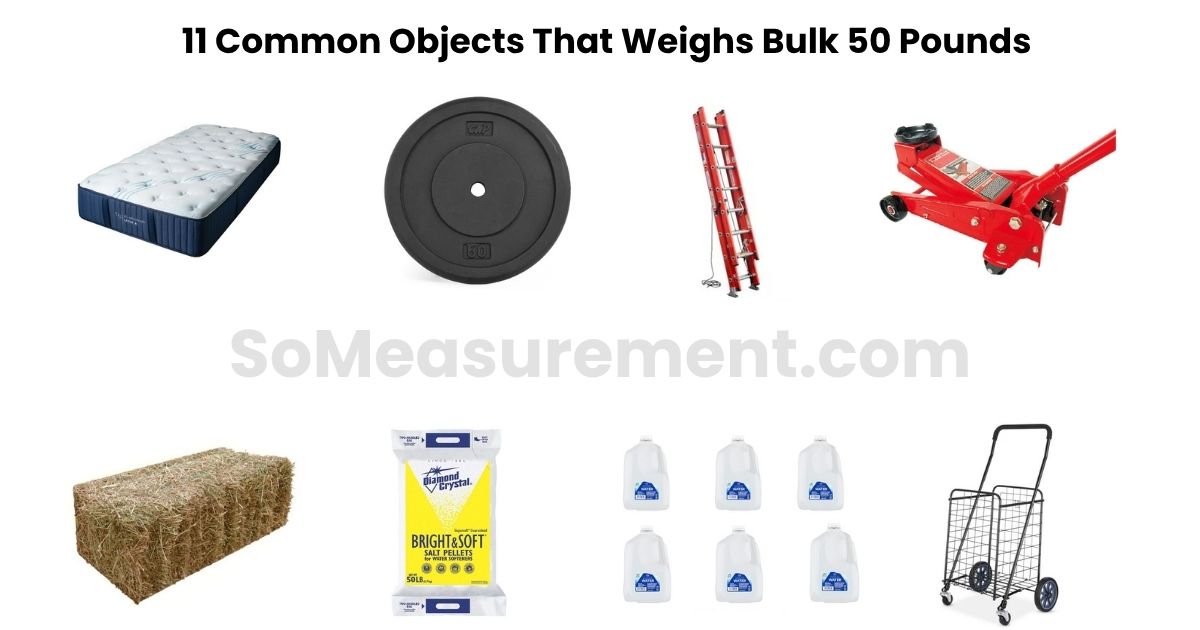
11 Daily-Use Things That Weigh 50 Pounds
| Object | Category | Weight |
| Industrial extension ladder | Construction tool | 50 lbs |
| Hydraulic floor jack | Garage equipment | 50 lbs |
| Six gallons of water | Household liquid | 50 lbs |
| Steel grocery cart | Retail equipment | 50 lbs |
| Twin-size memory foam mattress | Furniture | 50 lbs |
| Packed checked suitcase | Travel item | 50 lbs |
| Olympic weight plate | Fitness equipment | 50 lbs |
| Bag of lawn fertilizer | Garden supply | 50 lbs |
| Small rectangular hay bale | Farm supply | 50 lbs |
| Bulk bag of all-purpose flour | Food supply | 50 lbs |
| Water softener salt bag | Household supply | 50 lbs |
1. Industrial Extension Ladder

A 24-foot fiberglass or heavy-duty aluminum extension ladder used by electricians and construction crews lands right around 50 lbs. Fiberglass runs slightly heavier than aluminum at the same length because of how the material is layered, but both sit in this range at full size.
What people don’t expect is the balance problem. The weight isn’t the hard part — carrying a 24-foot rigid object solo is. It pulls you sideways before you’ve taken three steps. The 50 lbs feels more like 80 when it’s distributed across that length with no center grip.
Professional crews always carry these horizontally with two people. If you’ve ever tried it alone, you already understand why.
2. Hydraulic Floor Jack
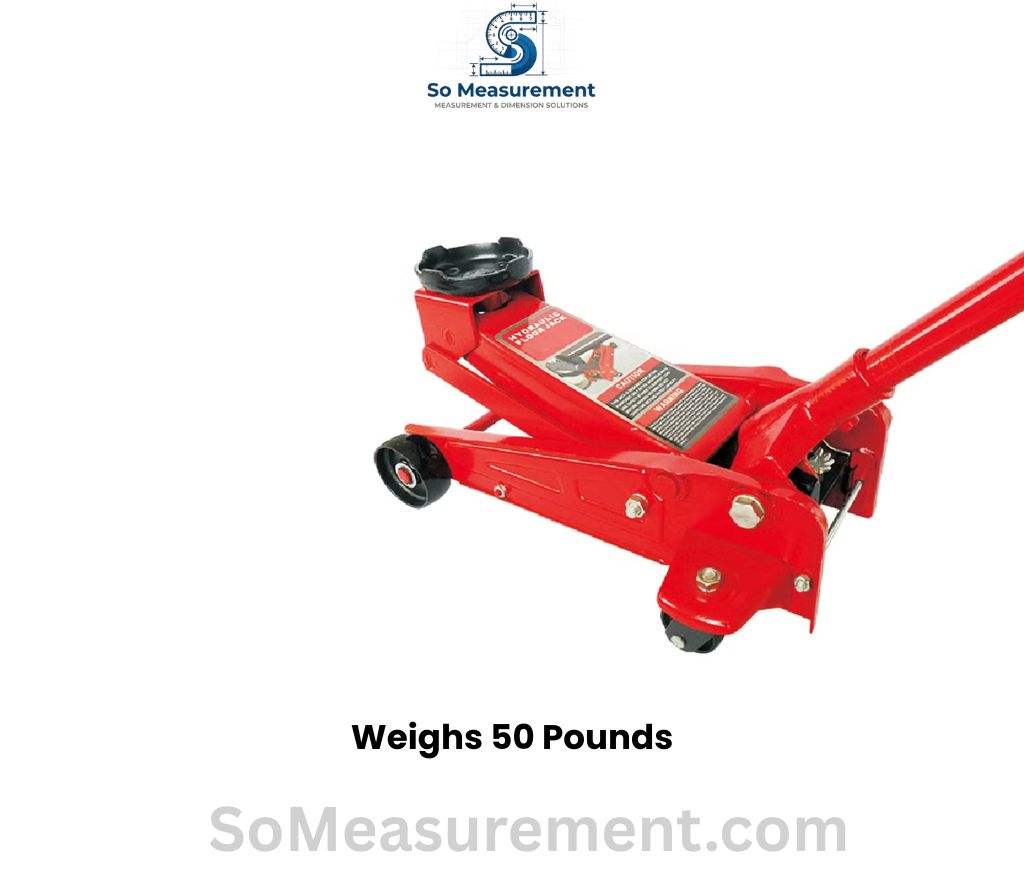
The 2-ton or 3-ton floor jack sitting in most home garages — the one used to lift a car for tire changes or oil drains — is built with thick steel plate housing and a solid hydraulic cylinder. That construction puts most models between 45 and 55 lbs.
You wouldn’t guess the weight by looking at it. It sits low, compact, almost unassuming. Then you reach down to slide it out from under the workbench and your back immediately recalibrates your expectations.
Most floor jacks have a small front wheel for exactly this reason. Tilt it back onto that wheel and roll it instead of lifting it outright. The engineers knew what they built.
3. Six Gallons of Fresh Water
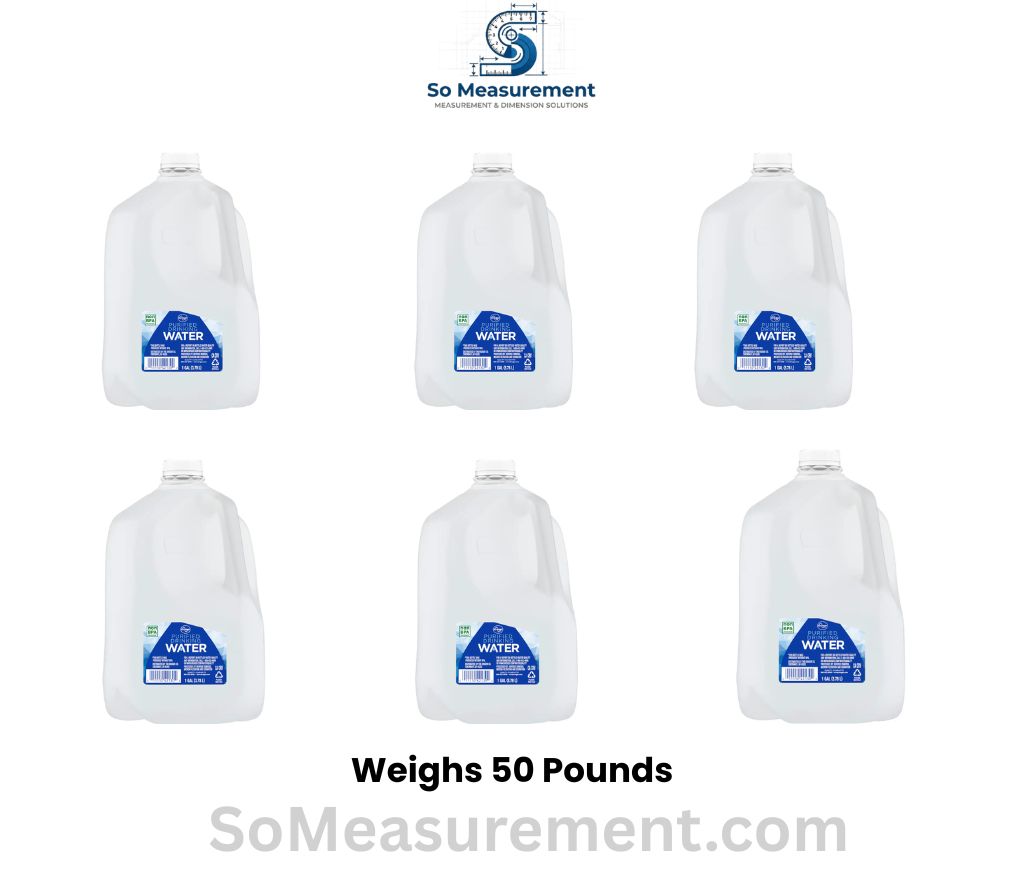
Pure water weighs 8.34 pounds per gallon — a fixed, consistent value that makes water one of the most reliable weight references available. Six gallons brings you to 50.04 lbs.
This is why the standard office water cooler jug — which holds five gallons — feels so heavy when you try to flip it onto the dispenser. That’s 41.7 lbs of pure liquid awkwardness. Add one more gallon and you’ve crossed into 50 lb territory.
If you want to feel this weight at home without a scale, fill six one-gallon jugs. Three in each hand. Walk across the kitchen. That experience will anchor 50 lbs in your body better than any chart.
4. Steel Grocery Cart
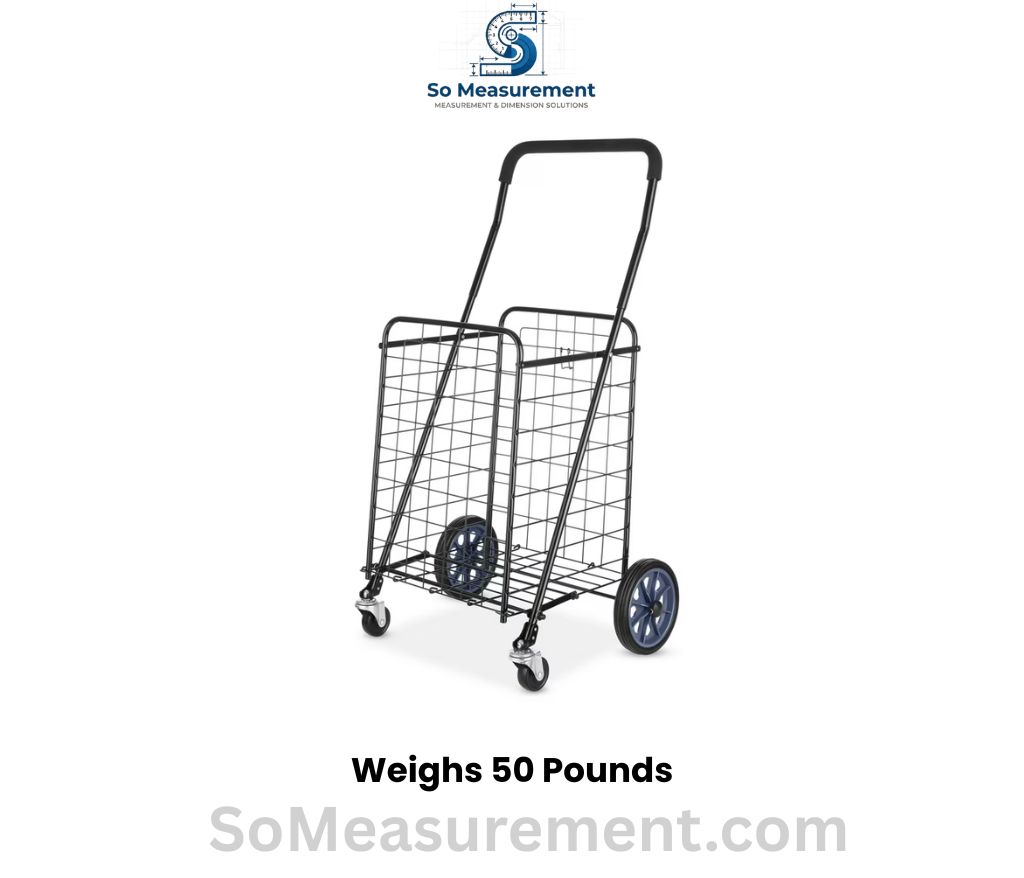
Empty metal grocery carts at large supermarkets — the deep-basin kind that can hold a full family shop — weigh between 45 and 55 lbs. The mass is intentional. Steel construction keeps them stable in parking lots during wind, resists outdoor rust, and survives years of daily collision with other carts and curbs.
Next time you’re in a store, try lifting the front end of an empty cart straight off the ground. That resistance you feel before the wheels leave the floor? That’s approximately 50 lbs pushing back.
5. Twin-Size Memory Foam Mattress

A standard twin mattress — 38 inches wide, 75 inches long — in 10-inch memory foam density typically weighs between 45 and 60 lbs. Mid-density foam at that thickness lands around 50 lbs consistently.
The number isn’t what makes this hard to carry. It’s the shape. A 50 lb barbell plate has handles. A 50 lb mattress has nothing — it bends, it flops, it sticks to walls and doorframes. Two people and a mattress bag turn this into a manageable job. One person and a narrow staircase turn it into a 20-minute argument with furniture.
6. Fully Packed Checked Airline Suitcase
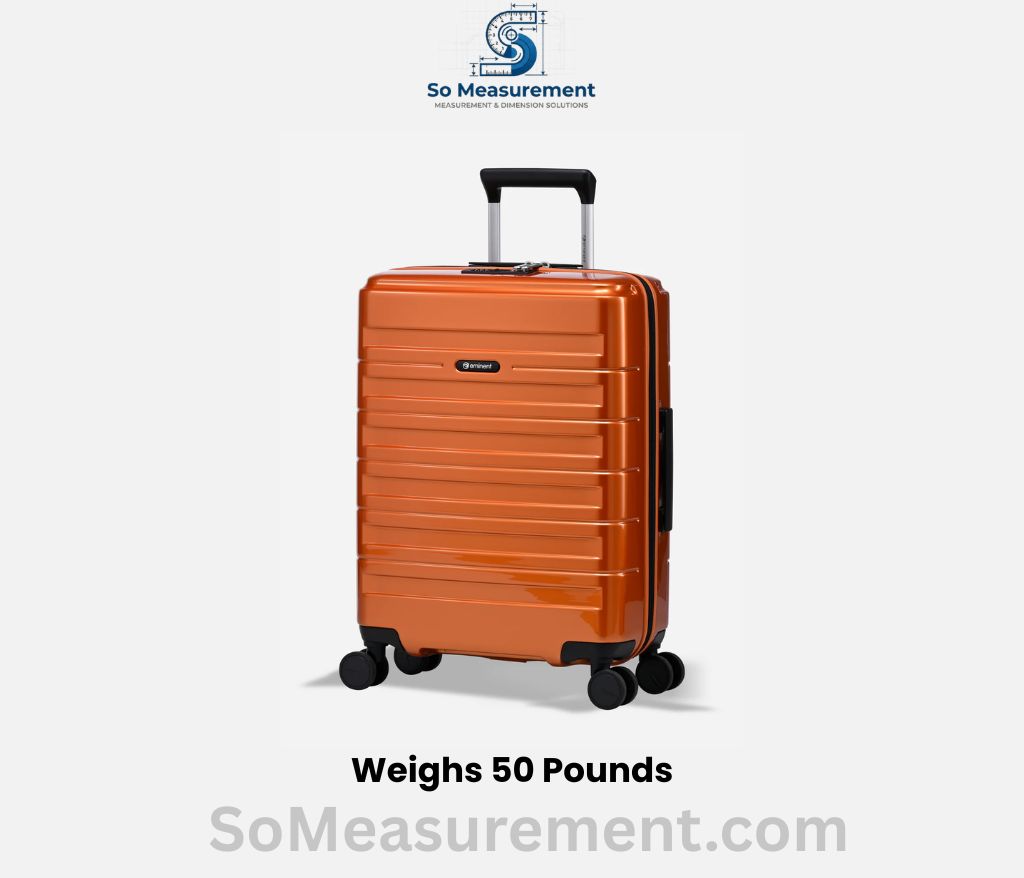
Most major international airlines — Delta, Emirates, British Airways, United — set their checked baggage maximum at exactly 50 lbs (23 kg). If you’ve ever stood at a check-in counter watching the scale read 51.3 and quickly pulling out a pair of shoes to avoid a fee, you’ve held 50 lbs and made real decisions about it.
Airline ground crews are trained not to manually lift bags above this threshold without mechanical assistance. That policy exists because of cumulative injury risk from repeated lifts at this weight across an eight-hour shift. It’s not arbitrary — it’s based on occupational load research.
How heavy is 50 pounds of luggage in practical terms? It fills a large suitcase to near capacity. Think eight to ten days of clothing, shoes, toiletries, and a jacket — and then you’re there.
7. Olympic Barbell Plate (Single 50 lb Iron Plate)
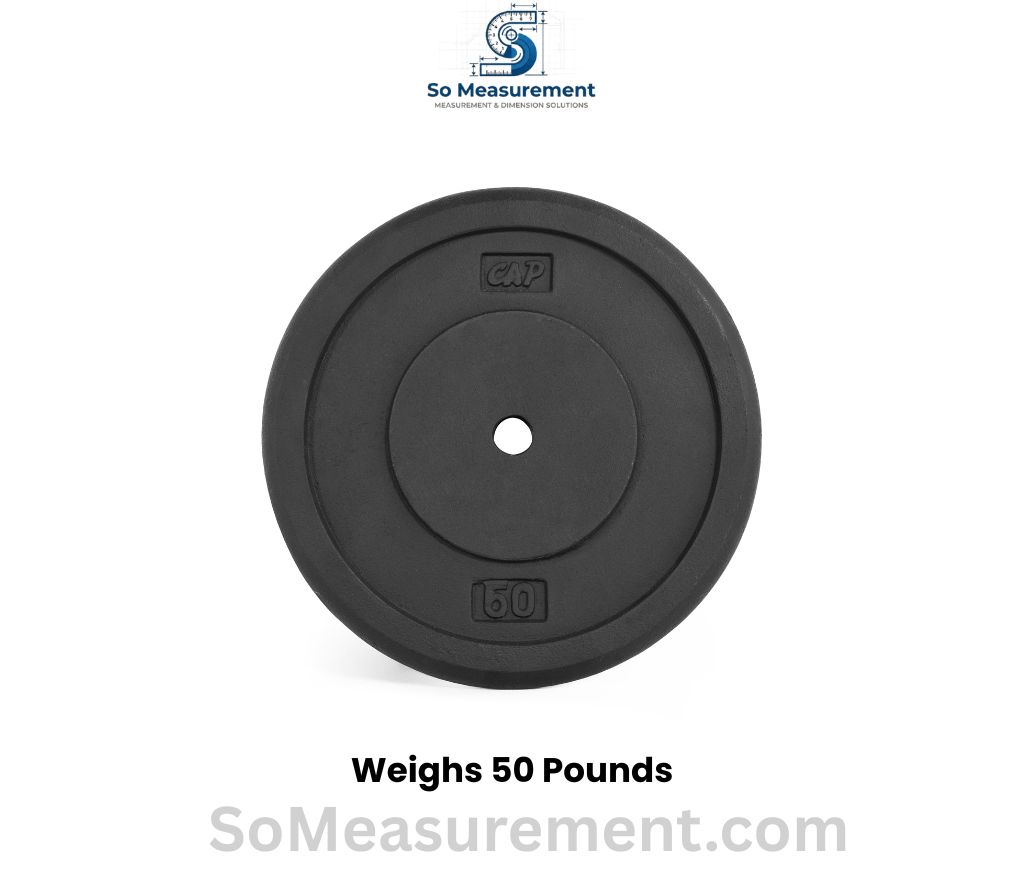
A standard Olympic barbell from Rogue Fitness or similar brands weighs 44 lbs (20 kg) on its own. But a standalone 50 lb iron plate is a separate product sold at most sporting goods retailers — a flat circular disc about 17 inches in diameter with a center hole.
Holding a single 50 lb plate feels nothing like carrying a bag of the same weight. The plate is rigid, dense, and the grip forces your fingers to work hard. Lifters sometimes use these for farmer’s carries — walking a set distance holding one in each hand — which means 100 lbs of grip-dominated load.
For reference, many beginner strength programs suggest women start their barbell squat around this total weight. That framing alone tells you where 50 lbs sits on the strength learning curve — not extreme, but genuinely demanding.
8. Bag of Lawn Fertilizer
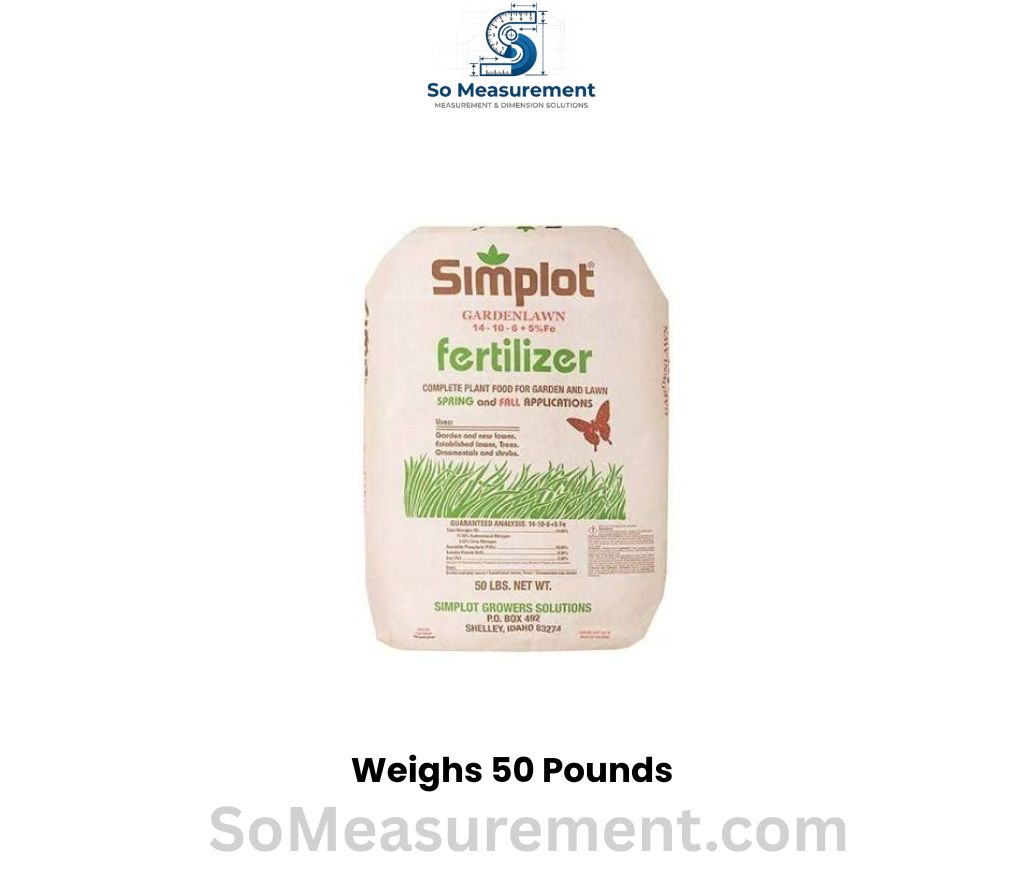
Walk into any Home Depot or Lowe’s in spring and you’ll see 50 lb bags of lawn fertilizer stacked near the entrance. Brands like Scotts and Pennington package their standard coverage products in exactly this size. The bag is roughly the dimensions of a large school backpack, but it has no straps, no structure, and no comfortable grip points.
Carrying it from the car to the back fence in one trip is a specific kind of effort most people underestimate on the first attempt. The granules shift inside the bag, changing the weight distribution mid-carry. By the time you reach the yard, you’ve done a full-body workout you didn’t schedule.
9. Small Rectangular Hay Bale
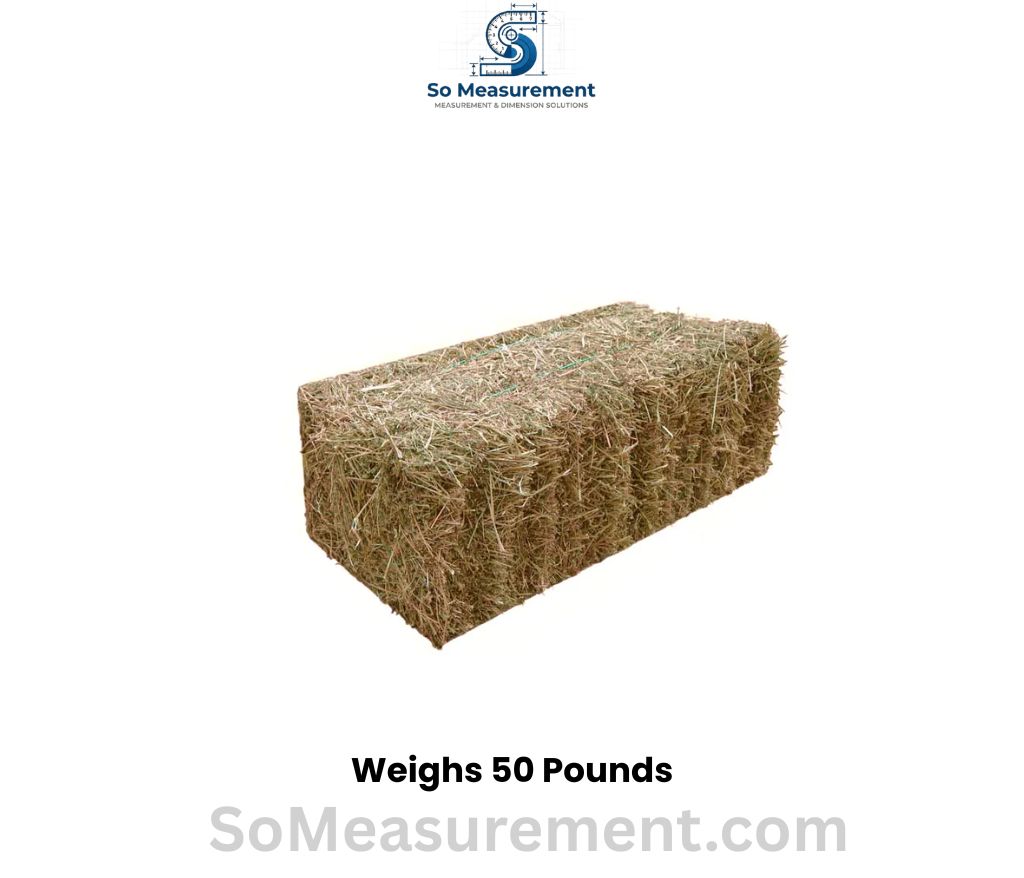
A standard small rectangular hay bale — roughly 36 inches long, 18 inches wide, 14 inches tall — weighs between 40 and 75 lbs depending on moisture content. Dry, compressed grass bales land right around 50 lbs.
Ranch hands and farmers develop the ability to toss these single-handed after enough repetition. For everyone else, it’s a two-arm grip with bent knees and a conscious decision not to twist at the waist. The twine wrapped around the bale gives you something to hold, but it’s rough on bare hands after the second or third carry.
This is also one of the oldest informal weight standards in agricultural work — farmers have been handling bales in this range for generations, long before anyone attached a pound value to the task.
10. Bulk Bag of All-Purpose Flour
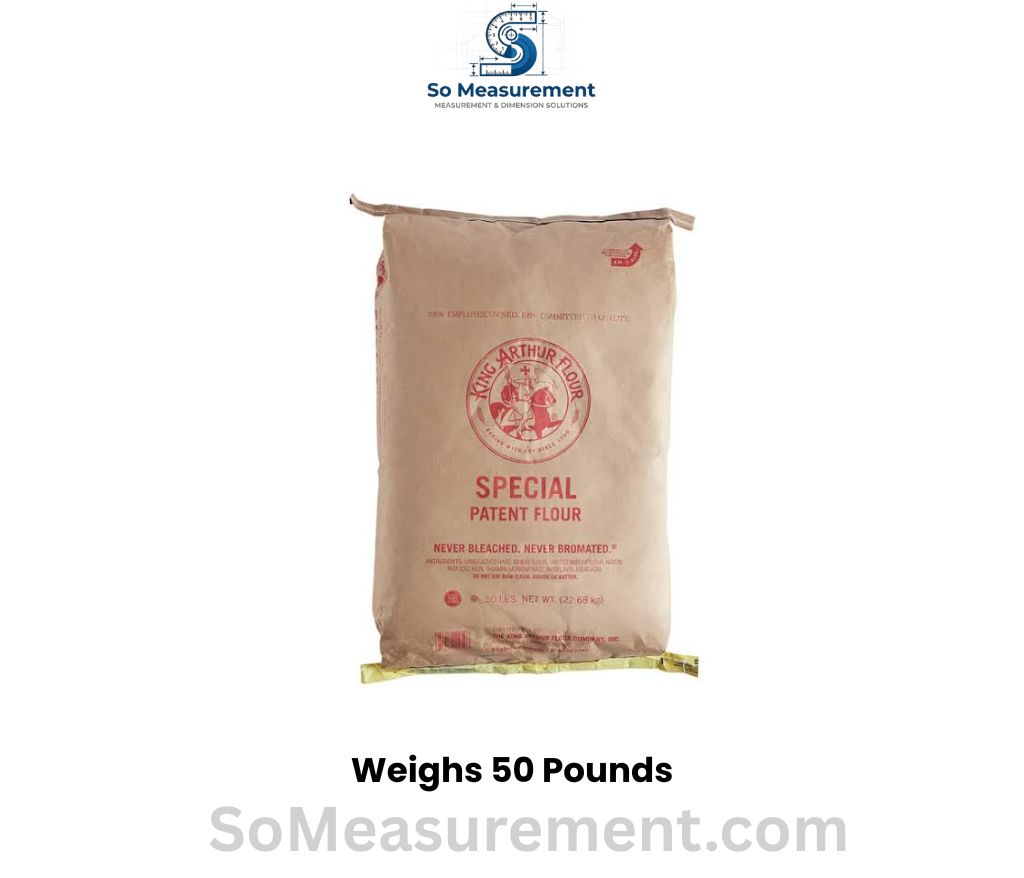
Commercial bakeries, restaurant kitchens, and institutional food operations buy flour in 50 lb paper sacks. This is a regulated standard package size in the US food industry — not arbitrary, but structured around supply chain efficiency and occupational handling limits.
The sack is large, floppy, and offers almost no grip. The flour inside shifts and compresses, making the bag feel heavier on one side than the other. Professional kitchen workers who handle these regularly develop a specific technique: grip the bottom with both hands, lean it against the body, and walk with it pressed to the torso rather than carried at arm’s length.
If you’ve volunteered at a community kitchen or worked a catered event, you’ve probably wrestled one off a shelf at some point and immediately understood why commercial kitchens have floor-level storage for them.
11. Bag of Water Softener Salt Pellets

Home improvement stores sell water softener salt in 40 lb and 50 lb bags — the 50 lb size is the most common on shelves. Homeowners pour these coarse pellets into water treatment tanks to remove mineral buildup from household pipes and appliances.
Unlike flour or fertilizer, the pellets inside shift constantly and create an unpredictable load. The bag feels like it’s trying to reorganize itself while you carry it. Most people drag these from the car to the basement rather than lifting them outright, and honestly, that’s the smart call.
It’s also one of those household tasks that gets underestimated until the first time. Then you buy a hand truck.
Is 50 Pounds Heavy for a Woman?
At or near this weight, yes — for most women without regular strength training, 50 lbs sits at the upper edge of what’s safe to lift alone. The National Institute for Occupational Safety and Health (NIOSH) sets its general maximum recommended lift at 51 lbs under ideal conditions, and that number drops significantly when the lift is repeated, awkward, or performed overhead.
That doesn’t mean women can’t handle this weight. Trained women — athletes, warehouse workers, military personnel — lift well above 50 lbs with proper form. What matters isn’t gender alone. It’s technique, frequency, and how the load is shaped.
For any repeated lifting at this weight in a workplace context, NIOSH guidelines specifically recommend mechanical assistance, team lifts, or equipment like hand trucks and dolleys. That recommendation applies to everyone, not just women — but women are statistically more likely to experience lower back injury at this load due to differences in average muscle mass distribution.
Measuring 50 Pounds Without a Scale
Water method: Fill six one-gallon containers. Water is exactly 8.34 lbs per gallon — no estimation required. Six gallons is 50.04 lbs.
Grocery bag stack: A fully packed paper grocery bag of canned goods runs 12–15 lbs. Four of those bags handed together puts you between 48 and 60 lbs — close enough to feel the range.
Backpack method: A loaded hiking pack typically carries 30–40 lbs. Add a 10–12 lb dumbbell inside and you’re in the 50 lb zone. Wear it for one minute.
Common Errors People Make About This Weight
Mixing up pounds and kilograms. 50 kilograms is 110 pounds — more than double what we’re discussing. This confusion comes up constantly in luggage contexts when travelers move between airline systems that use different units. Always confirm which unit the airline is listing before you pack.
Judging by a single lift. One careful lift of 50 lbs with good form feels manageable. Ten lifts per hour over a workday is an entirely different physical experience. NIOSH guidelines reduce safe limits sharply as frequency increases. Don’t use your first attempt as the reference point.
Thinking shape doesn’t matter. A rigid 50 lb box with handles and a floppy 50 lb bag of salt pellets are not the same carry. Load distribution, grip availability, and center of mass all change how heavy something feels in practice. The scale reads the same. Your body doesn’t.
Read more:
What Weighs 35 Pounds? 10 Common Objects That Weigh 35 Pounds
What Weighs 40 Pounds? 10 Daily Objects at This Exact Weight
Frequently Asked Questions
1. Is 50 pounds heavy for the average person?
For many adults, 50 pounds is manageable for one careful lift, but it can still feel heavy. The shape of the object, where you lift it from, and how far you carry it all make a big difference. Repeated lifting is much harder than lifting it once.
2. What is the easiest way to feel what 50 pounds weighs?
A simple method is to use water. Six full one-gallon jugs weigh almost exactly 50 pounds. Because the weight is easy to measure, it gives you a reliable way to understand how heavy 50 pounds really feels.
3. Why do some 50-pound objects feel heavier than others?
Weight is only part of the story. A solid object with handles is usually easier to carry than a large, soft, or unbalanced item. Things like mattresses, ladders, and bags of salt feel harder because the weight shifts or is spread over a larger area.
4. Can carrying 50 pounds cause injury?
It can if you lift with poor form or carry the weight for a long distance. Bending your knees, keeping the load close to your body, and avoiding twisting can lower the risk. If an object feels too awkward or unstable, using a cart or asking for help is the safer choice.
50 pounds shows up constantly in daily life — in the basement, the garage, the airport, the gym. It’s not extreme, but it’s not casual either. The objects in this list aren’t edge cases. They’re the things sitting in your home right now that you’ve probably moved without thinking twice.
Next time you’re hauling a salt bag down the stairs or hoisting a suitcase onto a scale, you’ll know exactly what you’re dealing with — and why bending at the knees actually matters.

Lev is passionate about helping readers understand sizes and dimensions of everyday objects. With a focus on clarity and practical examples, Lev shares accurate, trustworthy insights that make measurements relatable, useful, and easy to visualize for everyone.